Oaxaca City’s Top Markets: Eat, Shop, Vibe
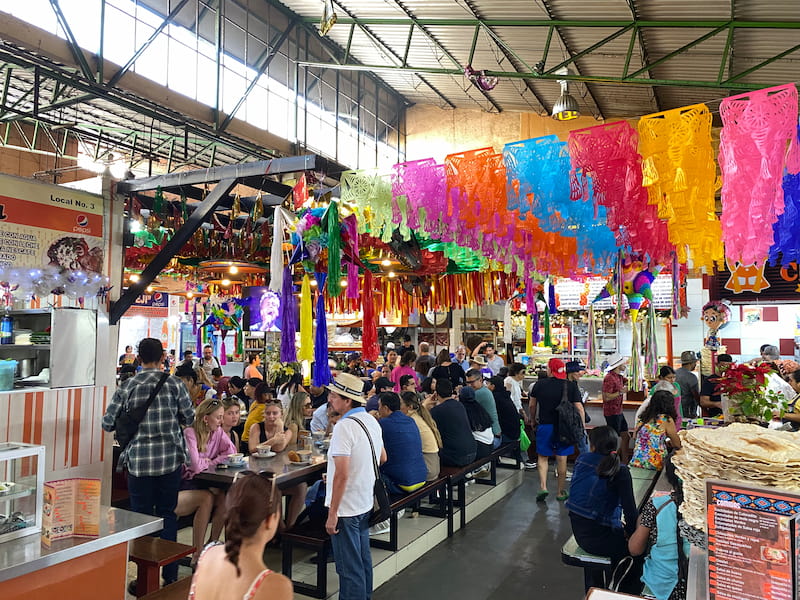
If you want to understand Oaxaca, spend a morning in its markets.
Not a quick walk-through — actually stop, eat something, watch how people move through the stalls, listen to the noise. Markets here aren’t tourist attractions with a side of local color. They’re where the city does its daily business: buying breakfast, picking up ingredients, meeting neighbors, arguing over prices.
That said, some are more visitor-friendly than others, some are better for food than shopping, and a couple are genuinely only worth it if you know what you’re looking for. Here’s the honest breakdown.
The Main Markets in Centro Histórico
All of these are within walking distance of the Zócalo. You could visit all of them in a single morning if you wanted to — though you’d be full before you finished.
Mercado 20 de Noviembre – Best for Traditional Oaxacan Food
This is the one. If you only go to one market in Oaxaca City, make it this one.
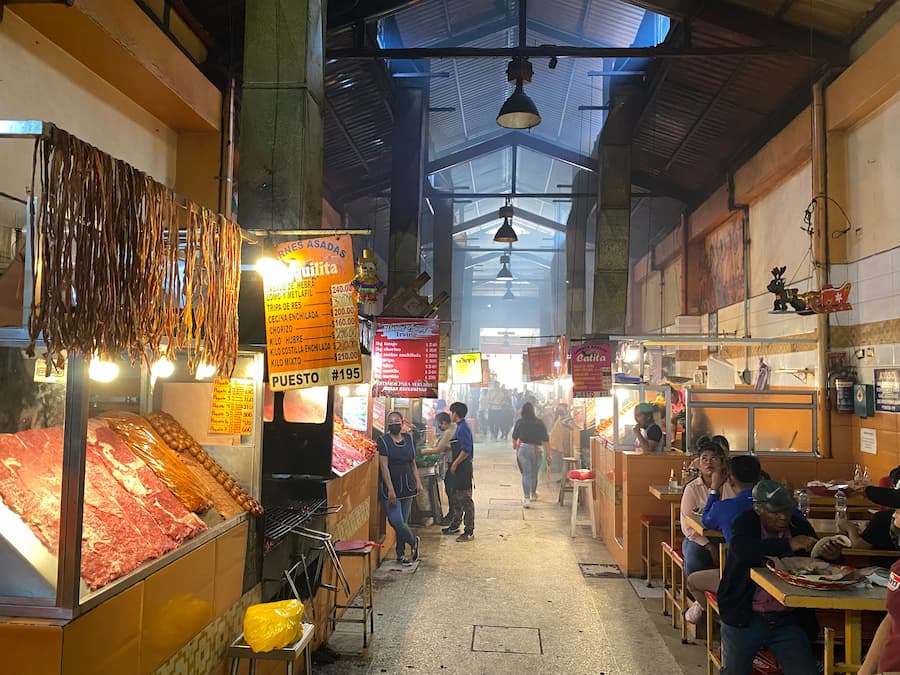
Mercado 20 de Noviembre is famous for a reason — locals eat here, visitors eat here, and the food is genuinely excellent. The atmosphere is loud and busy in the best way, the stalls are packed tight, and the smell of charcoal and chili hits you before you’re even through the door.
The highlight is the Pasillo de Humo — the Smoke Hall. You walk through, choose your meat from the vendors at the entrance (tasajo, chorizo, cecina, or chicken), hand it over, and watch it get grilled in front of you on open charcoal fires. Sit down at one of the shared tables and it arrives with tortillas, grilled onions, salsa, and quesillo. It’s one of the most Oaxacan experiences you can have in the city.
Beyond the Smoke Hall, the market has stalls serving tlayudas, mole negro with chicken and rice, memelas, caldo de pollo, and more or less everything else in the traditional Oaxacan food canon.
Best for: Lunch, first-time visitors, anyone who wants to eat well for under 100 pesos
Location: Just south of the Zócalo on 20 de Noviembre Street (Map)
Tip: Gets busy between 2–4pm. Cash only at most stalls. Go hungry.
👉 Oaxacan Mole Explained: The 7 Moles, Where They Come From, and Why Locals Care
Mercado Benito Juárez — Best for Souvenirs and Oaxacan Pantry Staples
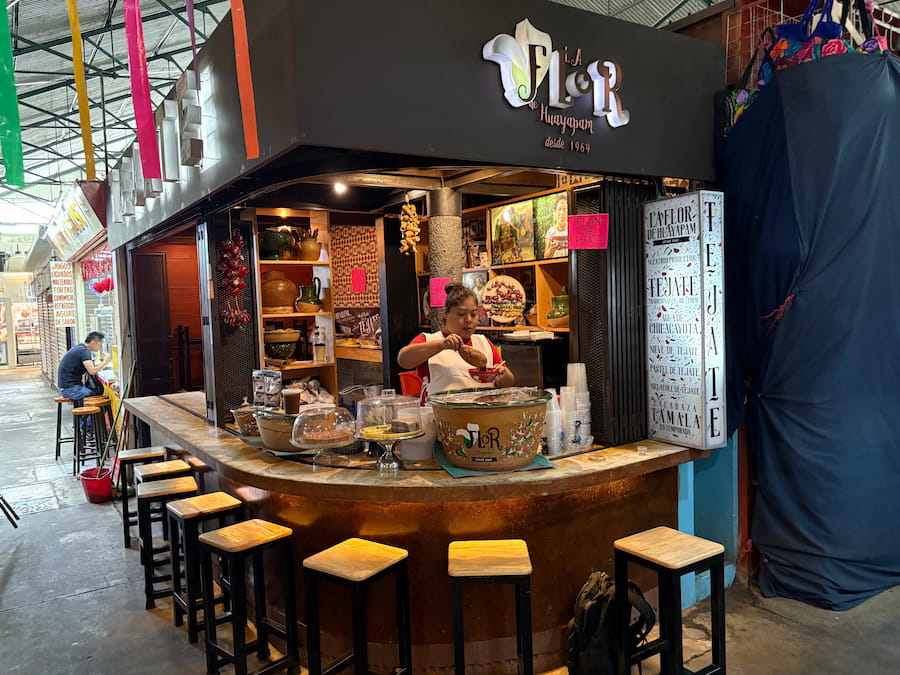
Right next door to 20 de Noviembre — literally a shared wall — Benito Juárez is more about shopping than eating, though there’s food here too.
This is the place to buy mole paste (negro, rojo, coloradito — all available fresh by weight), Oaxacan chocolate, quesillo in large ribbon balls, dried chilies, and mezcal. For souvenirs and gifts, you’ll find textiles, alebrijes, embroidered blouses, leather goods, and handmade jewelry alongside the food stalls.
The quality is generally good, prices are reasonable, and the variety in one place is hard to beat. It’s the most practical market in the city for visitors who want to bring something home.
Best for: Food souvenirs, Oaxacan pantry staples, gifts
Location: Corner of 20 de Noviembre and Miguel Cabrera, directly next to Mercado 20 de Noviembre (Map)
Tip: Prices vary between stalls — walk the whole market before you buy. You’ll often find the same item for less three stalls down.
👉 5 Best Places to Buy Souvenirs in Oaxaca City

Mercado de Artesanías — Best for Handicrafts and Textiles
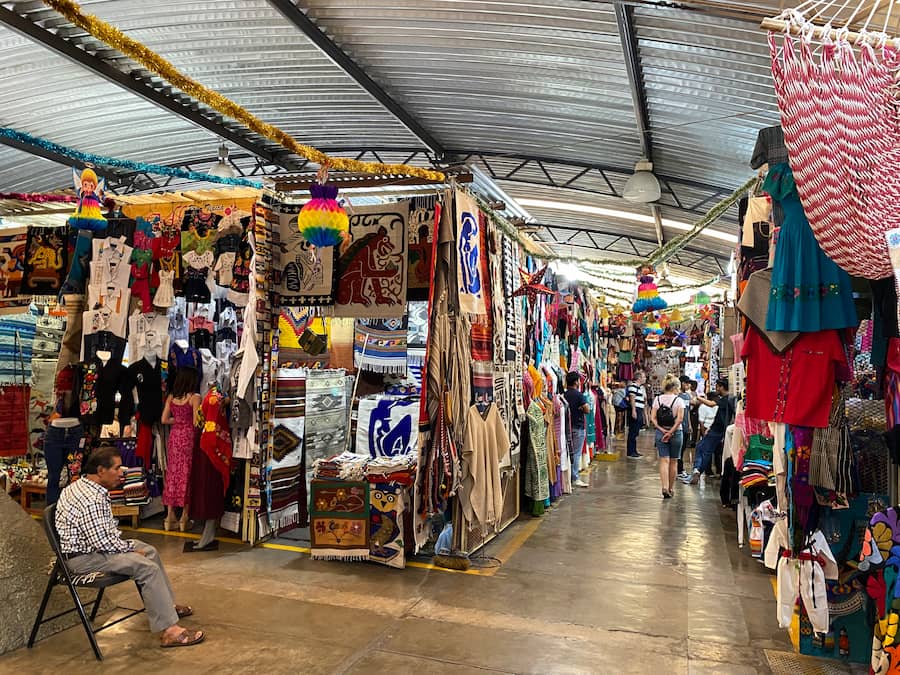
A few blocks southwest of the Zócalo, the Mercado de Artesanías is Oaxaca City’s dedicated handicraft market — all under one roof, all artisan-made, all from across the state’s different craft traditions.
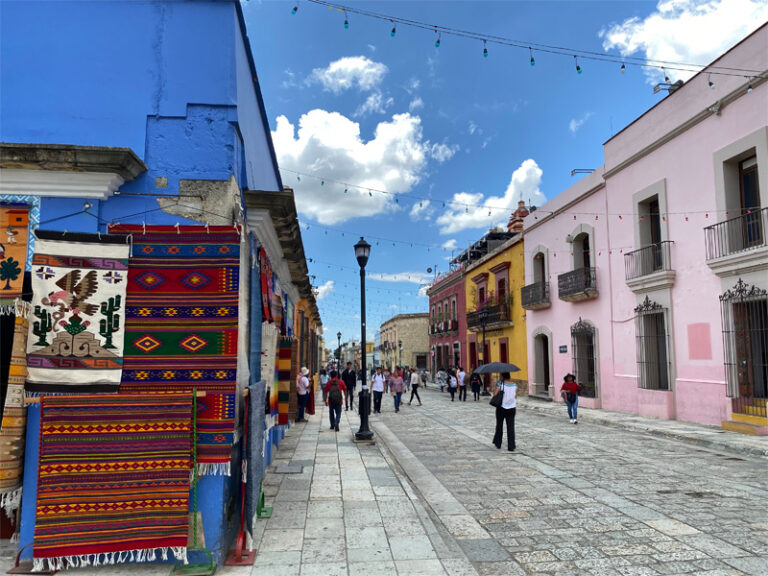
Expect textiles from Teotitlán del Valle and other weaving communities, alebrijes and carved wooden figures from San Martín Tilcajete, pottery and ceramics from the black clay and green glaze villages, rugs, bags, jewelry, and leather goods.
It’s a good place to browse the breadth of Oaxacan craft in one visit, and the vendors are generally patient and knowledgeable about what they’re selling. If you see something you like, ask about where it was made — most will tell you.
Best for: Handicrafts, textiles, understanding Oaxaca’s craft traditions
Location: Calle J.P. García, five blocks southwest of the Zócalo (Map)
👉 Oaxacan Pottery: A Guide to Black Clay, Red Clay, and Where to See It Made
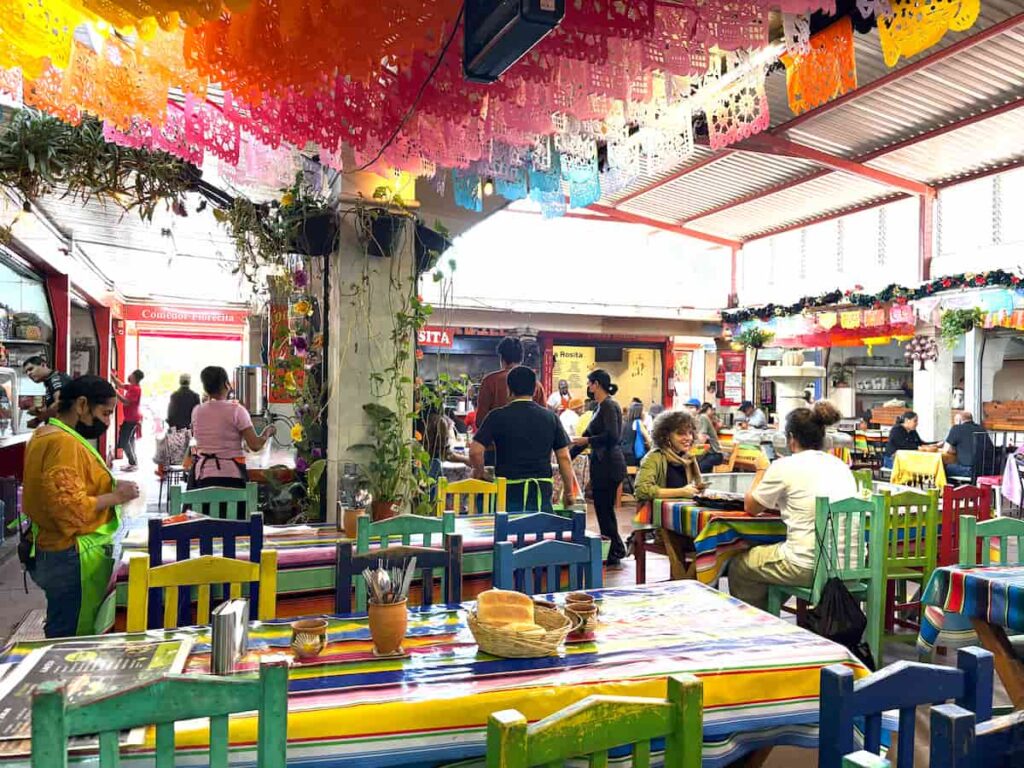
Mercado de la Merced — Best for Local Life and Breakfast
Further east from the tourist center and noticeably less visited, La Merced is where you go when you want a market that feels like it exists entirely for the people who live nearby.
Fresh produce, flowers, cheese, bread, meat — the everyday essentials. But the food stalls here are genuinely excellent and very cheap: tlayudas, enfrijoladas, and tamales eaten at small tables surrounded by locals doing exactly the same thing.
If you’re staying in an apartment and cooking for yourself, this is your market. If you want a proper local breakfast without a tourist in sight, this is also your market.
Best for: Breakfast, groceries, everyday Oaxaca without the crowds
Location: East side of Centro, near Calzada de la República (Map)
👉 Oaxaca City Cooking Classes: Cook Like a Local
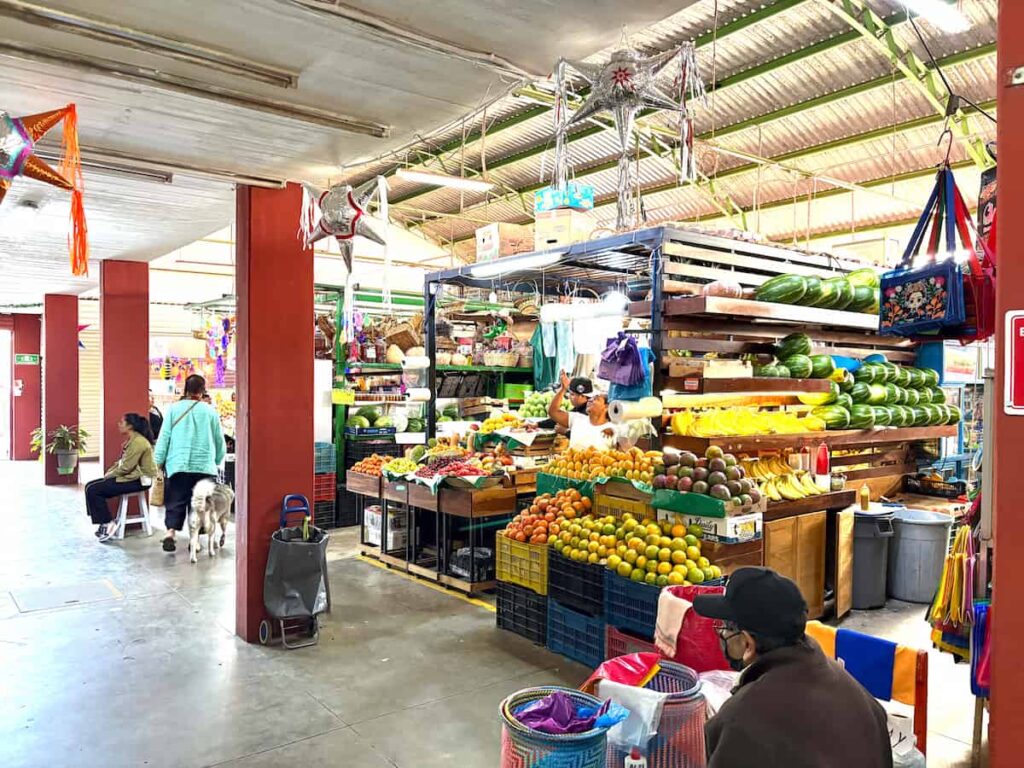
Mercado Sánchez Pascuas — Best for a Relaxed Browse
A neighborhood market on the north side of Centro, close to Santo Domingo church, that moves at a completely different pace from the main markets.
You’ll find cheese, honey, mole, herbs, and flowers, plus a few small food stalls — including some decent vegetarian options, which are harder to come by in the busier markets. It’s a nice alternative on days when the central markets feel overwhelming, and it’s worth combining with a walk around the Santo Domingo area.
Best for: Light breakfast, casual browsing, a quieter market experience
Location: Tinoco y Palacios, north side of Centro (Map)
Top Rated Tours in Oaxaca City
⭐️ 5 Star – Mezcal Journey
⭐️ 4.9 Star – Monte Alban
⭐️ 4.5 Star – Hierve El Agua
Mercado IV Centenario – Best for a Quick Local Glimpse
Small, traditional, and mostly used by people from the surrounding neighborhood. Fruit, tortillas, and daily essentials — not much for souvenirs, but the atmosphere is real and it’s worth a five-minute walk-through if you’re already near the Basílica de la Soledad.
Location: Near the Basílica de la Soledad (Map)
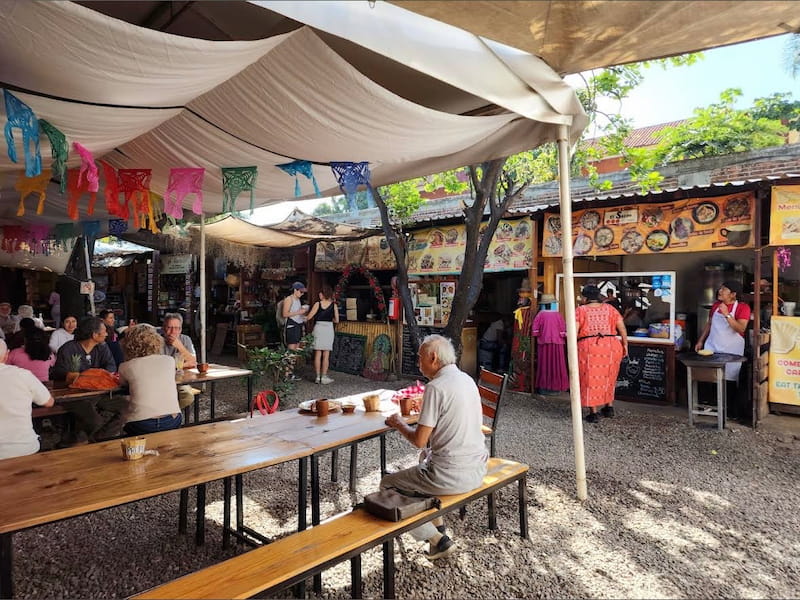
La Cosecha Organic Market — Best for Coffee, Vegan Food, and a Slower Morning
Different in every way from the traditional markets — smaller, quieter, and decidedly more modern. La Cosecha caters to Oaxaca’s expat community and health-conscious visitors: organic produce, smoothies, vegan food, artisan chocolate, and specialty coffee.
It won’t give you the classic Oaxacan market experience, but the quality is high and the atmosphere is genuinely pleasant. Good option for a slow morning or if you need a break from the sensory overload of the bigger markets.
Location: Near Santo Domingo (Map)
The One You Shouldn’t Miss: Mercado de Abastos
Not right in Centro, and not for everyone — but worth knowing about.
Mercado de Abastos is massive. It’s the wholesale and distribution heart of Oaxaca, where vendors from the smaller markets buy their stock. It sprawls across several city blocks on the Periferico and sells everything imaginable: produce, meat, dried chilies, textiles, hardware, household goods, live animals.
It’s chaotic, it’s loud, it’s genuinely not set up for tourists — and that’s exactly why it’s interesting. This is how a Mexican city actually feeds itself.
Go with your bearings, keep your belongings close, and don’t have your phone out while navigating. But if you’re curious about what lies beneath the surface of Oaxaca’s food culture, an hour at Abastos is more illuminating than any food tour.
There is a Oaxaca Central de Abastos Food Tour if you prefer guided tour there.
Location: Periferico (Map)
Weekly Markets Near Oaxaca City
If you’re here for more than a few days, these regional markets are worth building a day around. Each one is completely different from the city markets, and from each other.
Tlacolula — Sunday The one to prioritize if you only do one. About an hour east of Oaxaca City, in the Tlacolula Valley. Famous for barbacoa de borrego cooked overnight in underground pits, excellent bread, grilled meats, and a sprawling tianguis selling food, textiles, produce, and everything else. Combine with Hierve el Agua or Mitla for a full day.
Ocotlán — Friday South of the city, known for embroidery and textiles. Good food market alongside the craft stalls.
Etla — Wednesday North of the city, in the valley where quesillo originated. The cheese selection here is exceptional — also good for tamales, fresh produce, and local ingredients.
Zaachila — Thursday A traditional tianguis experience with a strong local feel. Less visited by tourists, which is part of the appeal.
🛍️ What to Buy at Oaxaca’s Markets
What to Buy at Oaxaca’s Markets
A quick reference for what each type of market does best:
Food to take home: Mole paste (buy it fresh by weight at Benito Juárez), Oaxacan chocolate, dried chilies, quesillo, chapulines, mezcal
Crafts and textiles: Mercado de Artesanías for variety, Teotitlán del Valle if you want to go to the source for rugs
Everyday groceries: La Merced or Sánchez Pascuas
The full Oaxacan food experience: Mercado 20 de Noviembre, no contest
Practical Tips
Bring cash in small bills. Most market stalls are cash only, and vendors often can’t break large notes early in the day.
Go early. Cooler, less crowded, and the food stalls are freshest in the morning. By early afternoon the main markets are at peak capacity.
Ask before taking photos. Most vendors are fine with it, but it’s worth asking — especially at food stalls where people are working.
Try before you buy. Particularly for mole paste, chocolate, and cheese — most vendors will let you taste.
Negotiate respectfully, or not at all. Gentle negotiation is normal for crafts and souvenirs, less so for food. If the price feels wrong, shop around rather than pushing hard on one vendor.