5 Best Places To Buy Souvenirs in Oaxaca City
Oaxaca is one of the best places in Mexico to buy something worth keeping. The craft traditions here — textiles, pottery, carved wood, chocolate, mezcal — are genuinely world-class, and the variety across the city means you don’t have to settle for generic tourist market stuff if you know where to look.
The challenge is that Oaxaca also has plenty of the generic tourist market stuff. Knowing which spots are worth your time — and what to look for when you get there — makes the difference between taking home something meaningful and taking home a keychain.
These are my five picks, covering different budgets, styles, and shopping experiences.
👉 50 Best Things To Do In Oaxaca City
1. Mercado Benito Juárez — Best for One-Stop Souvenir Shopping
Start here. Mercado Benito Juárez is the most practical souvenir market in the city — central, well-stocked, and covering almost everything Oaxaca produces in one building.
You’ll find mole paste sold by weight (negro, coloradito, rojo — scoop it into a bag and take it home), Oaxacan chocolate made with cinnamon and almonds, fresh quesillo, dried chilies, mezcal, textiles, embroidered blouses, alebrijes, leather goods, and the usual smaller souvenirs. It’s a mix of food products and crafts that no other single location matches.
What makes it worth going: The food souvenirs here are genuinely excellent and better priced than dedicated shops. Mole paste and chocolate in particular — these are the edible souvenirs that actually get used when you get home, not left at the back of a cupboard.
What to look for:
- Fresh mole paste by weight — ask to taste before you buy, vendors expect it
- Oaxacan chocolate — look for tablets made with cacao, cinnamon, and sugar, not the processed commercial stuff
- Quesillo — a ball of fresh ribbon cheese travels well for a day or two
- Textiles — browse a few stalls before committing, quality varies noticeably
Price range: Budget to mid-range. Best value in the city for food products.
Location: Corner of 20 de Noviembre and Miguel Cabrera, directly next to Mercado 20 de Noviembre – here.
Tip: Go on a weekday morning when it’s less crowded and the food products are freshest.
👉 Oaxaca City’s Top Markets: Eat, Shop, Vibe
2. Mercado de Artesanías — Best for Traditional Handmade Crafts
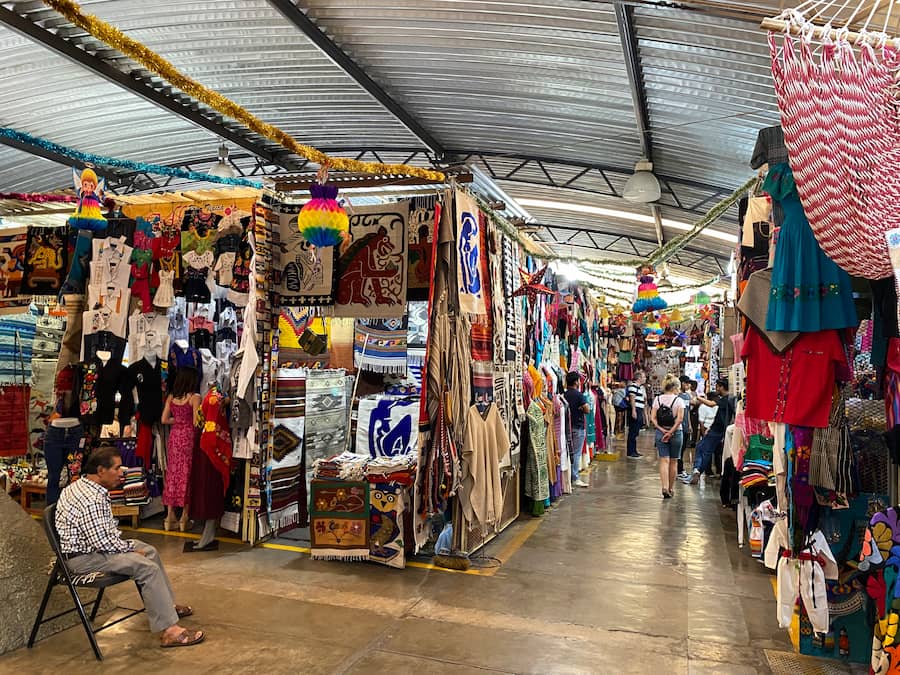
A few blocks southwest of the Zócalo, the Mercado de Artesanías is dedicated entirely to Oaxacan handicrafts. No food stalls, no everyday essentials — just craft goods from across the state under one roof.
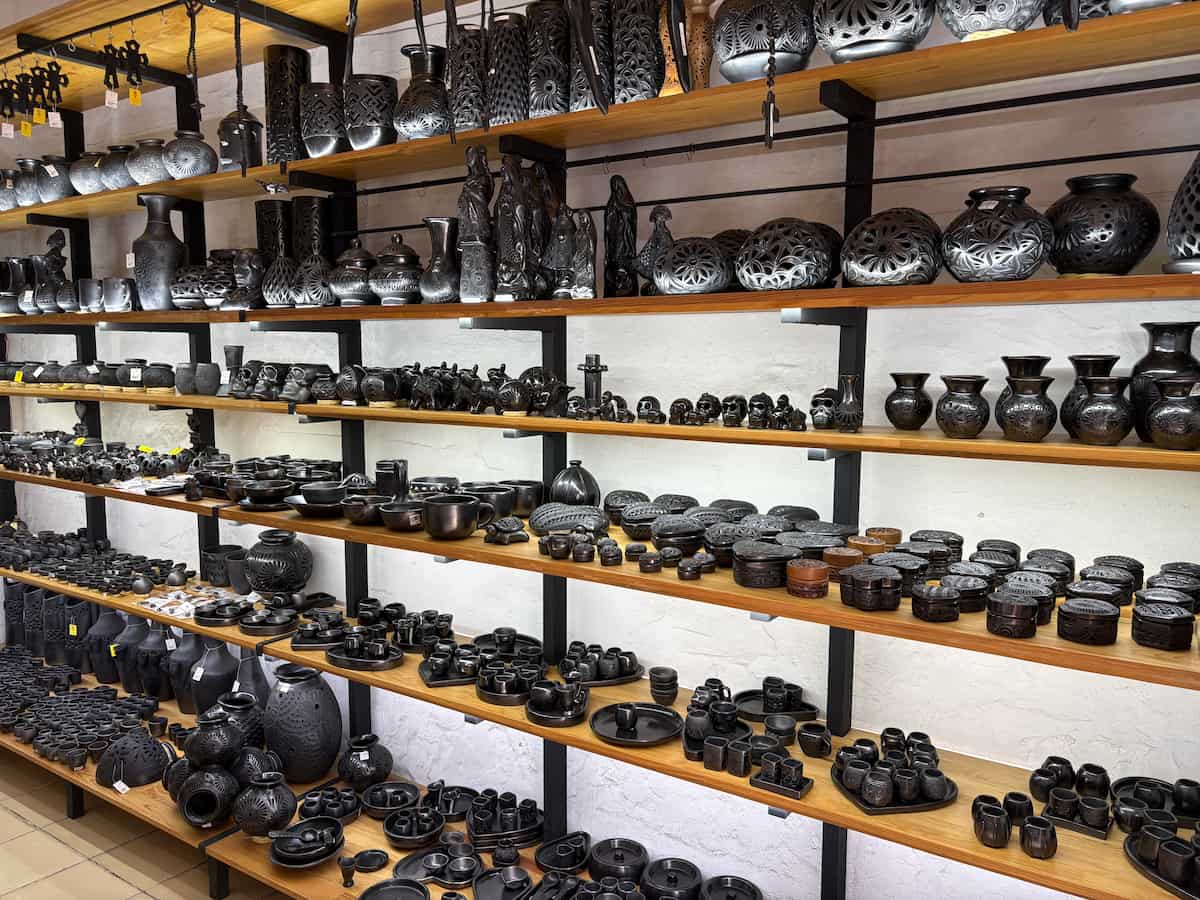
The range is genuinely impressive: alebrijes in every size from tiny to enormous, barro negro pottery from San Bartolo Coyotepec, green-glazed pieces from Atzompa, embroidered huipiles and blouses, woven rugs and bags, jewelry, and painted tin pieces. The concentration of craft traditions in one place makes it useful for anyone who wants to understand the breadth of what Oaxaca produces before deciding what to buy.
What makes it worth going: Better prices than the boutiques on Calle Alcalá for comparable quality. Many vendors source directly from the artisan villages, and some are the artisans themselves.
What to look for:
- Alebrijes — inspect the painting detail closely. Fine lines, intricate patterns, and multiple colours indicate genuine hand work. A blurry painted surface with repeated mechanical patterns suggests mass production.
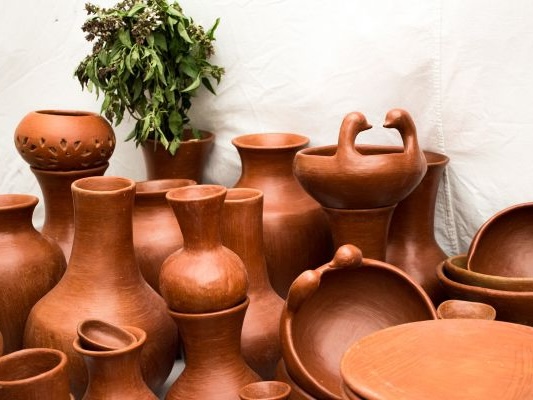
- Barro negro — should feel smooth and evenly polished with a near-metallic sheen. The walls are thin and fragile — handle carefully and pack with serious protection.
- Embroidered textiles — look for hand embroidery rather than machine stitching. Turn the fabric over: hand embroidery has irregular backs, machine embroidery is perfectly consistent on both sides.
Price range: Mid-range. Not the cheapest in the city but fair for genuine craft goods.
Location: Calle J.P. García, five blocks southwest of the Zócalo – here.
👉 Oaxacan Pottery: A Guide to Black Clay, Red Clay, and Where to See It Made
3. La Casa de las Artesanías de Oaxaca — Best for Authentic and Ethically Sourced Crafts
This is the one I send people to when they want quality they can trust without the research.
La Casa de las Artesanías is a cooperative of indigenous member families where every purchase goes directly to the artisan communities who made it. It’s not a shop in the conventional sense — it’s a collective showcasing work from producers across all eight regions of Oaxaca, with clear pricing and no haggling.
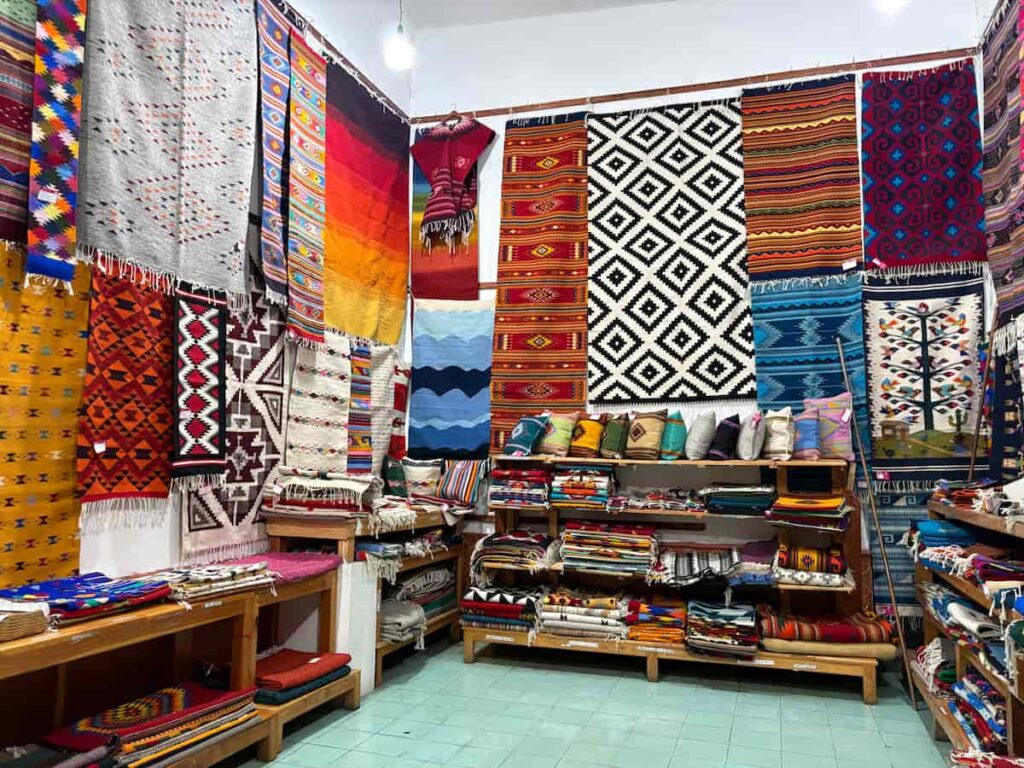
The selection covers the full range of Oaxacan craft: barro negro, green and red clay pottery, textiles from Teotitlán del Valle, alebrijes, jewelry, and embroidered clothing. Everything is labeled with its origin village and technique, which makes it an educational experience as much as a shopping one.
What makes it worth going: Authenticity is guaranteed. You know what you’re buying and exactly where it came from. The prices reflect fair payment to the makers rather than market margins.
What to look for: This is actually the right place to buy the higher-end pieces — a significant barro negro sculpture, a large natural-dye rug, an elaborate alebrije. For these investments, provenance and quality assurance matter, and La Casa provides both.
Price range: Mid to high. Not cheap, but what you’re paying for is real.
Location: Matamoros 105, Centro — a short walk from the Zócalo – here.
👉 Teotitlán del Valle: Oaxaca’s Rug Weaving Village (Complete Visitor Guide)
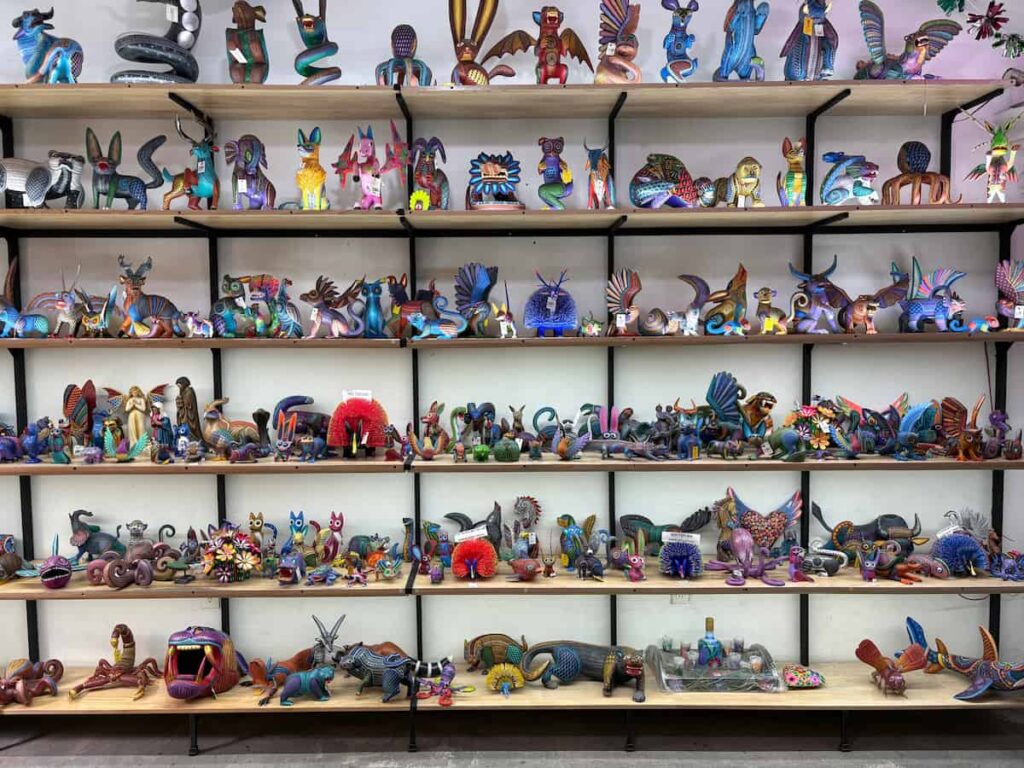
4. Huizache “Pueblos Originarios de Oaxaca” — Best for Browsing Everything in One Place
Huizache sits on the Andador Turístico (Macedonio Alcalá) and has a slightly more curated feel than the markets — better display, more breathing room, and a layout that makes it easy to see everything without the sensory overload of a busy market stall.
The selection mirrors what you’ll find elsewhere — alebrijes, textiles, pottery, mezcal accessories, clothing — but presented in a way that’s particularly good for anyone who finds the busy markets overwhelming, or who wants to browse without a vendor hovering.
What makes it worth going: Convenience and calm. You’re already walking the Andador anyway — Huizache is a natural stop. Good for a second look at anything you saw elsewhere but weren’t sure about, since the quieter atmosphere makes comparison easier.
Price range: Mid-range, similar to the markets.
Location: Macedonio Alcalá (Andador Turístico), Centro – here.
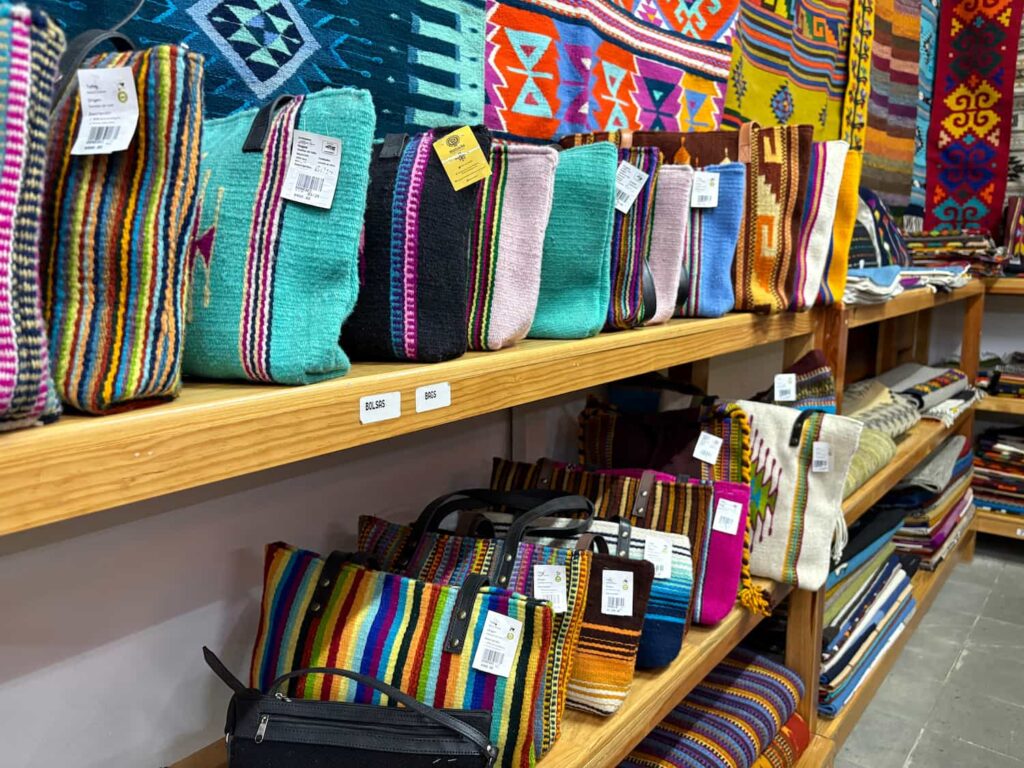
5. Calle Macedonio Alcalá — Best for Higher-End and Unique Pieces
The pedestrian street between the Zócalo and Santo Domingo is lined with independent shops, boutiques, and galleries that offer a different level of Oaxacan shopping — more curated, more expensive, and often featuring pieces you won’t find in the markets.
This is where you’ll find contemporary Oaxacan jewelry, limited-edition prints from local graphic artists, high-end textiles, and the kind of carefully selected craft pieces that would sit comfortably in a design-conscious home. Several galleries here show living Oaxacan artists alongside traditional craft.
What makes it worth going: If you want something genuinely unique — a piece of art, a one-of-a-kind textile, jewelry designed by a local artist — the boutiques on Alcalá are where to look. The market version of the same category won’t match the quality or the story behind it.
Street performers and evening atmosphere: In the evenings the street fills with musicians, vendors, and people — making it an enjoyable browse even if you’re not buying.
Price range: Mid to high. Budget for what you’re here for.
Location: Runs north from the Zócalo to Santo Domingo church.

What to Actually Buy — The Best Oaxacan Souvenirs
Knowing where to go is half the answer. Knowing what’s worth buying is the other half.
Mole paste — the most useful edible souvenir. Buy it fresh by weight at Benito Juárez, pack it in an airtight bag, and you have the base for an authentic Oaxacan meal at home.
Oaxacan chocolate — stone-ground with cinnamon and sometimes almonds or nuts. Different in texture and flavour from European chocolate. Buy it in tablet form for hot chocolate or nibbling. Travels perfectly.
Quesillo — fresh, same-day ribbon cheese. Doesn’t travel long distances but is excellent for the first day or two.
Barro negro pottery — the signature Oaxacan craft. Beautiful, fragile, and worth the packing effort for the right piece.
Textiles from Teotitlán del Valle — natural-dye rugs woven by hand are the premium souvenir from this region. Buy directly from the village for the best price and the full story.
Alebrijes — the painted wooden fantasy creatures. Tiny ones are perfect gifts. Large ones need serious packing but are extraordinary objects.
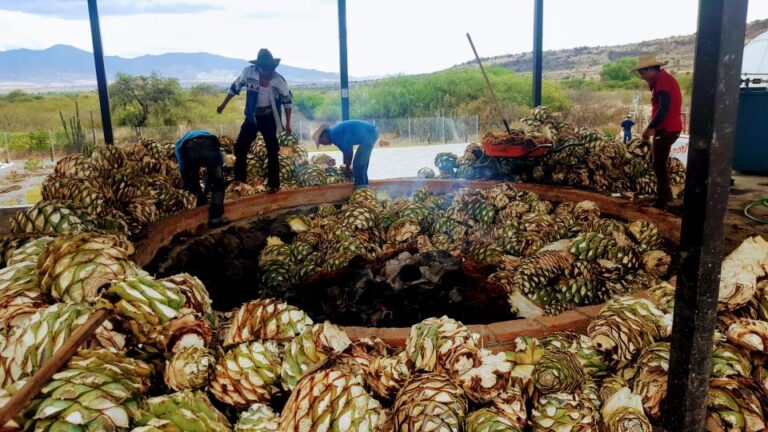
Mezcal — a bottle from a small palenque that never leaves Oaxaca is worth more than any packaged souvenir. Pack it in checked luggage wrapped in clothes, or buy a specialist wine/spirits bag.
Graphic art prints — flat, lightweight, and distinctive. Several studios on Alcalá and in Jalatlaco sell numbered limited-edition prints by local artists for 200–600 MXN.
Packing Fragile Items
Worth saying clearly because barro negro and alebrijes break easily:
- Wrap each piece individually in multiple layers of clothing or bubble wrap
- Pack fragile items in the center of your bag surrounded by soft layers
- For significant pieces, carry them as hand luggage if possible
- For large pieces or shipping, several shops on Alcalá offer a freight service to send items directly home — worth asking about for anything that genuinely can’t survive checked baggage
Tips for Buying Well
Compare before committing. The same alebrije or textile will appear in multiple places at different prices. Walk the whole market before buying the first thing that catches your eye.
Haggle respectfully, if at all. Gentle negotiation on craft items is normal in the markets. La Casa de las Artesanías and the Alcalá boutiques have fixed prices — don’t haggle there. And at any market: the gap between asking price and what you’re offering is often small enough that pushing hard over 50 pesos on a handmade item isn’t worth the dynamic it creates.
Ask where things are from. Authentic pieces can usually tell you their village of origin. A vendor who can’t or won’t say is a reasonable sign that the item was mass-produced somewhere else.
Buy food products last. Mole paste, chocolate, and cheese belong at the end of a shopping day, not the beginning.
Also worth reading: [Oaxaca City’s Top Markets: Eat, Shop, Vibe] and [Oaxacan Pottery: A Guide to Black Clay, Red Clay, and Where to See It Made]