Is Oaxaca City Safe? 10 Years Living Here — 2026 Guide
Yes. Oaxaca City is safe for tourists.
I’ve lived here for more than ten years, and I still walk around the city every day, take taxis, go out at night and travel around Oaxaca with my son.
But “safe” doesn’t mean nothing ever happens.
Oaxaca has petty theft, phone snatching, dodgy taxi pricing and the occasional robbery, just like any city. There are also parts of Oaxaca State I wouldn’t casually travel through without checking the current situation first.
The good news is that most tourists never come close to those areas.
If you’re visiting Oaxaca City, Monte Albán, the Central Valleys or the usual tourist destinations, here’s what I think you actually need to know.
👉 Follow Johnny in Oaxaca on Instagram 😎
👉 10 Best Day Trips from Oaxaca City (With And Without A Tour)
Is Oaxaca Safe Right Now? (2026 Update)
For tourists visiting Oaxaca City, yes.
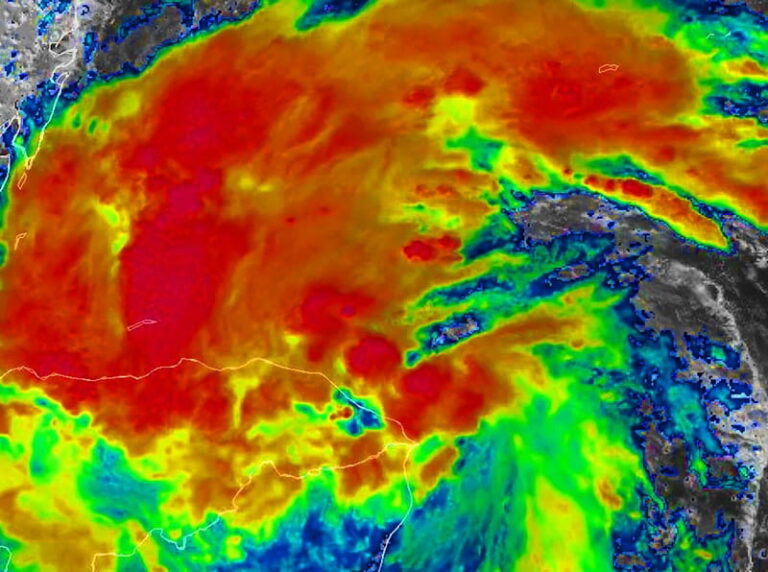
One thing that causes a lot of confusion is that Oaxaca is a huge state. Something happening several hours away can make international news simply because it’s described as happening “in Oaxaca.”
That doesn’t necessarily tell you anything about what is happening in Oaxaca City.
I live here. I go about my normal life. I’m not checking the news every morning to decide whether it’s safe to walk to the shops.
If there is a specific situation that affects tourists or the areas you’re travelling to, that’s different. Check local news and ask your hotel or Airbnb host before heading somewhere unfamiliar.
But I wouldn’t come to Oaxaca City expecting the kind of danger you see in headlines about Mexico.
👉 5 Days in Oaxaca City: A Practical Itinerary for First-Time Visitors
What Are the Actual Risks in Oaxaca?
Forget the dramatic stuff for a minute.
These are the things I’d actually tell a friend to watch out for.
Phone theft
This is probably the most realistic problem for tourists.
Don’t walk around Centro staring at your phone. Don’t leave it sitting on a restaurant table beside the street. And don’t assume that because you’re in a busy tourist area, nobody is watching.
I’ve never had my phone stolen in Oaxaca. I also don’t walk around waving it around like an advertisement.
It’s an easy precaution.
Petty theft and pickpockets
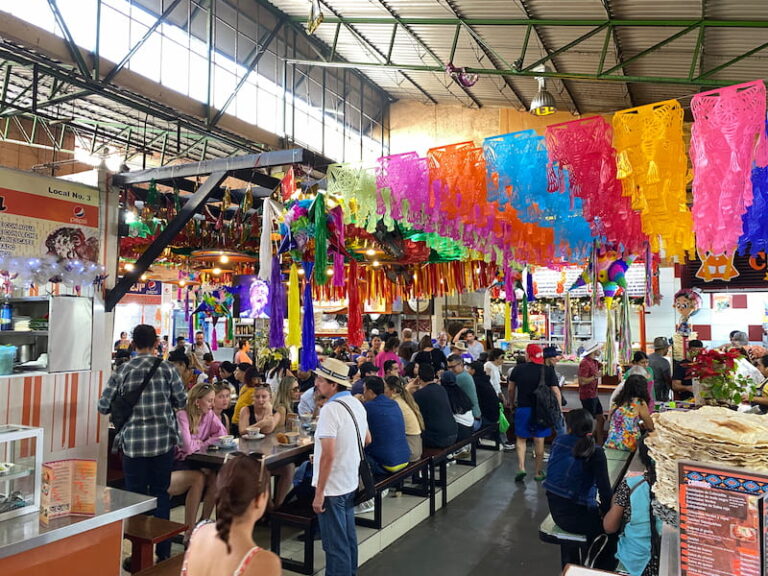
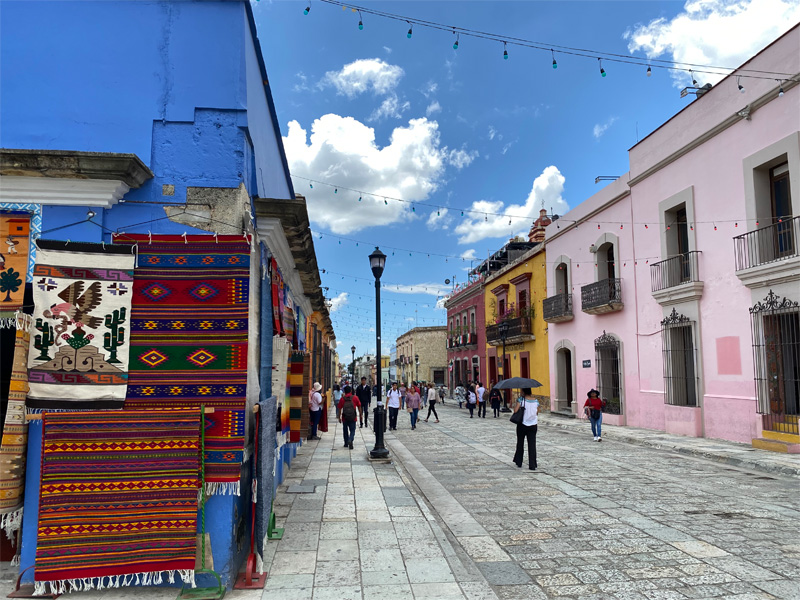
Crowded markets, festivals and packed streets are where I’d be most careful.
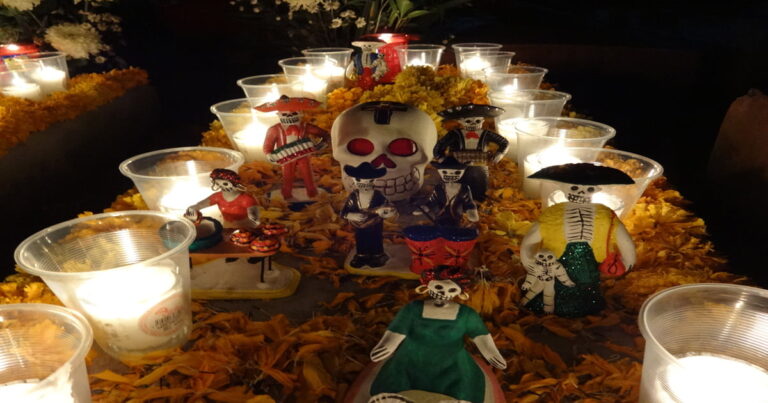
Mercado de Abastos is busy. Guelaguetza and Día de los Muertos make the entire city much busier.
Keep your bag where you can see it, don’t put your phone in your back pocket and don’t carry everything you own around with you. A slim money belt worn under your clothes is a good way to keep your cash, cards and phone secure.
Walking around at night
This is where a little common sense goes a long way.
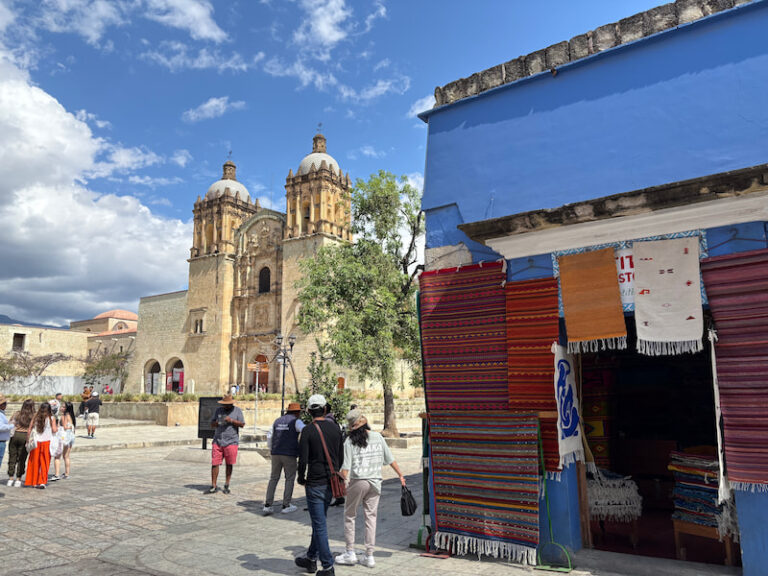
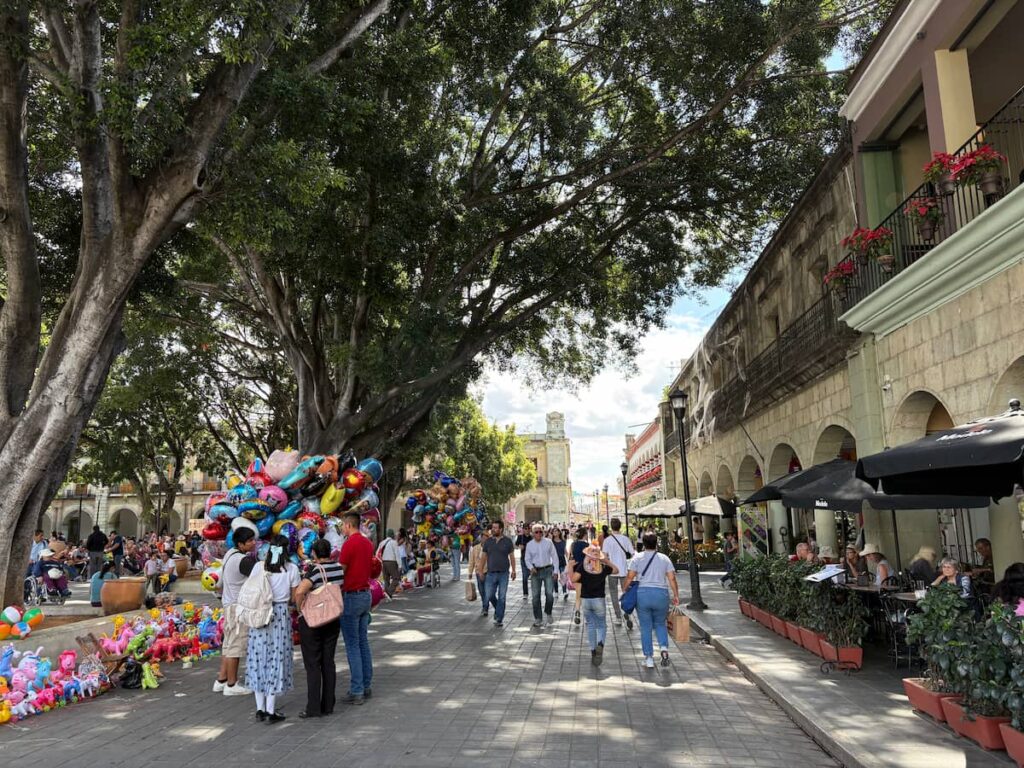
The Zócalo, Andador, Santo Domingo and the busy restaurant areas can be lively late into the evening.
But Oaxaca changes quickly once you leave the busy streets.
I’ve walked around Centro at night plenty of times. I wouldn’t, however, choose to walk 20 minutes through empty streets at midnight just because Google Maps says it’s faster.
Busy street? I’ll walk. Empty street? I’ll take a taxi.
That’s my rule.
Cartels and organized crime
Yes, organized crime exists in Oaxaca State.
No, I don’t spend my life worrying about being caught up in cartel violence in Oaxaca City.
The two things are not the same.
I’ve lived here for over ten years and have never experienced or seen anything involving organized crime. And you likely won’t either.

Is Oaxaca Safe at Night?
Generally, yes — if you stick to the busy areas and use some common sense.
The Zócalo, Andador Turístico, Santo Domingo and parts of Jalatlaco can still be busy at night.
The further you get from those areas, the quieter things become.
And that’s when I’d take a taxi.
A taxi across town isn’t expensive, and for me it’s not worth walking through a deserted neighborhood late at night to save a few pesos.
One other thing: don’t walk around with your phone in your hand at night.
You don’t need to be paranoid. Just don’t make yourself an easy target.
Is Oaxaca Safe for Solo Female Travelers?
Yes.
Oaxaca is a very popular destination for solo female travelers, and there are plenty of women travelling around the city alone.
The same advice applies: stay around busy areas at night, take a taxi if you’re going somewhere quiet, don’t get into unmarked vehicles and keep an eye on your drink when you’re out.
And don’t feel like you need to spend your entire trip looking over your shoulder.
Is Oaxaca safe for families?
Yes. I live here with my son, so this is one I can answer from personal experience.
We spend plenty of time walking around Oaxaca, going to parks, markets, restaurants and attractions.
During the day, I don’t think twice about taking him around the city.
At night, I use the same rule I mentioned above: stick to busy areas and take a taxi when we’re going somewhere further away.
Oaxaca is particularly good for families because so much of the centre is walkable and there are plenty of plazas, parks and pedestrian areas.
👉 10 fun things to do with kids in Oaxaca City.

Safest Neighborhoods in Oaxaca City
Centro Histórico
This is my first choice for most visitors.
You’re close to practically everything, and the central streets remain busy into the evening.
Jalatlaco
Jalatlaco is quieter and more residential, but still close enough to Centro to walk.
It’s one of the most popular areas for visitors and generally feels very comfortable.
Reforma and Noria
These are quieter areas with lots of accommodation and restaurants.
They’re good options if you don’t mind being a little further from the main tourist centre.
Areas I’d avoid for a first-time stay
I wouldn’t choose somewhere around Mercado de Abastos or the far western edges of Centro if you plan on doing a lot of walking at night.
You can visit these areas. I’m talking about where I’d choose to stay.
👉 Check out this guide to Oaxaca City’s best neighborhoods.
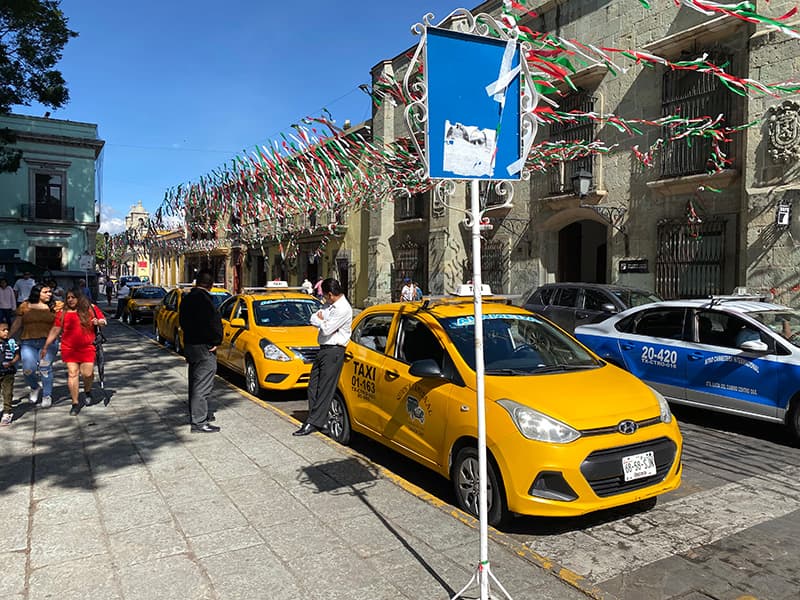
Are taxis safe in Oaxaca?
Yes. I use them all the time.
The main thing tourists need to know is that you should agree on the price before getting in.
Oaxaca taxis generally don’t work like a metered taxi in many other cities. Ask the price, agree on it, then get in.
For an airport pickup or a very early morning trip, I prefer using a driver I’ve already used before. Save their WhatsApp number if you find a good one.
And no, there isn’t Uber in Oaxaca City.
👉 Oaxaca City Taxi Prices : What You Should Really Pay (2026)
👉 There’s No Uber in Oaxaca: Why Not?
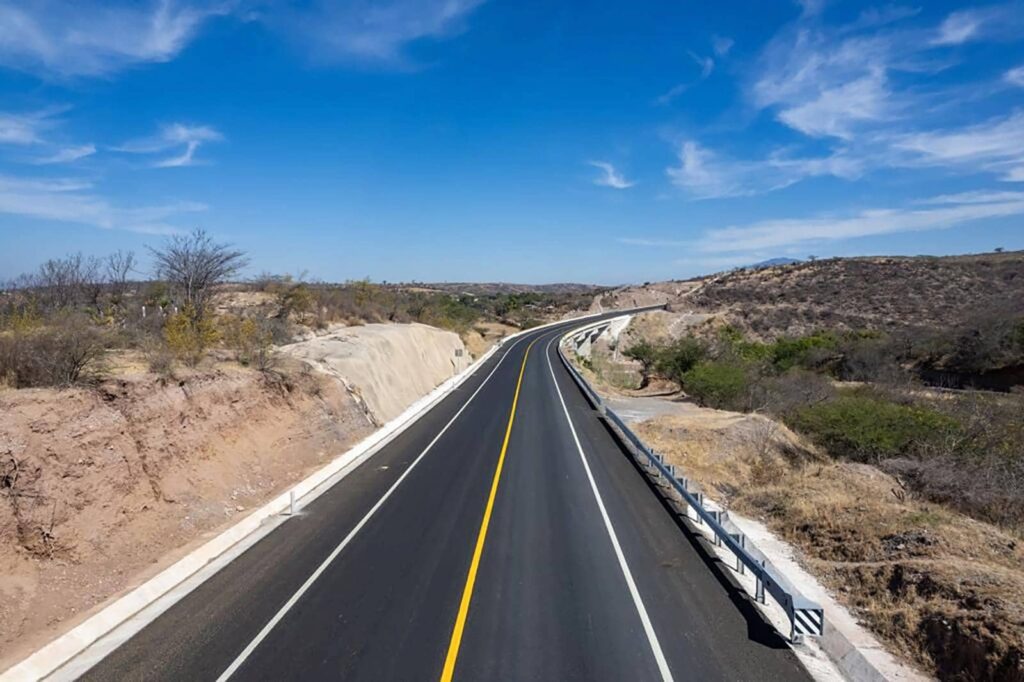
Is it safe to drive in Oaxaca?
This is one area where I’d worry more about the driving than crime.
Mexican driving can take a little getting used to.
Expect topes (speed humps). Expect people to overtake. Expect motorcycles to appear beside you. Expect pedestrians, dogs and other surprises.
The mountain roads are the bigger concern.
Don’t drive unfamiliar mountain roads at night if you can avoid it.
If you’re driving to Puerto Escondido, I’d do the trip during daylight.
Use the toll roads where possible and slow down. You don’t need to drive like a local on your first day here.
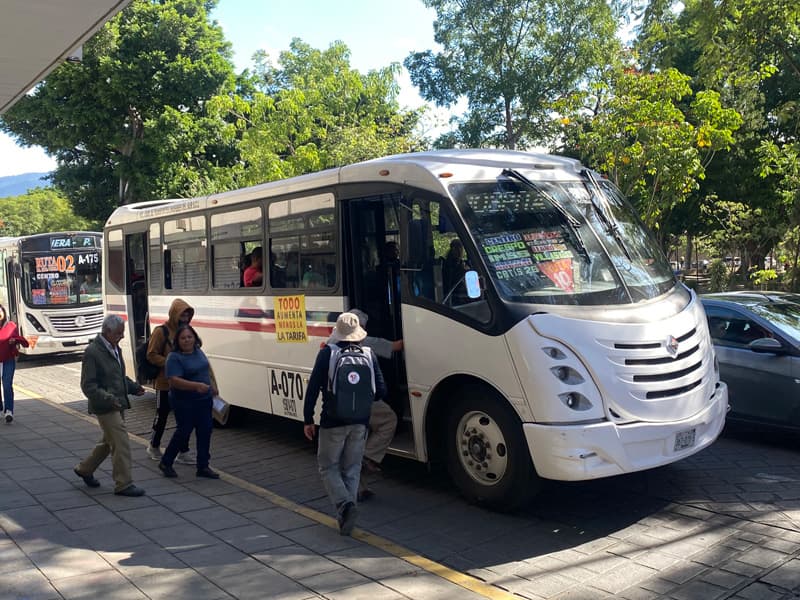
Is public transportation safe in Oaxaca?
Generally, yes.
City buses are cheap and widely used. They can get crowded, so keep your belongings secure.
ADO buses are a good option for longer trips and are used by tourists and locals every day.
Colectivos are also normal and generally fine, particularly during the day.
If you’ve never used Mexican public transport before, it can feel chaotic at first. That’s different from being unsafe.
👉 How to get around Oaxaca City
What About Protests?
You’ll probably see one while you’re here.
Oaxaca has a long history of protests, marches and road blockades.
For tourists, the main problem is usually getting stuck somewhere, not getting attacked.
If you see a protest, don’t walk into the middle of it because you want a photo.
Go around it.
If roads are blocked, change your route or wait it out.
That’s what I do.
Top Rated Tours in Oaxaca City
⭐️ 5 Star – Mezcal Journey
⭐️ 4.9 Star – Monte Alban
⭐️ 4.5 Star – Hierve El Agua
A Few Other Safety Things You Should Know
Tap water
Don’t drink it.
Use bottled or filtered water for drinking.
Altitude
Oaxaca City is around 1,550 metres above sea level.
Some people notice the altitude when they arrive. Take it easy for the first day, especially if you’re drinking.
And remember that mezcal hits harder than you think.
Earthquakes
Oaxaca gets earthquakes.
It’s part of living here.
If you hear an earthquake alarm, follow the instructions where you are and move away from buildings if necessary.
Your hotel or accommodation should be able to tell you what their emergency procedure is.
👉 Earthquakes are a part of life in Oaxaca: Fact!
Dengue
Dengue is more of a concern during the rainy season, particularly in warmer parts of Oaxaca.
Use mosquito repellent, especially around dawn and dusk.
Beaches
If you’re heading to the coast, pay attention to the ocean.
Rip currents are a much more realistic danger than many tourists realise.
Don’t assume a beach is safe because other people are swimming. Follow local warnings and be careful on beaches without lifeguards.
My 10 Simple Safety Rules for Oaxaca
If you want the whole article condensed into ten things, here they are:
- Keep your phone out of sight when you’re walking.
- Take a taxi if you’re walking through deserted streets late at night.
- Agree on the taxi fare before getting in.
- Keep your bag in front of you in crowded places.
- Don’t carry all your cash and cards with you.
- Use ATMs during the day where possible.
- Don’t get so drunk that you lose awareness of what’s happening around you.
- Don’t leave your drink unattended.
- Be careful on the roads, especially at night.
- If something feels wrong, leave.
👉 Cash or Card in Oaxaca? What Actually Works
So, Is Oaxaca Safe?
Yes.
I’ve lived here for more than ten years. I walk around the city, take taxis, go out at night and travel around Oaxaca with my son.
I don’t feel like I’m taking my life into my hands every time I leave the house.
But I also don’t do stupid things.
I put my phone away. I take a taxi when the streets are empty. I watch my belongings in crowded places. I don’t drive mountain roads at night. And I pay attention to what’s happening around me.
That’s really the secret to Oaxaca.
Come here. Enjoy yourself. Just don’t switch your brain off because you’re on holiday.
Check out some Travel Insurance options here.