Earthquakes are a part of life in Oaxaca: Fact!
Most visitors to Oaxaca know about the food, the mezcal, the ruins, and the festivals.
Fewer know that Oaxaca is one of the most seismically active places in Mexico — and that on any given day, the ground beneath the city might move.
I’ve been here since 2014. I’ve felt dozens of earthquakes, including the 2017 earthquake that remains one of the most powerful ever recorded in Mexican history. Most tremors you feel are minor and over in seconds. But some are not — and the difference between being prepared and being unprepared in a major earthquake is significant.
This isn’t meant to alarm you. Oaxacans live with seismic activity as an ordinary part of life. But if you’re visiting or living here, this is information worth having before you need it.
👉 50 Best things To Do in Oaxaca City: Your Ultimate Guide

The Most Important Thing First: Download SkyAlert Now
Before you read anything else — download the SkyAlert app on your phone.
It connects to Mexico’s national earthquake early warning system and sends real-time alerts directly to your device before shaking reaches you. It could give you the seconds you need to act. It’s free. There’s no reason not to have it.
Download SkyAlert: Available on iOS and Android — search “SkyAlert” in your app store.
A second option worth having as a backup: the Earthquake Network app, which uses your phone’s sensors to detect shaking and reports earthquakes crowdsourced from other users in real time.
Why Oaxaca Has So Many Earthquakes
The geology is the reason, and it’s worth understanding.
Oaxaca sits at the convergence of three major tectonic plates: the Cocos Plate, the North American Plate, and the Caribbean Plate. The Cocos Plate is constantly pushing — subducting — beneath the North American Plate in a process called subduction. That grinding, pressurized movement underground is what generates the seismic activity.
This process doesn’t happen smoothly. Plates lock together as friction holds them in place, pressure builds over years or decades, and then releases suddenly — producing an earthquake. The depth of the focus, how much pressure was stored, and the local geology all determine how strong and destructive that release is.
In the past ten years alone, more than 12,400 earthquakes of magnitude 4.0 or above have occurred within 300km of Oaxaca — an average of over 100 per month. The vast majority are not felt. But the frequency tells you something important about the ongoing tectonic stress beneath this region.
The running dark joke in Oaxaca is that the worst earthquakes seem to happen in September. The 2017 earthquake hit on September 7th. The 2020 earthquake (7.4 magnitude) hit on June 23rd — the anniversary of the 1999 earthquake that damaged the city. There may or may not be statistical basis for the September pattern, but locals treat it as more than coincidence.
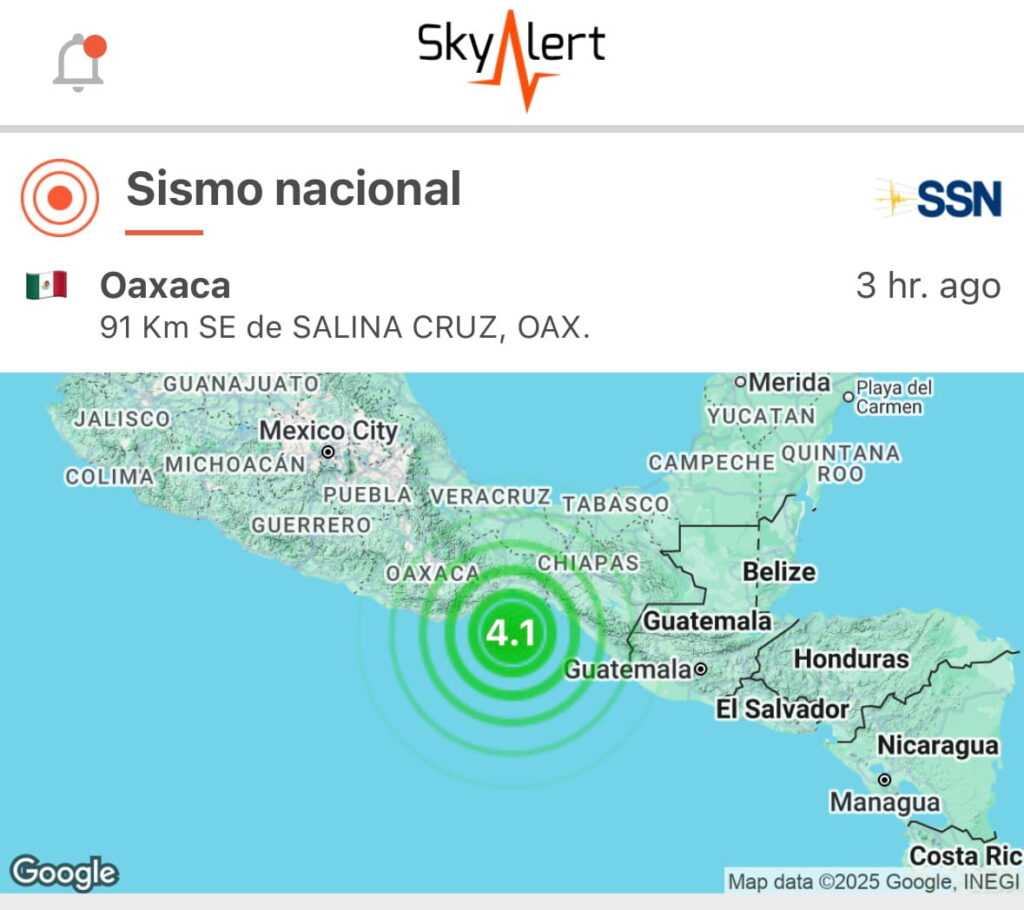
The Earthquake Early Warning System — SASMEX
Mexico has one of the world’s most advanced earthquake early warning systems: SASMEX (Sistema de Alerta Sísmica Mexicano).
It works by detecting seismic waves at sensor stations closer to the earthquake’s epicentre and transmitting alerts faster than the shaking can travel to populated areas. The physics: seismic waves travel at a limited speed, and because many Oaxacan earthquakes originate offshore or in the subduction zone southwest of the coast, sensors there can detect movement before it reaches the city.
What SASMEX gives you: Typically 20–60 seconds of warning before strong shaking arrives in Oaxaca City. For earthquakes closer to the city, the warning time is shorter. For distant offshore events, it can be longer. Even 20 seconds is meaningful — it’s enough to get outside.
What activates it: The alarm triggers for earthquakes exceeding approximately 5.5 magnitude that are expected to cause felt shaking in populated areas. Smaller tremors may not activate the alarm but can still be felt.
What the alarm sounds like: A distinctive electronic siren — not a standard alert tone. You need to know this sound before you hear it for real. Listen to it here now on YouTube if you don’t know it. Hearing an unfamiliar alarm during an earthquake and not knowing what it means costs you the seconds it just gave you.
The alarm broadcasts through speakers throughout Oaxaca City, through the SkyAlert app, and through emergency broadcasting systems. When you hear it, you act immediately.
What to Do When You Feel an Earthquake
Here’s the honest version — what people in Oaxaca actually do, alongside the official guidance:
If you’re inside a building:
The official guidance is Drop, Cover, and Hold On — get under a sturdy table or desk, protect your head and neck, and hold on until shaking stops.
The Oaxaca reality: Most experienced residents of Oaxaca try to get outside quickly if they can do so before shaking becomes violent. Older colonial buildings in Centro — beautiful as they are — were not built to modern seismic standards. They can shed cornices, balconies, and wall sections during earthquakes. Getting into open space away from buildings is the better outcome when timing allows it.
The decision point: If the alarm gives you warning before shaking starts, move outside immediately. If shaking has already started and is violent, don’t try to run — Drop, Cover, Hold On. Moving through a shaking building is more dangerous than staying put.
If you’re outside:
Move away from buildings, walls, power lines, and large trees. The danger outside is falling masonry and infrastructure, not the ground itself. Open space — a park, a wide street, a plaza — is where you want to be.
If you’re in a car:
Pull over away from overpasses, bridges, and buildings. Stop, turn on your hazard lights, and wait for shaking to stop.
After shaking stops:
- Don’t re-enter damaged buildings
- Expect aftershocks — sometimes within minutes of the main event
- Check for gas leaks (smell, listen) — if suspected, leave the building and don’t use electrical switches
- Stay away from damaged structures — aftershocks can bring down walls that survived the main quake
- Keep roads clear for emergency vehicles
- Check on neighbors, particularly elderly people
The Magnitude Scale — What the Numbers Mean
When a magnitude is reported, here’s what it means in practice for Oaxaca:
| Magnitude | What you feel |
|---|---|
| Under 3.0 | Not typically felt |
| 3.0–4.0 | Light shaking, like a truck passing — may rattle windows |
| 4.0–5.0 | Clearly felt, some objects move. No alarm on minor end |
| 5.0–6.0 | Strong shaking, SASMEX activates. Minor damage to weak structures |
| 6.0–7.0 | Significant shaking, possible structural damage |
| 7.0+ | Major event. Serious structural damage possible. Significant alert zone |
| 8.0+ | Catastrophic. The 2017 earthquake was 8.2 |
Depth matters as much as magnitude. A shallow earthquake (under 30km) is felt much more intensely at the surface than a deeper one of the same magnitude. The February 2026 magnitude 5.7 earthquake near Puerto Escondido had a shallow depth of 18.8km — causing it to be felt strongly over a wide area despite not being an especially large event.
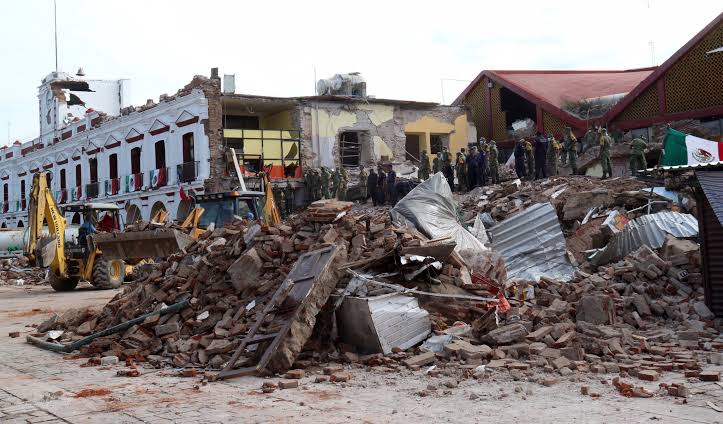
Significant Earthquakes in Oaxaca’s Recent History
September 7, 2017 — Magnitude 8.2
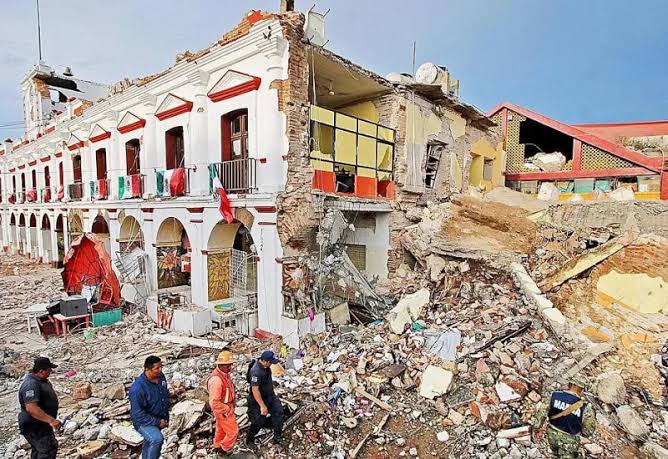
The largest earthquake to hit Mexico in a century. The epicentre was near Pijijiapan, Chiapas, but the destruction in Oaxaca’s Isthmus of Tehuantepec region — particularly Juchitán — was catastrophic. Hundreds of homes were flattened. Many people died.
I was in Oaxaca City at 11:49pm when it hit. The house shook violently for what felt like a full minute. Things fell off shelves, crockery broke, and the noise of the building moving was something I hadn’t experienced before. That earthquake changed how seriously I take seismic preparation.
September 19, 2017 — Magnitude 7.1
Twelve days after the 8.2 earthquake, a separate 7.1 earthquake struck central Mexico, primarily affecting Mexico City. The date — September 19 — is the same as the devastating 1985 earthquake that killed thousands. Oaxaca felt it.
June 23, 2020 — Magnitude 7.4
A strong earthquake centered near Santa María Zapotitlán on the Oaxacan coast. Significant damage in coastal communities. Felt strongly throughout the state.
October 6, 2023 — Magnitude 6.0
Near Matías Romero in the Isthmus region. A reminder that the post-2017 rebuilding didn’t end the seismic risk.
February 2026 — Magnitude 5.7
A shallow 5.7 earthquake near San Pedro Pochutla (coastal Oaxaca) felt over a wide region — a recent reminder that significant seismic events continue regularly.
Earthquake Preparedness for Residents and Longer Stays
If you’re in Oaxaca for weeks or months, preparation matters more:
Know your building. Older colonial buildings in Centro are the most earthquake-vulnerable — the architecture is beautiful but not built to modern seismic codes. Newer buildings generally perform better in earthquakes. Ask your landlord about the building’s construction and whether there have been significant cracks after previous earthquakes.
Identify your nearest open space. Know which direction gets you out of the building and into open ground fastest.
Have a go-bag. If you’re staying long term: a small bag with water, basic first aid, copies of important documents, cash, a torch, and a phone charger. Not paranoia — just the standard preparation that Oaxacans keep in earthquake-prone neighborhoods.
Schools and workplaces in Oaxaca hold annual earthquake drills — usually in September — and the culture of preparation is genuine. If you work or study here, participate.
Check for local Civil Protection resources: Protección Civil Oaxaca issues preparedness guidance and operates emergency response. Know the emergency number: 911 in Mexico.

The September Pattern
Oaxacans genuinely talk about September as earthquake month, and the data gives it some weight. The three most significant earthquakes affecting Oaxaca in recent decades — 1985 (Mexico City, felt here), 1999 (Oaxaca City), and the 2017 double event — all struck in September. The 2020 earthquake was in June.
The geological reason, if any exists, is debated. Some researchers point to seasonal pressure changes from the rainy season affecting surface loading. Others say it’s coincidence reinforced by memory bias.
Either way, being more alert through September is sensible.

The Bolillo Para el Susto
Anyone who lives in Oaxaca or anywhere in Mexico knows this phrase.
After an earthquake, phones light up with memes and messages saying “Te mando un bolillo para el susto” — “I’m sending you a bread roll for the fright.” The idea comes from a Mexican folk belief that eating carbohydrates helps calm anxiety and shock. It became the standard earthquake-aftermath meme.
It’s a small thing, but it captures something real about how Mexicans process these events — with humour, community, and a bread roll.
Quick Reference — What to Do
When the alarm sounds: → If inside and can exit safely: get outside immediately to open space → If shaking has already started: Drop, Cover, Hold On → Away from windows, exterior walls, heavy objects
After shaking stops: → Don’t re-enter damaged buildings → Expect aftershocks → Check for gas leaks → Stay off roads to keep them clear for emergency services
Apps to have: → SkyAlert (primary — connects to SASMEX) → Earthquake Network (backup)
FAQ
Are earthquakes common in Oaxaca? Yes — over 12,400 earthquakes of magnitude 4.0 or above have occurred within 300km of Oaxaca in the past decade. Most are not felt. A few each year are strong enough to cause concern.
Is it safe to visit Oaxaca given the earthquake risk? Yes. Millions of people visit without incident. The earthquake risk is real but manageable with basic preparation — primarily downloading the SkyAlert app and knowing what to do if the alarm sounds.
What was the biggest earthquake in Oaxaca? The September 7, 2017 earthquake registered 8.2 — the largest to hit Mexico in a century.
How much warning does SASMEX give? Typically 20–60 seconds before strong shaking arrives, depending on the earthquake’s distance from the city.
What should I do if I’m at Monte Albán or on a day trip when an earthquake hits? Move away from archaeological structures and walls. Get to open ground. Wait for shaking to stop before attempting to move.
Is the coast more at risk than Oaxaca City? Different risks. The coast faces more direct seismic intensity from offshore subduction zone earthquakes. Oaxaca City is inland and at altitude, but still experiences strong shaking from significant events.
Stay safe and Happy Travels ✌️
Also worth reading: [Is Oaxaca Safe? Honest 2026 Guide] and [2026 Hurricane Season in Oaxaca: What to Expect]