Day of the Dead in Oaxaca: Dates, Cemeteries & Parades 2026
Parties in the cemetery. Brass bands playing until sunrise. Families gathered around candlelit graves, eating, drinking, and laughing together.
If that sounds unusual, it’s because Day of the Dead in Oaxaca is unlike anything most visitors have ever experienced. I still find it one of the most moving and genuinely joyful things I witness each year.
This is not Mexico’s version of Halloween. It’s something older, deeper, and far more human than that. And Oaxaca is widely considered the best place in Mexico to experience it.
Here’s everything you need to know.
👉 Book your Day of the Dead Tour 2026
Quick Guide: Day of the Dead in Oaxaca 2026
Dates: October 31 to November 2 (celebrations start building about a week earlier)
Best cemetery: Xoxocotlán, night of October 31
Best parade: Centro Histórico, October 31
Wildest night: San Agustín Etla Muerteada, night of November 1 (transport is tricky)
How long to stay: 3 nights minimum, 4–5 is more comfortable
Haven’t booked a place to stay yet? Jump to Accommodation below.
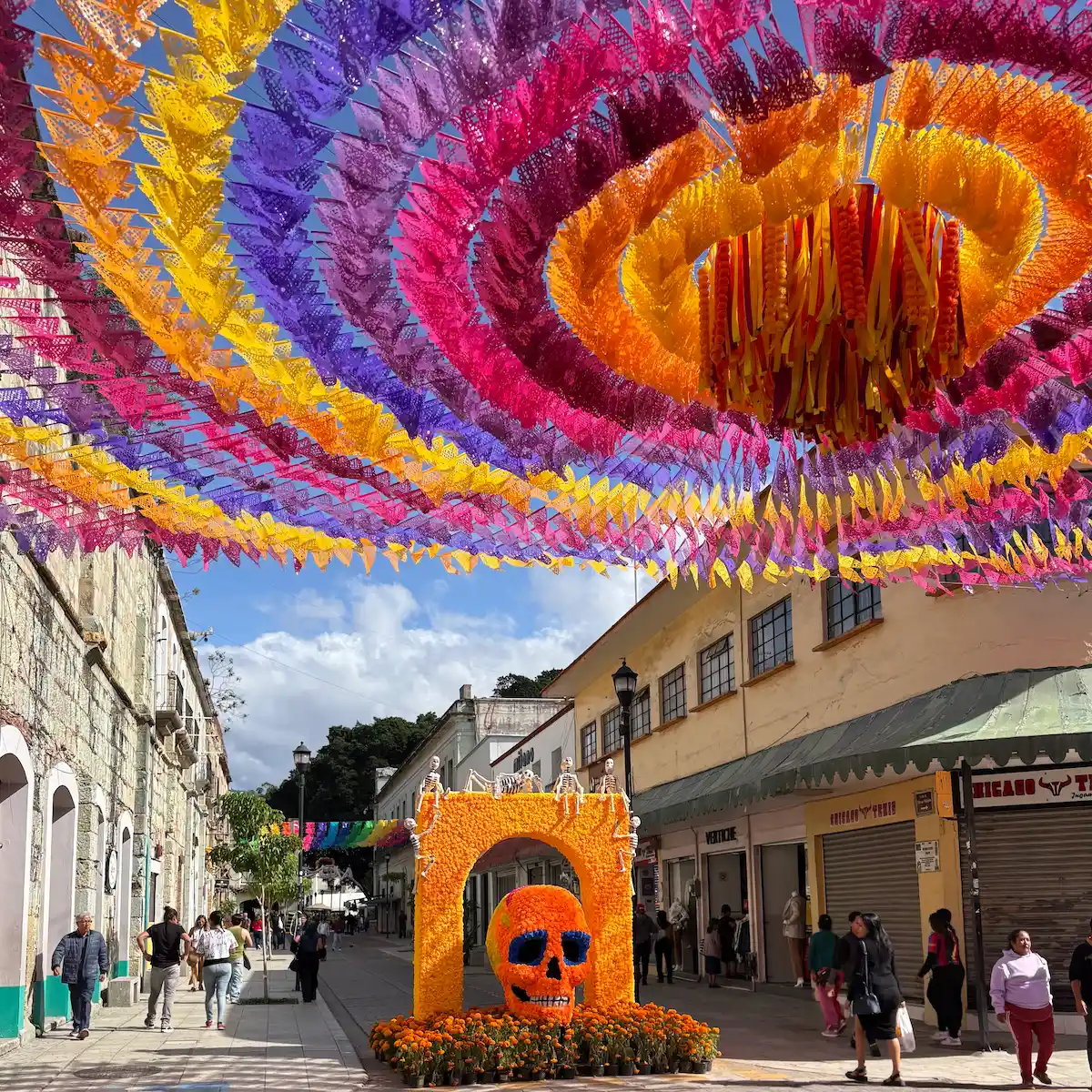
When is the Day of the Dead in Oaxaca 2026?
The official dates are October 31 to November 2, but in Oaxaca the celebrations start building about a week earlier and the energy doesn’t fully fade until November 3 or 4.
Saturday, October 31: Centro’s main parade, plus the Xoxocotlán cemetery vigil that evening.
Sunday, November 1: Jalatlaco comparsa and the San Agustín Etla Muerteada.
Monday, November 2: Adults remembrance. Altar competition at the Zócalo and the vigil at San Felipe del Agua.
The night of November 1 into November 2 is the most significant, when families hold all-night vigils in village cemeteries. Xoxocotlán on October 31 is the biggest vigil for visitors.
👉 Day of the Dead Oaxaca City: Full Schedule of Events and Parades 2026
The Traditions — What You’ll See and What They Mean
Understanding what you’re looking at makes the experience far more meaningful.
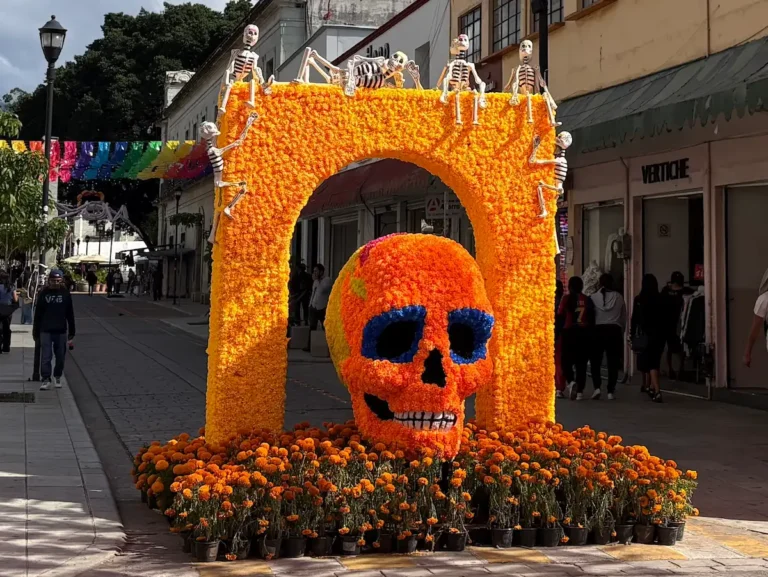
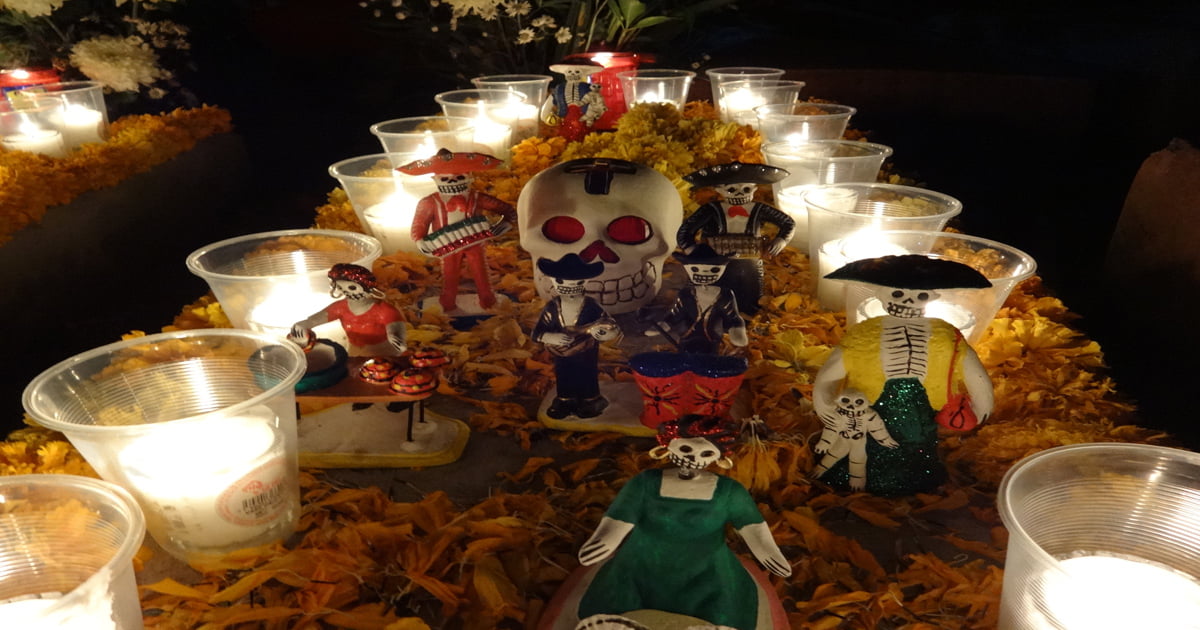
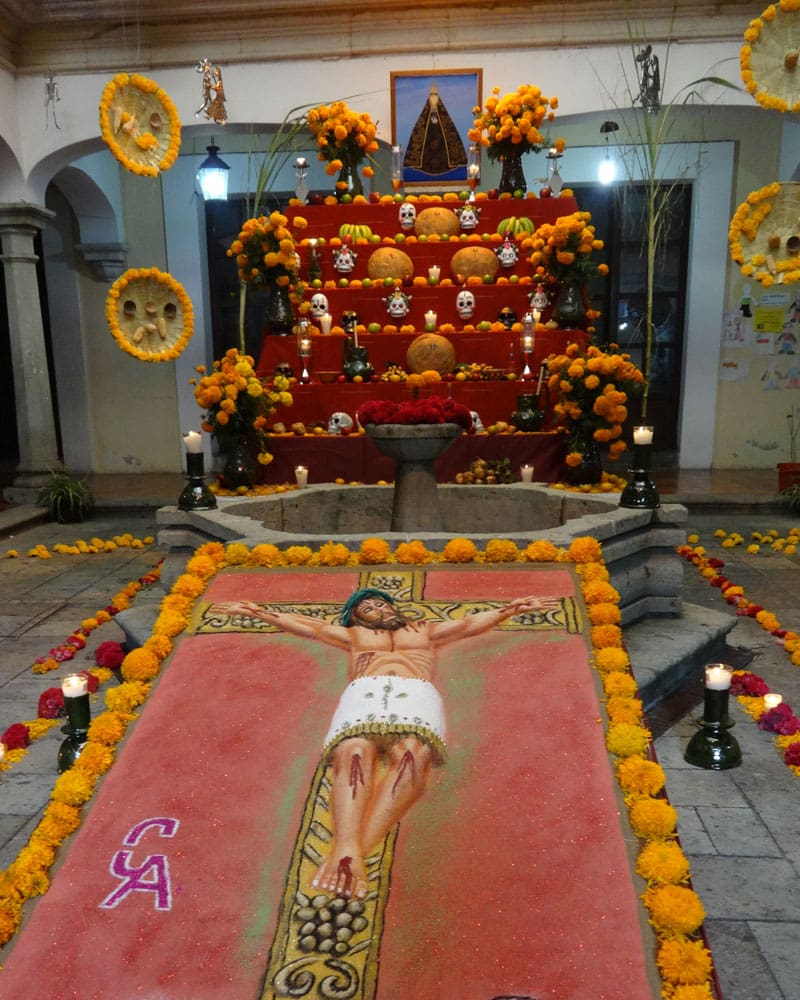
Ofrendas (Altars): The altar is the heart of Día de los Muertos. Families build them at home, in businesses, schools, and cemeteries, with photos of the deceased, candles to light the way home, and their favorite foods and drinks. Orange cempasúchil (marigolds) create a scent trail guiding the spirits back, and the white smoke of copal resin cleanses the space.
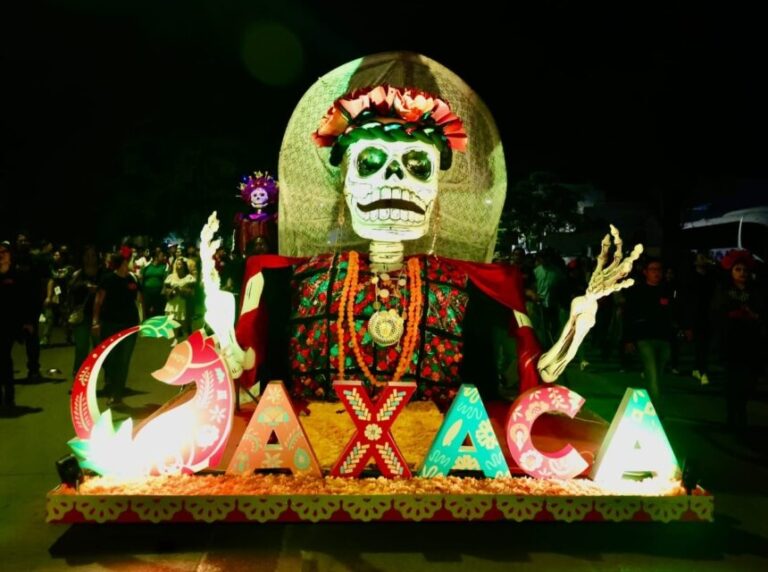
Comparsas: Parades of people dressed as catrinas, in elaborate costumes, or as their departed loved ones, moving through the streets with brass bands at full volume. Spontaneous, joyful, and infectious. If you hear a brass band and fireworks, follow the sound.
Face Painting: Catrina face painting isn’t a pre-Hispanic tradition, but it’s now part of the festival, and visitors are welcome to join in.
Top Rated Tours in Oaxaca City
⭐️ 5 Star – Mezcal Journey
⭐️ 4.9 Star – Monte Alban
⭐️ 4.5 Star – Hierve El Agua
The Best Cemeteries to Visit
This is what most visitors come for — and it genuinely delivers.
Xoxocotlán — The Essential Cemetery (October 31)
If you only visit one cemetery during Day of the Dead in Oaxaca, make it Xoxocotlán. Full stop.
The cemetery is in Santa Cruz Xoxocotlán, just 4km from the city center, and it’s the largest and most famous in the region. There are two cemeteries a couple of blocks apart. You want the larger, newer one (the panteón nuevo), where most of the activity is. Located here – Panteón Mictlancíhuatl.
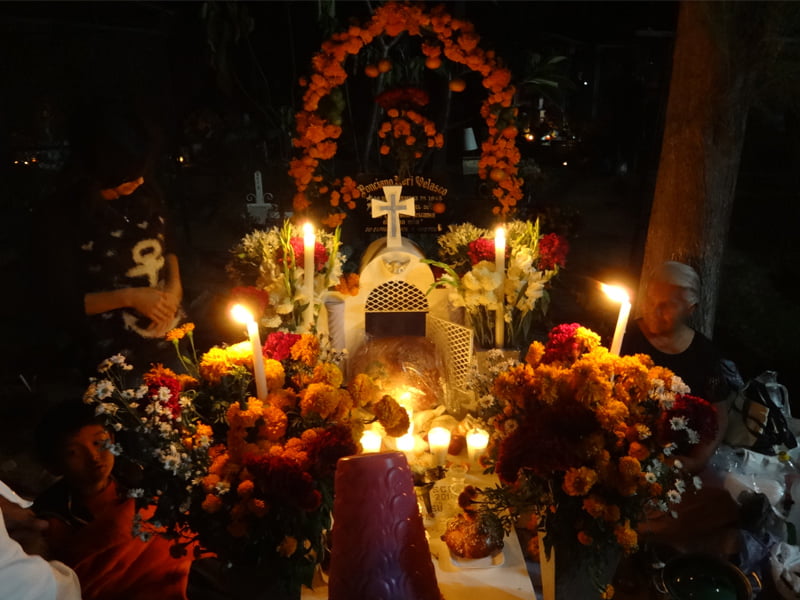
On the night of October 31, hundreds of family vigils happen at once across an enormous space: graves covered in marigolds, candles, photographs, and food. The vigil starts in the afternoon and builds after dark. Near the main entrance you’ll find brass bands and a festive atmosphere. Walk further in and it becomes quieter and more intimate, with families sitting with their loved ones, children running between graves, and the smell of copal and food mixing in the night air.
Practical tips:
- Arrive around 5–6pm as it gets dark, before the main crowds
- The cemetery is enormous, so allow 1.5–2 hours to walk it properly
- Be respectful: this is a genuine family occasion, not a performance. Ask before photographing anyone directly
- Food stalls outside the entrance serve excellent Oaxacan food. Eat here before or after
San Felipe del Agua — Accessible and Intimate (November 2)
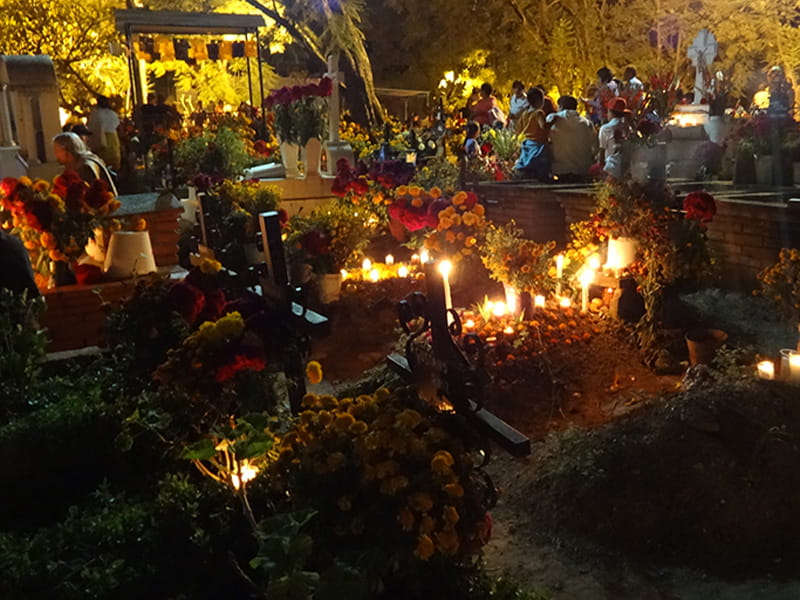
San Felipe wraps up the festival on the final day. It’s smaller and quieter than Xoxocotlán – less spectacle, more family gathering. You’ll get decorated graves and the genuine atmosphere without the crowds of the main event.
Good for visitors who want a more relaxed cemetery experience, families with children, or anyone who missed Xoxocotlán.
Only 15 minutes from Oaxaca City. Food stalls outside the entrance. Easy to reach by taxi.
The Best Parades
For exact times and dates, check out 👉 Day of the Dead Oaxaca City: Full Schedule of Events and Parades 2026
Day of the Dead Parade in Centro (October 31)
If you want to see the best Day of the Dead parade in Oaxaca City, head to Centro Histórico on the night of October 31.
The streets fill with elaborate costumes, catrinas, dancers and brass bands as the celebrations take over the city. It’s a bigger highlight than the Jalatlaco comparsa, so prioritise this one if you’re only in Oaxaca for a night or two.
Arrive early, expect crowds, and be prepared to walk. Streets around the parade route can get extremely busy.
Comparsa de Jalatlaco (Night of November 1st)
The most famous comparsa in the city – a neighborhood parade through the beautiful colonial streets of Jalatlaco, starting around 8pm on the night of November 1 and often seeing a second surge around midnight when November 2 officially begins.
Jalatlaco is already one of the most atmospheric neighborhoods in Oaxaca — cobblestones, painted walls, colonial architecture – and during the comparsa it becomes extraordinary. Brass bands compete with each other. The combination of costumes, candles, and the neighborhood setting is unforgettable.
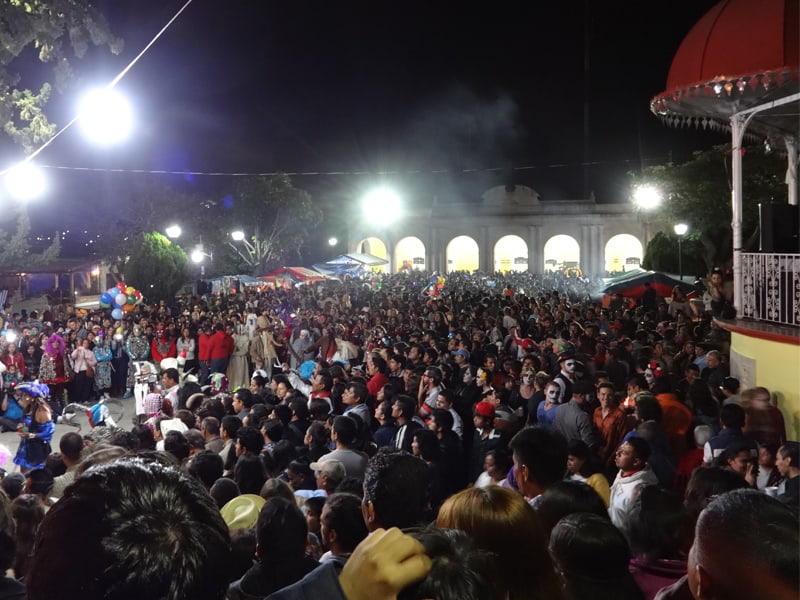
San Agustín Etla Muerteada — The Wildest Night (Night of November 1)
This is one of the most extraordinary things I’ve seen in my years in Oaxaca, and also the most logistically challenging.
A Muerteada is a local tradition where participants dress in costumes with mirrors and bells, dancing and jumping through the streets with brass bands at full volume. The procession moves between nearby towns before reaching San Agustín around 9–10pm, then performs a short show full of local jokes and humor about village life and politicians. The party continues until sunrise.
The transport warning: This is the most important practical information about this event. San Agustín Etla is only 45 minutes from Oaxaca City – but getting there and back on the night of November 1 is a serious challenge. Traffic can back up to 2–3 hours in each direction. Taxis are extremely limited for the return journey.
Options: Go with a guided tour that handles transport, arrange a driver willing to wait, or accept that you’ll be there until very early morning when traffic clears. Don’t assume you can easily get a taxi home at 1am.
👉 10 Best Day Trips from Oaxaca City (With And Without A Tour)
Comparsa in Centro — Spontaneous and Everywhere
Beyond the official events, comparsas happen throughout the city throughout the whole festival period. You’ll hear them before you see them – the sound of a brass band, bursts of fireworks, a crowd moving through the streets.
Don’t try to plan all of this. Walk around, keep your ears open, and follow the music. Some of the best moments during Day of the Dead in Oaxaca happen by accident.
Beyond the City — Village Celebrations Worth Knowing
Zaachila: The weekly market has a special Day of the Dead atmosphere, with sand paintings near the church. Combine it with the Zaachila ruins.
Teotitlán del Valle: The weaving village holds its own cemetery vigil, and some tours offer access to family homes, an intimate way to see the tradition from the inside.
Mitla: The Zapotec site known as the “Place of the Dead” takes on extra meaning during the festival, with community celebrations in the village.
👉 Día de Muertos in Mitla: The 2-Week Schedule of Events

What to Eat During Day of the Dead
Pan de muerto: In every bakery from late October. Get one daily.
Chocolate de agua: Thick, dark Oaxacan hot chocolate made with water instead of milk, and the classic pairing with pan de muerto.
Mole negro: The most ceremonial of Oaxaca’s moles, typically served at family gatherings during the festival.
Tamales de mole negro: Made in large batches for family altars and celebrations.

How to Be a Respectful Visitor
The cemeteries during Día de los Muertos are open to visitors, and families genuinely welcome respectful guests – some will even offer you food or mezcal if you stop and show genuine interest.
A few things worth keeping in mind:
Ask before photographing. Families are in a private, emotional moment even in a public space. A simple gesture asking permission before pointing a camera at someone goes a long way.
Don’t touch altars or graves. Look, appreciate, but keep your hands to yourself.
Keep your voice down in the deeper parts of the cemetery. The area near the entrance with bands and crowds is festive. Further in, the atmosphere is quieter and more intimate. Read the room.
Engage if invited. If a family speaks to you or offers something, accept graciously. These interactions are often the most memorable part of the whole experience.
Dress normally. You don’t need to dress up or face paint to attend cemetery vigils. It’s appropriate for comparsas and street celebrations, less so for the more intimate cemetery moments.
👉 How to Visit Oaxaca Respectfully: A Practical Guide for Responsible Travelers
Practical Planning for Day of the Dead 2026
Accommodation If You Haven’t Booked Yet
Oaxaca fills completely for Day of the Dead, and prices double or triple. If you haven’t booked yet, don’t give up, but be flexible. Check Hostelworld.com and Booking.com again every few days, because cancellations do happen. Expect to pay more than normal.
Best areas to stay: Centro Histórico puts you walking distance from the Zócalo, the altar competition, and the main comparsas. Jalatlaco is the most atmospheric neighborhood during the festival. Both are excellent choices.
How Many Days Do You Need?
Minimum 3 nights to catch the main events across October 31, November 1, and November 2. 4–5 nights is more comfortable and lets you do a village visit, enjoy the market atmosphere in the days before, and not feel rushed between events.
👉 5 Days in Oaxaca City: A Practical Itinerary
Getting Around During the Festival
The city is extremely crowded during the main festival days. Taxis are harder to find than usual, particularly late at night after the cemetery vigils. Walking is often faster than sitting in traffic.
For San Agustín Etla specifically – book a tour or arrange a driver well in advance. Don’t try to wing it.
👉 How to get around Oaxaca City: Transport Guide 2026
Should You Book a Tour?
For the cemeteries, walking in independently is completely fine and the experience is genuine. For village celebrations like San Agustín Etla, Teotitlán, and Mitla — a good tour operator solves the transport problem and often provides access and context that’s hard to replicate independently.
👉 Book your Day of the Dead Tour 2026
Top Rated Hotels in Oaxaca City
⭐️ 5 Star – Quinta Real Oaxaca
⭐️ 4 Star – NaNa Vida Hotel Oaxaca
⭐️ 3 Star – Hotel Trébol
FAQs
Is Day of the Dead appropriate for children? Yes – it’s a family celebration at its core. The cemetery atmosphere is joyful rather than frightening, and children are very much part of the tradition. Young children may find the late nights challenging but the daytime events and the city atmosphere are excellent for families.
Can visitors enter the cemeteries? Yes – cemeteries are open to respectful visitors. Families welcome observers who show genuine interest. Follow the etiquette guidelines above.
What’s the difference between November 1 and November 2? November 1 honors the spirits of children, and the spirits of adults begin arriving that night. November 2 is the main day for adults. The night of November 1 into November 2 is the most significant, when the cemetery vigils are at their fullest.
Is it safe during Day of the Dead? Yes – though the city is extremely crowded and pickpocketing increases in dense crowds. Keep your bag in front of you and your phone in a secure pocket during comparsas and busy market areas.
Is Oaxaca or Mexico City better for Day of the Dead? They’re very different. Mexico City offers large, organized public events. Oaxaca is more intimate and community-based, with family cemetery vigils, neighborhood comparsas, and village traditions. If you want to experience the tradition rather than watch a spectacle, Oaxaca is the better choice.
How much does it cost? Entering the cemeteries and walking through the Zócalo altars is free. The main costs are accommodation (which doubles or triples during the festival), food, and transport. Tours are optional.
Is Xoxocotlán cemetery free? Yes, it’s open to the public and free to enter. Food stalls outside the entrance are extra.
Do I need a tour? Not for the cemeteries or the Zócalo altars. A tour is worth it for the San Agustín Etla Muerteada and for village celebrations like Teotitlán, where transport and access are harder on your own.
There are celebrations you attend, and there are celebrations that stay with you for years afterward.
Day of the Dead in Oaxaca is the second kind. The candlelit cemeteries, the brass bands playing until sunrise, the families welcoming their dead home with food and laughter – it’s unlike anything most people have experienced, and it changes how you think about both death and community.
Come with an open mind, stay out late, and let it be what it is.