Oaxacan Pottery: A Guide to Black Clay, Red Clay, and Where to See It Made
Pottery is everywhere in Oaxaca. Markets, kitchens, roadside workshops, stacked outside family homes in villages you pass on the way to somewhere else.
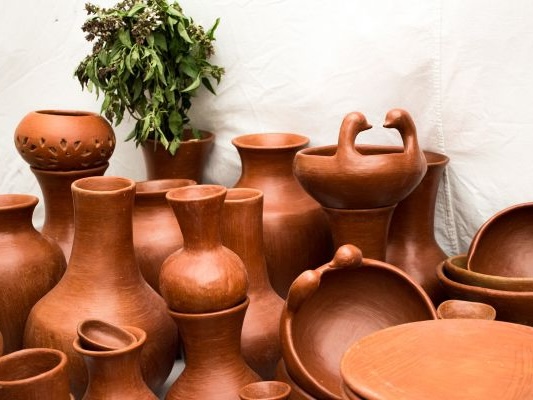
But it’s not all the same, and it’s not all made for tourists. Different villages work with different clay, different firing methods, and completely different end results — some of it decorative, some of it designed to go straight onto an open fire and cook your dinner. Understanding the difference makes browsing markets a lot more interesting, and helps you know what you’re actually buying when you take something home.
Here’s a breakdown of the main pottery styles in Oaxaca, where they come from, and where to see them being made.
👉 5 Days in Oaxaca City: A Practical Itinerary
Why Oaxacan Pottery Is Different
Pottery in Oaxaca isn’t a craft that was revived for the tourist trade. Many of the families making it today have been working with the same clay, in the same villages, using techniques passed down through Zapotec and Mixtec communities for generations.
What’s striking is how distinct each village’s output is. The clay composition varies by location, the firing methods differ, and the finishes — glossy black, rough terracotta, copper-green glaze — are tied to specific places rather than a general “Oaxacan style.”
That variety is what makes pottery here genuinely worth paying attention to.
Barro Negro — Black Clay from San Bartolo Coyotepec
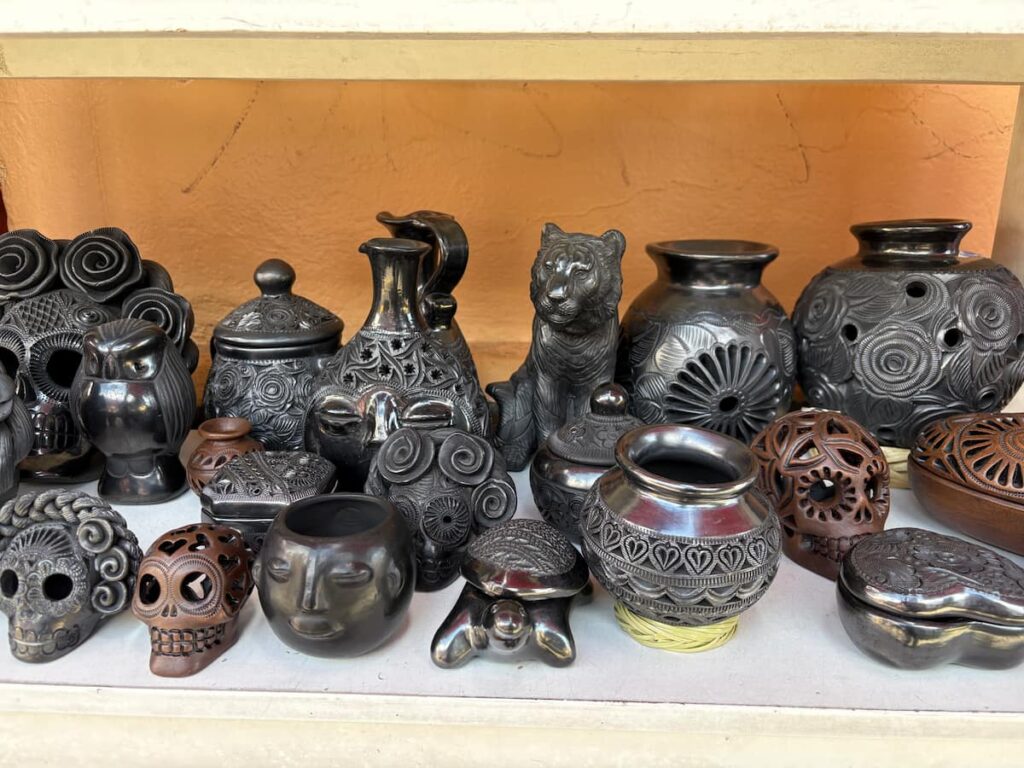
Barro negro is the most famous pottery in Oaxaca, and probably the most recognizable Mexican craft pottery in the world.
It comes from San Bartolo Coyotepec, a small village about 20 minutes south of Oaxaca City on the road toward Miahuatlán. The pieces are known for their deep, almost metallic black finish and smooth polished surface — striking enough that they’ve ended up in design shops and galleries internationally.
How the color happens The clay itself isn’t naturally black. The color is created through process: the unfired piece is polished by hand with a quartz stone before it fully dries, then fired in a low-oxygen kiln that starves the clay of air during burning. That oxygen-reduced atmosphere is what turns it black.
The technique as it exists today was largely developed and popularized by Doña Rosa Real de Nieto in the mid-20th century, who refined the polishing method and taught it widely in the village. It’s her legacy that turned San Bartolo Coyotepec into what it is today.
What gets made Vases, bowls, decorative skulls and figures, lamps, sculptural pieces. Barro negro is striking but fragile — the walls are thin and the polished surface can scratch — so it’s almost entirely decorative rather than functional.
Where to see it The village itself is the best option. Several family workshops are open to visitors, and you can watch pieces being shaped and polished by hand. The market in Oaxaca City also has barro negro vendors, but prices are higher and you miss the context of seeing it made.
👉 Black Pottery Tour included with Monte Albán and Alebrijes
Barro Rojo — Red Clay from San Marcos Tlapazola
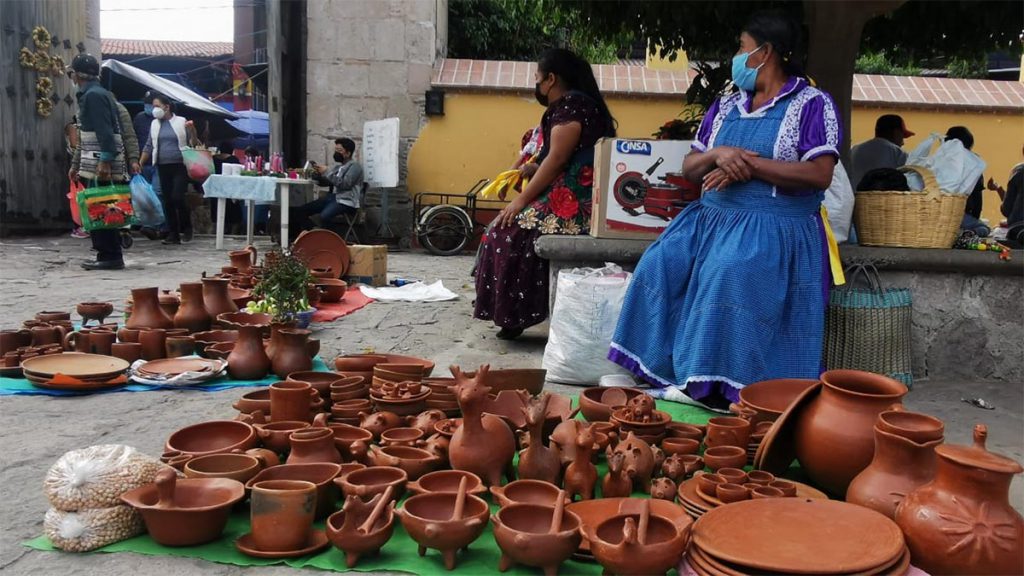
If barro negro is decorative, red clay pottery is the opposite — it’s built to be used.
San Marcos Tlapazola is a Zapotec village east of Oaxaca City, less visited than San Bartolo Coyotepec but arguably more interesting for anyone who wants to see traditional pottery in its natural context. Here, pottery is almost entirely made by women, using techniques and tools that have changed very little over centuries.
What it’s made for Red clay pottery is cooking ware. The main pieces are comales — the flat griddles used to cook tortillas — and cazuelas, the deep clay pots used for stews, moles, and beans. The clay is unglazed and fired at high temperatures, which makes it dense and heat-resistant enough to sit directly over an open flame.
This is the pottery you’ll find in traditional Oaxacan kitchens, not on display shelves. Many cooks swear that food tastes different — better — when made in clay, and there’s something to that argument beyond nostalgia.
Where to find it San Marcos Tlapazola itself is the place to go. You can also find red clay pieces at Oaxaca City’s markets, particularly the Central de Abastos, where they’re sold practically rather than as souvenirs.
👉 Oaxaca Red Clay Pottery Experience – Full Day Private Tour
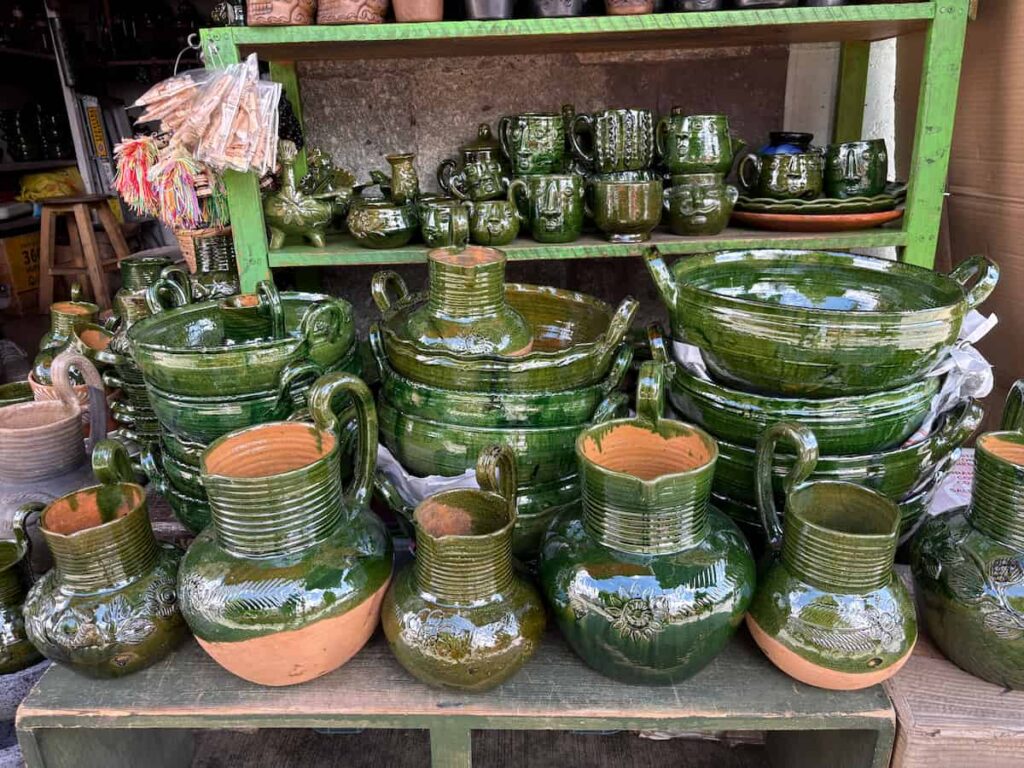
Barro Verde — Green Glazed Pottery from Santa María Atzompa
Santa María Atzompa sits just northwest of Oaxaca City and has been producing green-glazed pottery for centuries. The distinctive color comes from copper-based glazes applied before firing, resulting in pieces that range from pale sage to deep forest green.
Atzompa makes mostly functional tableware — bowls, plates, pitchers, cups — as well as decorative figures and incense burners. The village also has a strong tradition of figurative pottery, including elaborate tree-of-life sculptures and animal figures that blur the line between craft and art.
It’s one of the easiest pottery villages to visit independently given its proximity to the city, and the weekly market there is worth combining with a visit if your timing works out.
Top Rated Tours in Oaxaca City
⭐️ 5 Star – Mezcal Journey
⭐️ 4.9 Star – Monte Alban
⭐️ 4.5 Star – Hierve El Agua
Other Styles Worth Knowing
Decorative figurines from villages like Ocotlán de Morelos — animals, human figures, and traditional scenes, often brightly painted and used for both home decoration and ceremonial purposes.
Black and green combination pieces — some artisans in the valleys now blend techniques from different traditions, creating pieces that don’t fit neatly into one category. These tend to show up in the artisan markets in Oaxaca City.
The more time you spend in markets here, the more you start to recognise where things come from just by looking at them. That’s part of the pleasure of it.

Where to See Pottery Being Made
Buying from a market stall is fine. Visiting the village where something was made is better — not just for the price, but for the experience of watching the process up close.
San Bartolo Coyotepec — barro negro workshops, several open to visitors, 20 minutes south of Oaxaca City. Easy half-day trip.
San Marcos Tlapazola — red clay cookware, a more off-the-beaten-path village east of the city. Best combined with the Tlacolula market if you’re heading that direction.
Santa María Atzompa — green-glazed pottery, closest to Oaxaca City of the three. Quick and easy to visit independently.
All three can be combined into a longer artisan day trip, either independently or with a guide. A guided tour makes more sense here than at most sites — context about the specific families and techniques makes a significant difference to how much you take away from it.
👉 10 Best Day Trips from Oaxaca City (With And Without A Tour)
Buying Pottery in Oaxaca: What to Know
A few practical things before you spend money:
Buy directly from villages when you can. Prices are lower, the money goes straight to the maker, and you know exactly what you’re getting.
Know what you’re handling. Barro negro should feel smooth, with an even polish and no rough patches. Red clay should feel dense and heavy. If a barro negro piece feels light and the surface looks painted rather than polished, it might not be the real thing.
Pack carefully. Barro negro especially is fragile. Wrap pieces individually, put them in the center of your bag surrounded by soft clothing, and consider carrying them as hand luggage rather than checked bags.
Price context. Small barro negro pieces start from a few hundred pesos in the village. Larger sculptural pieces can run into the thousands, and the pricing at the Oaxaca City artisan market (MARO) reflects the quality. Don’t haggle aggressively — most of these pieces took hours to make.
👉 50 Best things To Do In Oaxaca City
The Bigger Picture
Oaxacan pottery matters because it’s still functional, still evolving, and still made by the same communities that developed it. It hasn’t been sanitized into a heritage display — it’s just part of how people live and work here.
Whether you’re buying a cazuela to cook with, a barro negro vase to take home, or just walking through a workshop watching someone shape clay by hand, pottery is one of the clearest windows into what makes Oaxacan craft culture different from anywhere else in Mexico.
👉 Follow Johnny_in_Oaxaca on Instagram 😎