Teotitlán del Valle: Oaxaca’s Rug Weaving Village (Complete Visitor Guide)
Thirty minutes east of Oaxaca City, there’s a small Zapotec village where families have been weaving rugs by hand for over 2,000 years.
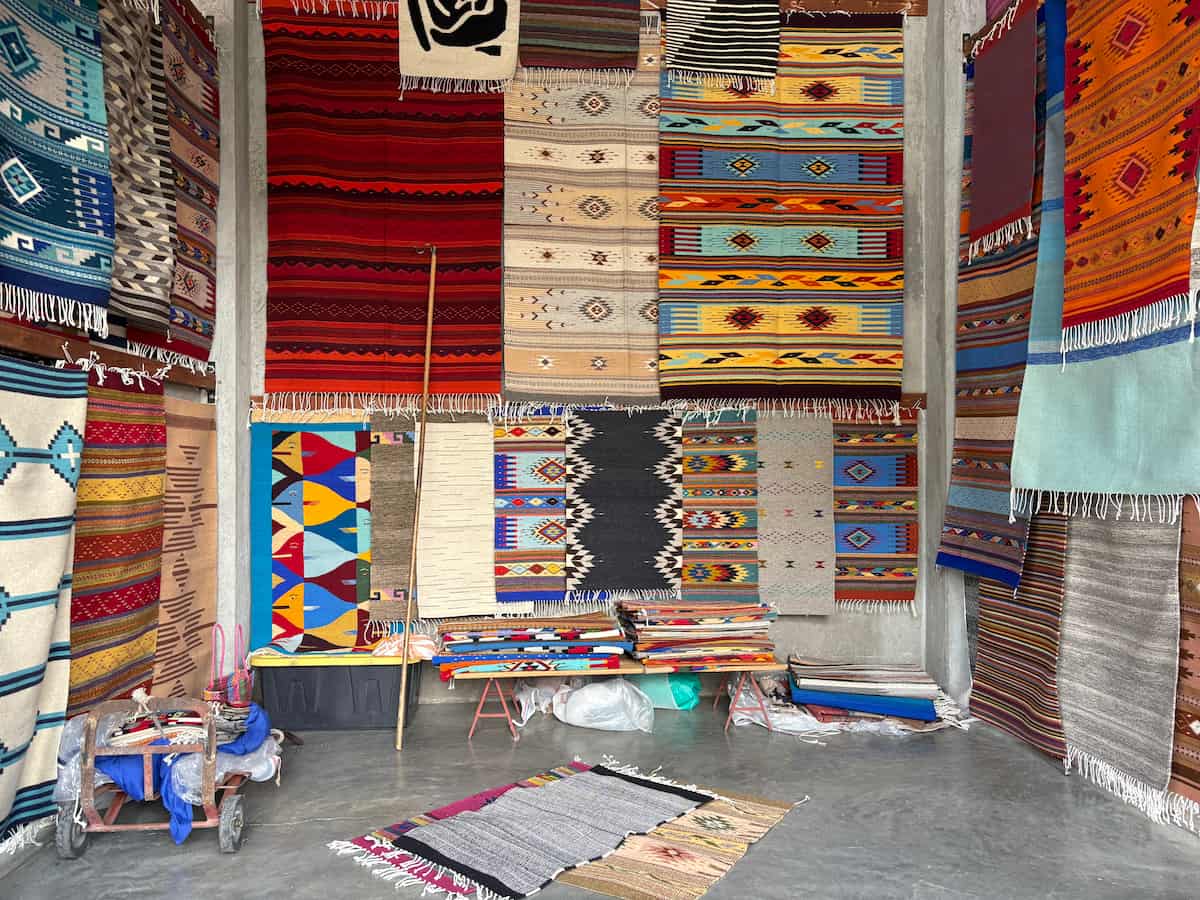
That’s not marketing copy. Teotitlán del Valle — known locally as Xigie, meaning “under the stone” — is a living, working community where the weaving tradition never stopped. Wool dyed with crushed insects and wildflowers, woven on wooden looms that fill the front rooms of family homes, using patterns passed down through generations that predate the Spanish by centuries.
It’s one of the most rewarding half-days you can spend near Oaxaca City — and one of the easiest to do on your own.
👉 10 Best Day Trips from Oaxaca City (With And Without A Tour)
Is Teotitlán del Valle Worth Visiting?
For most visitors to Oaxaca, yes — genuinely.
It’s not a museum or a staged cultural experience. Workshops are family homes. Demonstrations are real. The people showing you how it’s done are the same people who make their living doing it. That combination of accessibility and authenticity is rare, and it’s why Teotitlán keeps coming up in conversations about the best things to do around Oaxaca.
It’s a great fit if you:
- Want a half-day trip that feels personal rather than touristy
- Are interested in textiles, craft, or traditional techniques
- Want to buy a rug or textile directly from the family that made it
- Are combining it with Hierve el Agua, Mitla, or the Tlacolula Sunday market
It’s probably not for you if:
- You’re only interested in archaeological sites or major landmarks
- Craft demonstrations genuinely don’t interest you
For everyone else — it’s worth the 30-minute colectivo ride without question.
The Weaving Tradition: Why Teotitlán Is Different
Weaving in Teotitlán goes back more than 2,000 years to pre-Hispanic Zapotec culture, when artisans worked with cotton on backstrap looms. When the Spanish arrived in the 1500s, they introduced sheep wool and treadle looms — the foot-pedal wooden looms you’ll see in workshops today. The two traditions merged, and what emerged over the following centuries became something distinct to this valley.
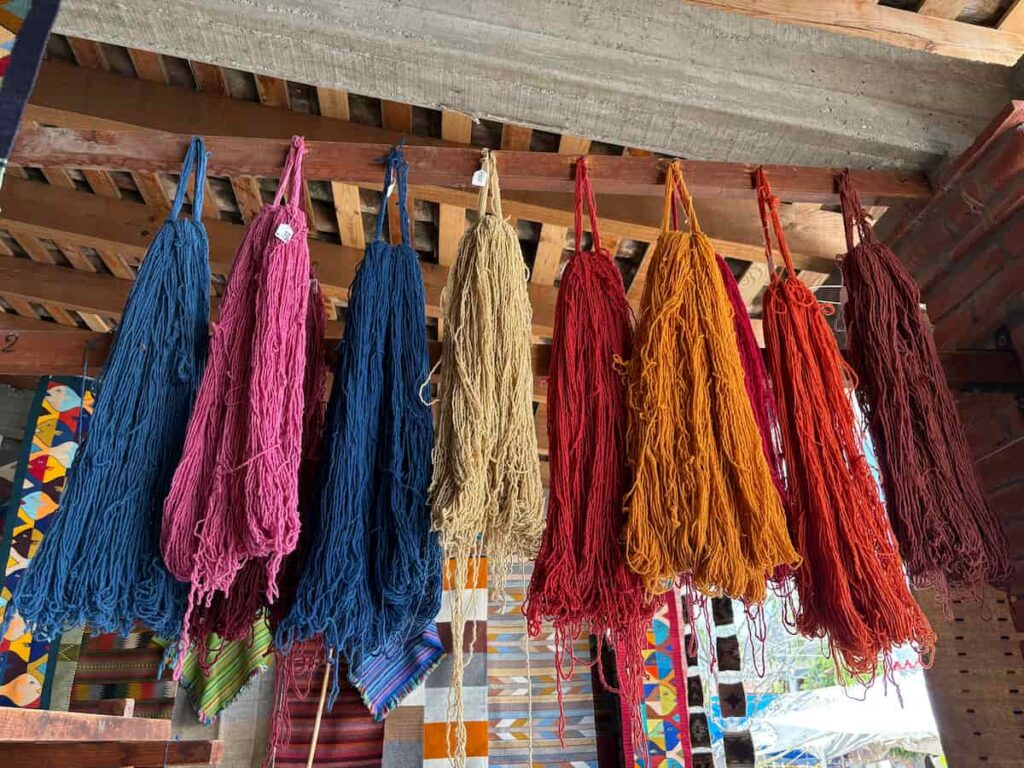
What sets Teotitlán apart from other weaving communities isn’t just the age of the tradition — it’s the continued use of natural dyes. Most artisan villages in Mexico switched to synthetic dyes decades ago because they’re cheaper and faster. Many families in Teotitlán didn’t, and the difference is visible immediately.
The main natural dyes used:
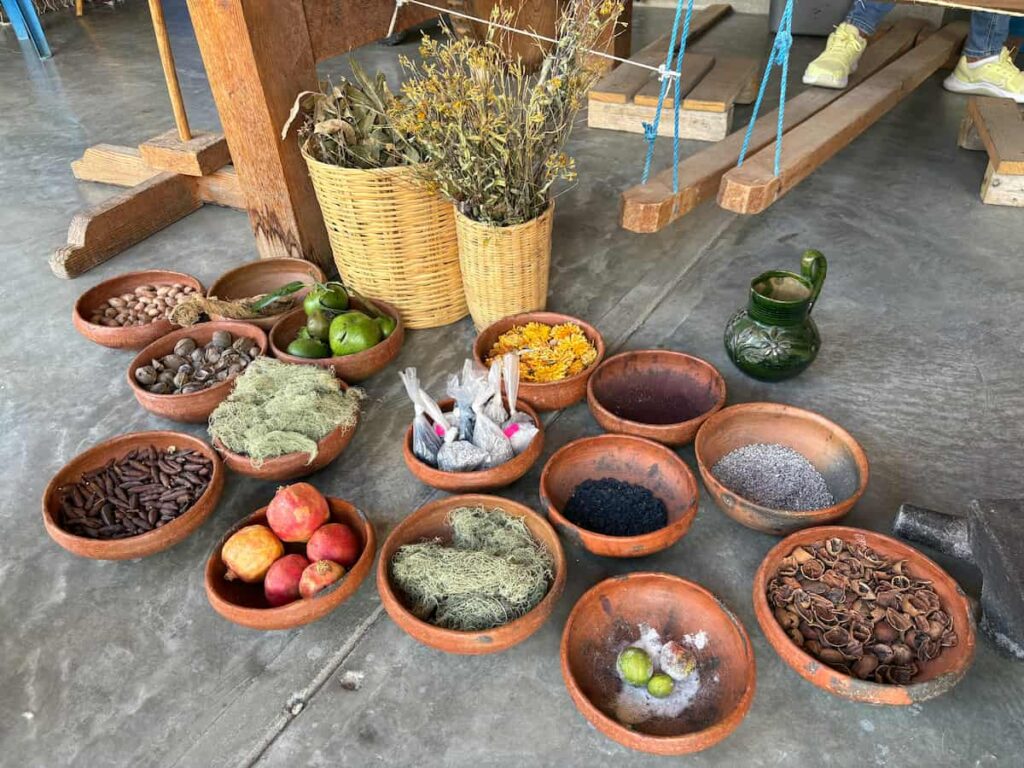
Cochineal — tiny insects that live on nopal cactus, harvested and dried, then crushed to produce deep reds, purples, and pinks. The color range shifts dramatically depending on what’s added — lime juice turns it orange, baking soda shifts it toward purple. It’s one of the most valuable natural dyes in the world and has been traded from Oaxaca since long before the Spanish arrived.
Indigo — a plant-based dye producing blues that range from pale sky to deep navy. Combined with cochineal, it makes rich purples.
Marigold flowers, pomegranate rind, and moss — for yellows, greens, tans, and browns.
Natural-dye rugs cost more than synthetic ones, but they don’t fade in the same way and they age beautifully. A good natural-dye rug from Teotitlán is an object that lasts decades and looks better for it.
The patterns themselves are equally layered. Many draw from the geometric mosaics at Mitla — the nearby archaeological site — alongside pre-Hispanic symbols, animal figures, and abstract Zapotec designs. Each family tends to have its own vocabulary of patterns, and experienced weavers can often identify which family made a piece just from the design.
👉 50 Best Things To Do In Oaxaca City
What to Expect When You Visit
This is where Teotitlán surprises people.
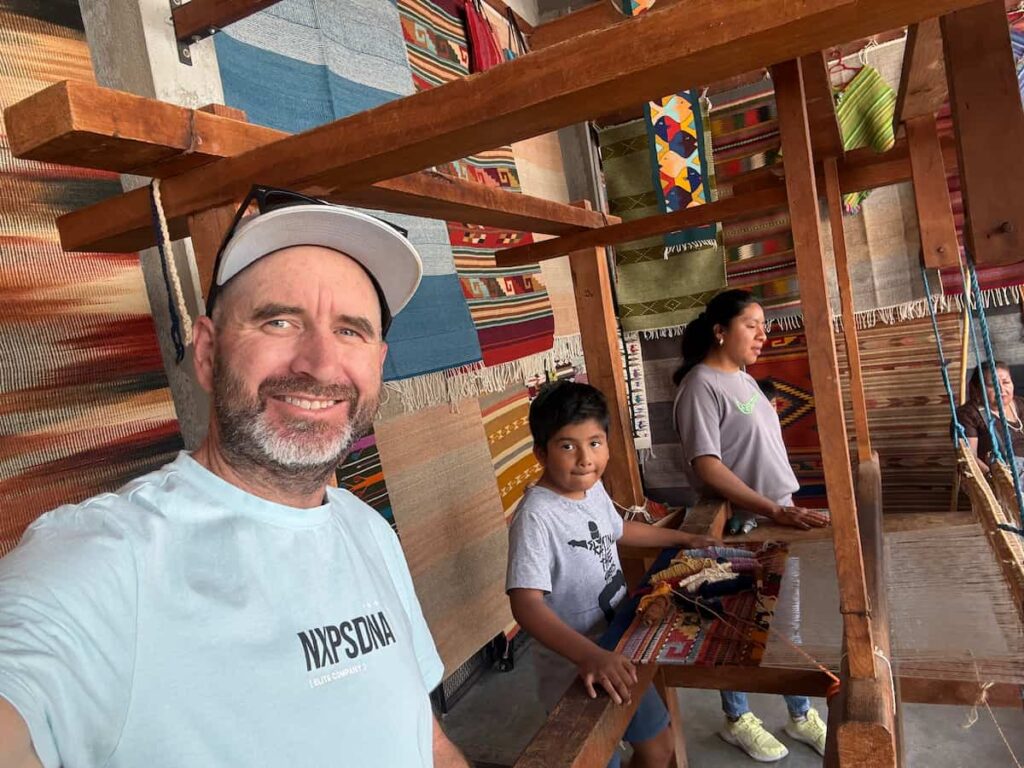
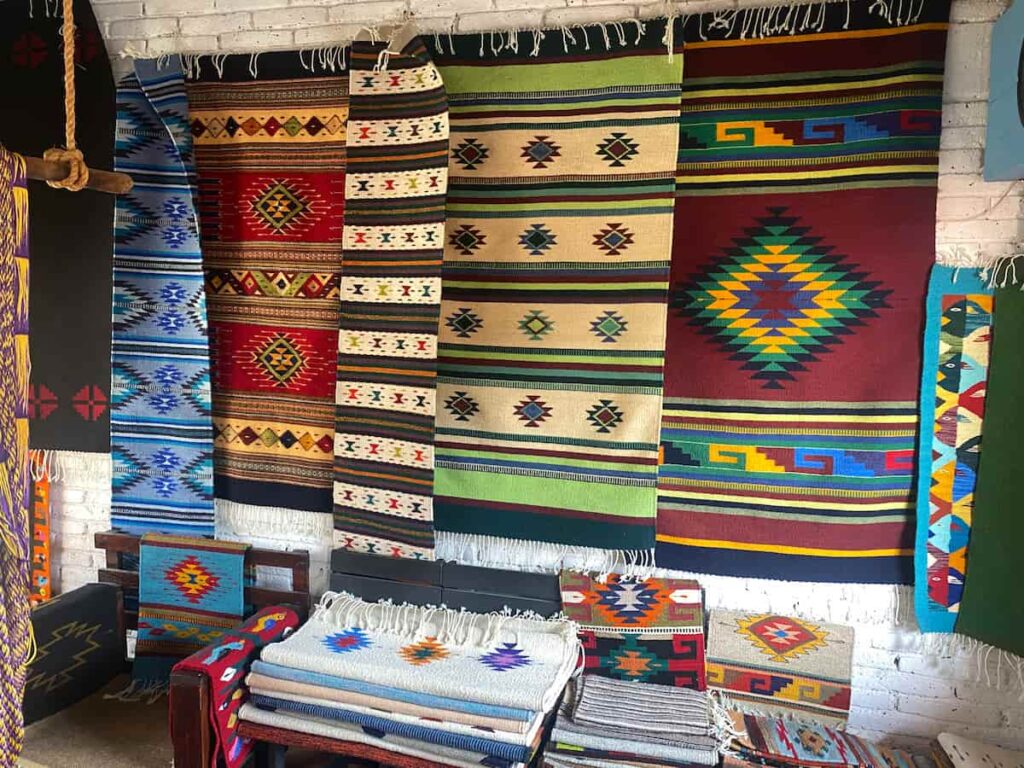
Walk into the village and you’ll see workshop signs outside family homes — some small, some large enough to have a full showroom. Walk in, and you’ll almost always be invited to watch a demonstration: raw wool being washed and carded, dye pots simmering over a flame, someone at a loom working through a pattern.
It’s informal. There’s rarely a script. Most artisans are genuinely happy to explain what they’re doing, show you the raw ingredients for the dyes, and let you handle the wool at different stages of the process. It’s the kind of experience that takes about 20 minutes but tends to stretch to an hour without you noticing.
The demonstrations are generally free, and the atmosphere is low pressure. You’re under no obligation to buy. Most families understand that not every visitor is there to purchase, and they’re not running a hard sell operation.
Outside the workshops, the village itself is quiet and very walkable. A few things worth seeing while you’re there:
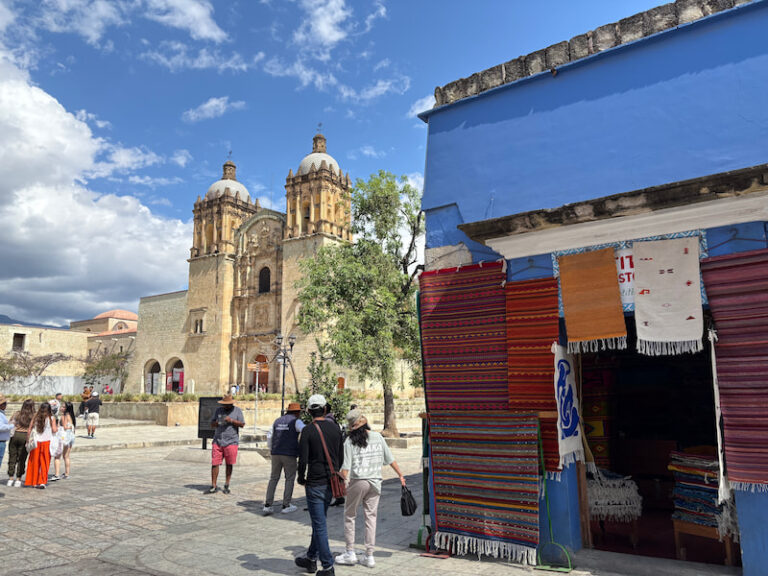
Iglesia Preciosa Sangre de Cristo — the main church, built by the Spanish in the 16th century directly over ancient Zapotec foundations. The combination of colonial architecture and pre-Hispanic stonework underneath is visible in places.
The local market area — especially lively on Sundays, when it overlaps well with the Tlacolula market nearby.
El Picacho — the hill above the village, reachable on foot, with panoramic views over the valley. Worth it if you have the energy and the right shoes.
How to Get to Teotitlán del Valle from Oaxaca City
Teotitlán is about 30km east of Oaxaca City — 30 to 40 minutes depending on traffic. The road is good and the journey is half the pleasure, passing through the Tlacolula Valley with mountains on both sides.

By Colectivo (Best Independent Option)
Cheap, frequent, and the way locals travel this route.
Option 1 — Direct colectivo: Head to the Volkswagen dealership near the baseball stadium in Oaxaca City, which is the main departure point for colectivos heading east. Ask specifically for Teotitlán del Valle.
Option 2 — Tlacolula/Mitla colectivo: These run more frequently. Take one heading toward Tlacolula or Mitla and tell the driver you want the Teotitlán intersection (crucero). From there, a short mototaxi ride takes you into the village — cheap and part of the experience.
By Taxi or Private Driver
A taxi from Centro runs around 300–400 pesos one way. Worth knowing: taxis back from Teotitlán are hard to find in the village itself. Either ask your driver to wait, arrange a pickup time, or get their WhatsApp number for a return trip. Alternatively, a colectivo back to the city from the main road is easy to catch.
A private driver for a half or full day gives you the most flexibility, especially if you’re combining Teotitlán with other stops.
On a Guided Tour
Most full-day tours heading to Hierve el Agua and Mitla include a stop in Teotitlán — usually a workshop demonstration and time to browse. It’s a good intro to the village, though the stop tends to be 45–60 minutes rather than a proper wander.
If you want to go deeper, a dedicated private textile tour is a different experience entirely — spending the day with one or two families, seeing the full process, and understanding the craft at a level a quick group stop doesn’t allow.
⭐️ 5.0 — Oaxaca Wool Textiles Experience, Private Tour
⭐️ 4.7 — Hierve el Agua, Mitla, Tule, Textiles + Mezcal Full Day Tour
How Much Do Teotitlán del Valle Rugs Cost?
Prices in 2026 vary by size, complexity, and whether natural or synthetic dyes were used:
| Size | Price Range (MXN Pesos) |
|---|---|
| Small pieces / table runners | 500 – 3,000 |
| Small rugs (~4 ft) | 1,300 – 4,000 |
| Medium rugs (~6 ft) | 3,500 – 10,000 |
| Large / detailed natural-dye rugs | 10,000 – 25,000+ |
Natural-dye pieces cost more than synthetic, and the price reflects real materials and real labor — cochineal alone is expensive, and a medium rug can take weeks to complete. If something seems significantly cheaper than these ranges, it’s worth asking whether synthetic dyes were used.
Buying directly in Teotitlán is almost always better value than buying the same quality piece in Oaxaca City markets, and the money goes straight to the family that made it.
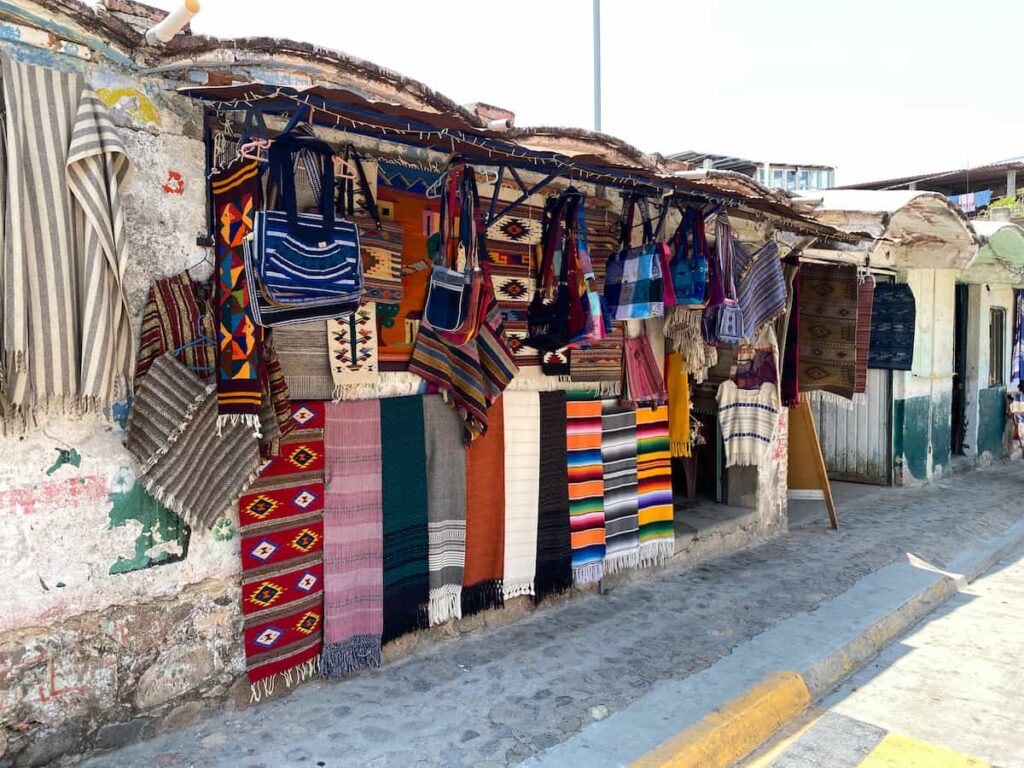
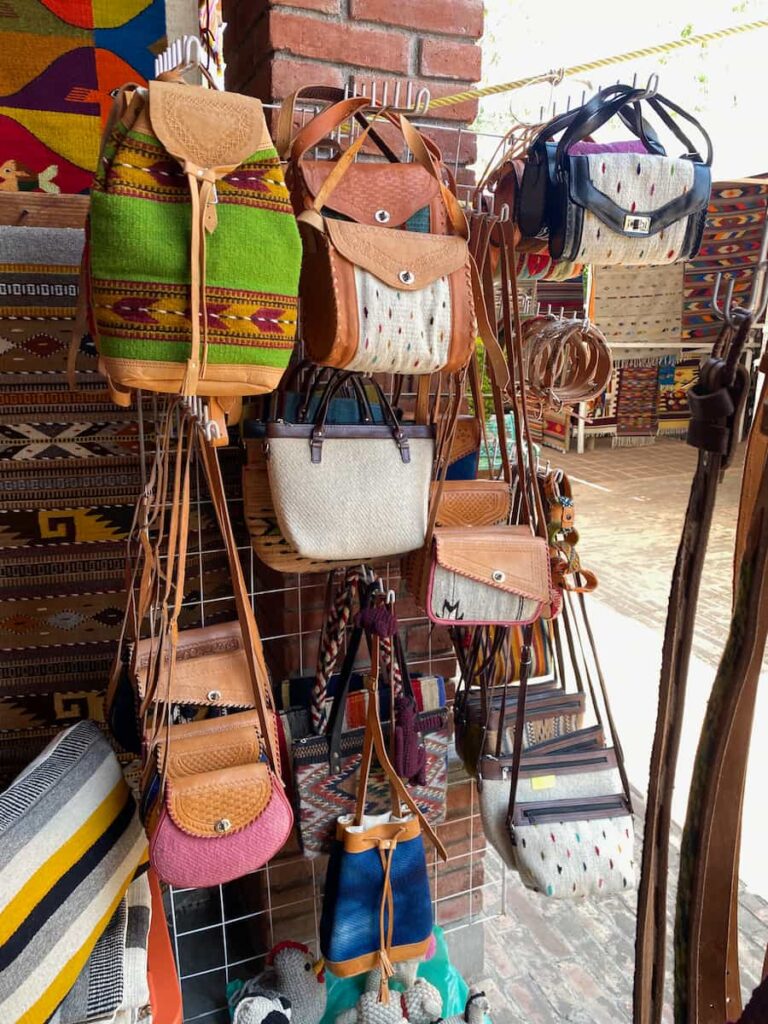
It’s not all rugs either. You’ll find bags, belts, table runners, ponchos, and wall hangings — all made using the same techniques and dyes.
Practical Tips
Bring cash. Almost all workshops are cash only. There are no ATMs in the village — take money out in Oaxaca City before you go.
Go in the morning. Cooler, better light for photos, and workshops are in full swing earlier in the day.
Wear comfortable shoes. You’ll walk between workshops on cobbled streets.
Don’t rush the conversations. The best part of Teotitlán is talking to the people making the rugs. If someone is willing to explain their process, let them.
Sunday is special. The Tlacolula market — one of the best weekly markets in Oaxaca — is only 15 minutes further east. Combining both on a Sunday makes for an excellent full morning.
You don’t have to buy anything. Demonstrations are genuinely free and low-pressure. Don’t let that stop you going if you’re not in the market for a rug.
FAQ’s
How long do you need in Teotitlán? Two to four hours is comfortable for walking the village, visiting a couple of workshops, and seeing a demonstration. If you’re buying or want to explore more, half a day works well.
Can you visit without a tour? Easily. It’s one of the most straightforward independent day trips from Oaxaca City. The colectivo system is simple, the village is small and walkable, and the workshops welcome individual visitors.
Is it better than buying rugs in Oaxaca City markets? Different experience entirely. Markets are convenient but the selection is curated and the prices are higher. In Teotitlán you see the full process, meet the maker, and often find pieces you won’t see anywhere else.
What’s the difference between natural and synthetic dye rugs? Natural-dye rugs are more expensive but the colors deepen and mellow beautifully over time rather than fading. If you’re buying something to keep, natural dye is worth the extra cost.
Is it suitable for kids? Yes — demonstrations are engaging for children and the village is relaxed and easy to navigate. I took my son (8 years old) there and he enjoyed it.
Teotitlán del Valle isn’t a place you go to tick a box. It’s a place you go and end up staying longer than you planned, leave with a better understanding of what Oaxacan craft actually means, and probably a rug you didn’t expect to buy.
For such an easy trip from the city, that’s a good return.
Also worth reading: 10 Best Day Trips from Oaxaca City and Hierve el Agua: Tours, Tips, How to Get There & What to Expect