Oaxaca’s Famous Street Parades: When and Where to see them
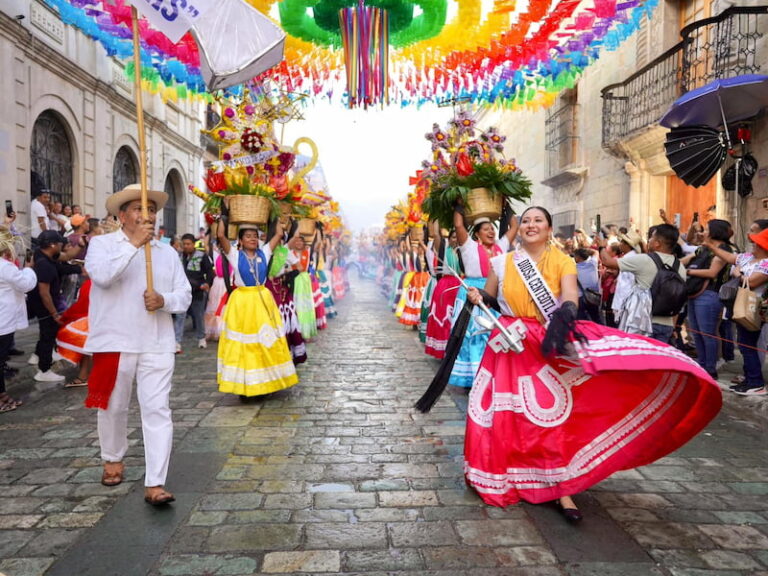
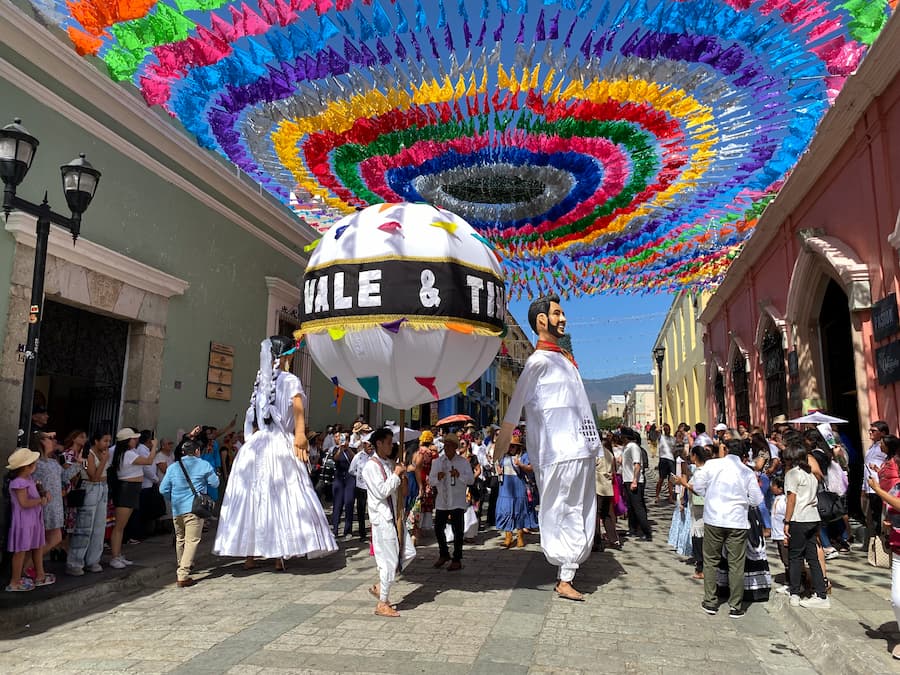
One of the best things about Oaxaca is that you don’t need a ticket or invitation to experience its traditions. Walk through the city long enough and you’ll eventually find yourself standing in the middle of a calenda — a lively street parade filled with music, dancing, giant puppets, and fireworks.
Here’s what they are, when they happen, and where to find them.
The Most Reliable Viewing Spot — Santo Domingo, Saturdays and Sundays
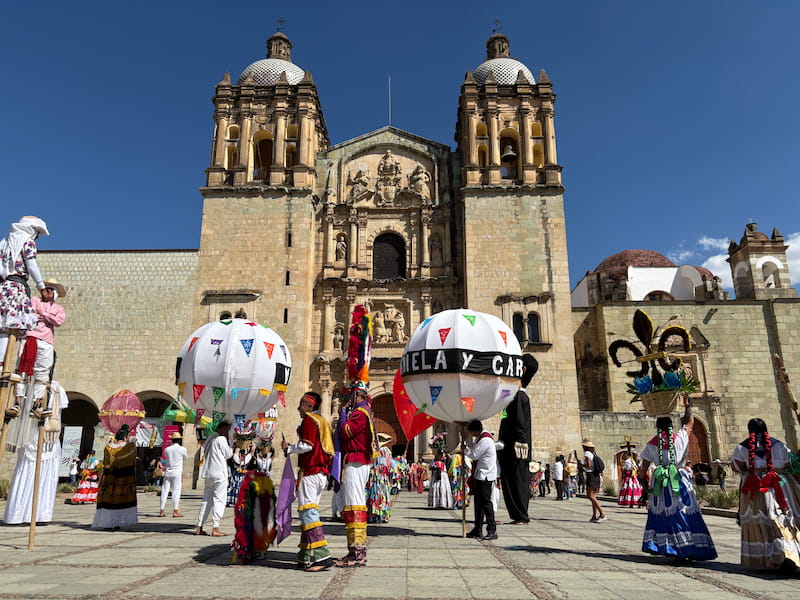
If you want to see a calenda and you don’t want to leave anything to chance, go to Templo de Santo Domingo on a Saturday or Sunday afternoon and wait.
Santo Domingo is booked solid on weekends for the entire year for weddings — couples from all over Mexico fly in specifically to get married in this church. After each ceremony, the wedding party spills out through the massive wooden doors and the calenda begins right there on the street.
Most Saturdays and Sundays you’ll see two, three, sometimes four calendas coming out of Santo Domingo at intervals of roughly 90 minutes to two hours throughout the afternoon. The parade then moves down the Andador Turístico (Macedonio Alcalá) a few blocks.
Position yourself anywhere along Alcalá from about 2pm onward and let the parades come to you. You’ll hear each one approaching from a distance — no advance notice needed.
What You’ll Actually See
Every calenda has the same core elements, though the scale varies from small and intimate to enormous depending on the budget and occasion.
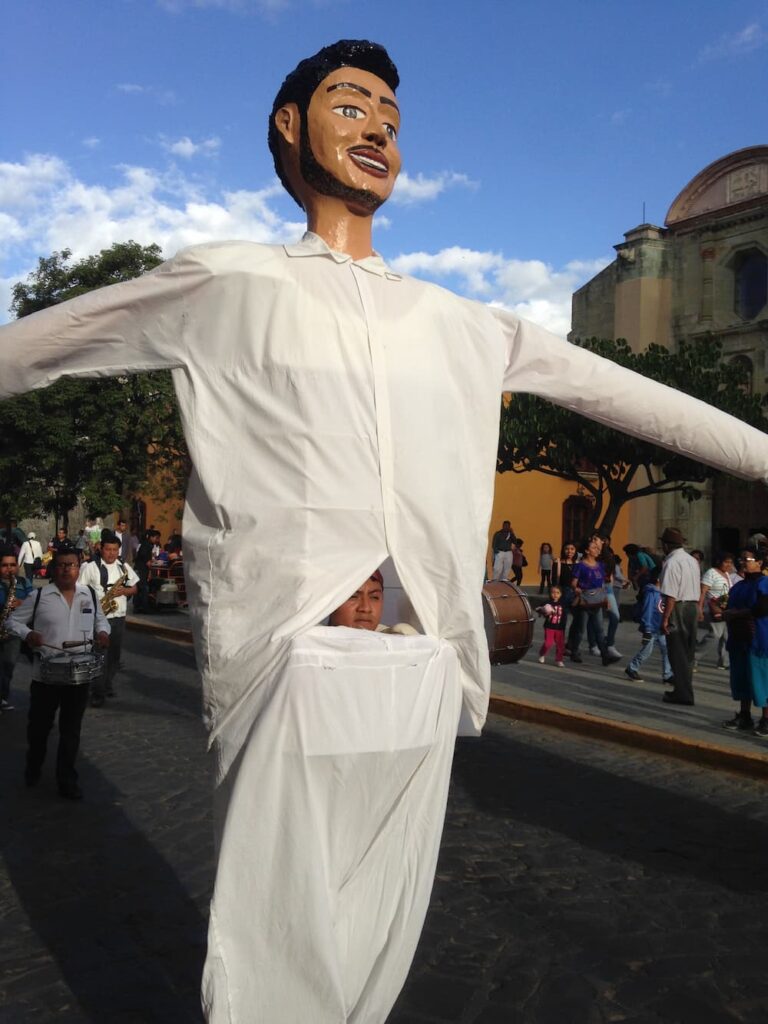
Monos de calenda — the giant papier-mâché figures that define the parade. For weddings, these are typically the bride and groom in enormous puppet form, dancing and swaying above the crowd. For other celebrations they represent whoever is being honored.
Marmotas — large illuminated spherical balloons on poles, often embroidered with the names of the couple or the event. They glow warmly at dusk and evening calendas.
Brass band — a full conjunto playing music that sits somewhere between traditional Oaxacan march and Mexican polka. The sound carries several blocks in any direction.
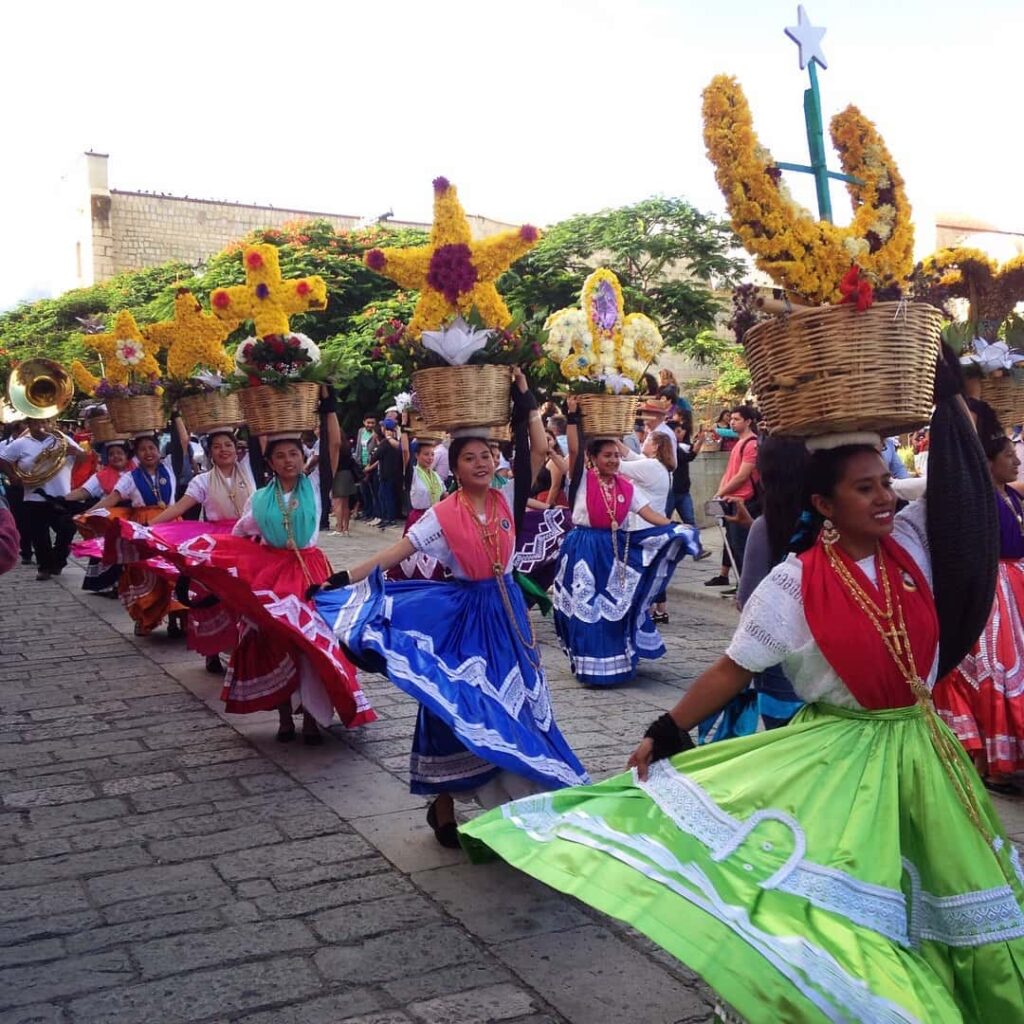
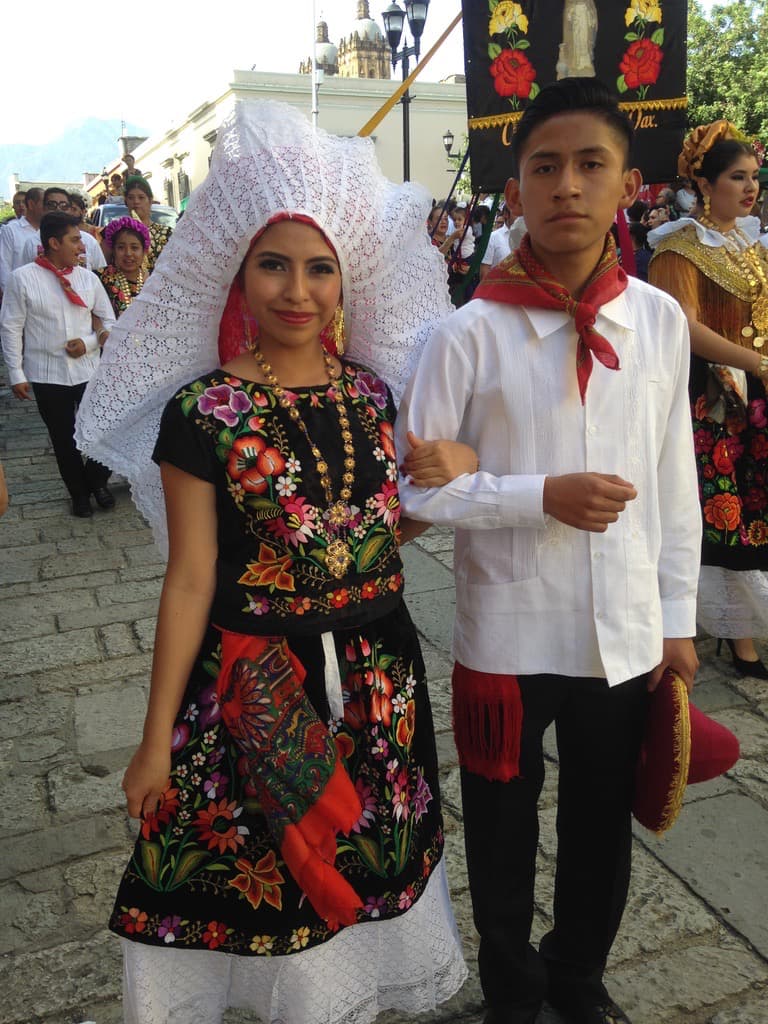
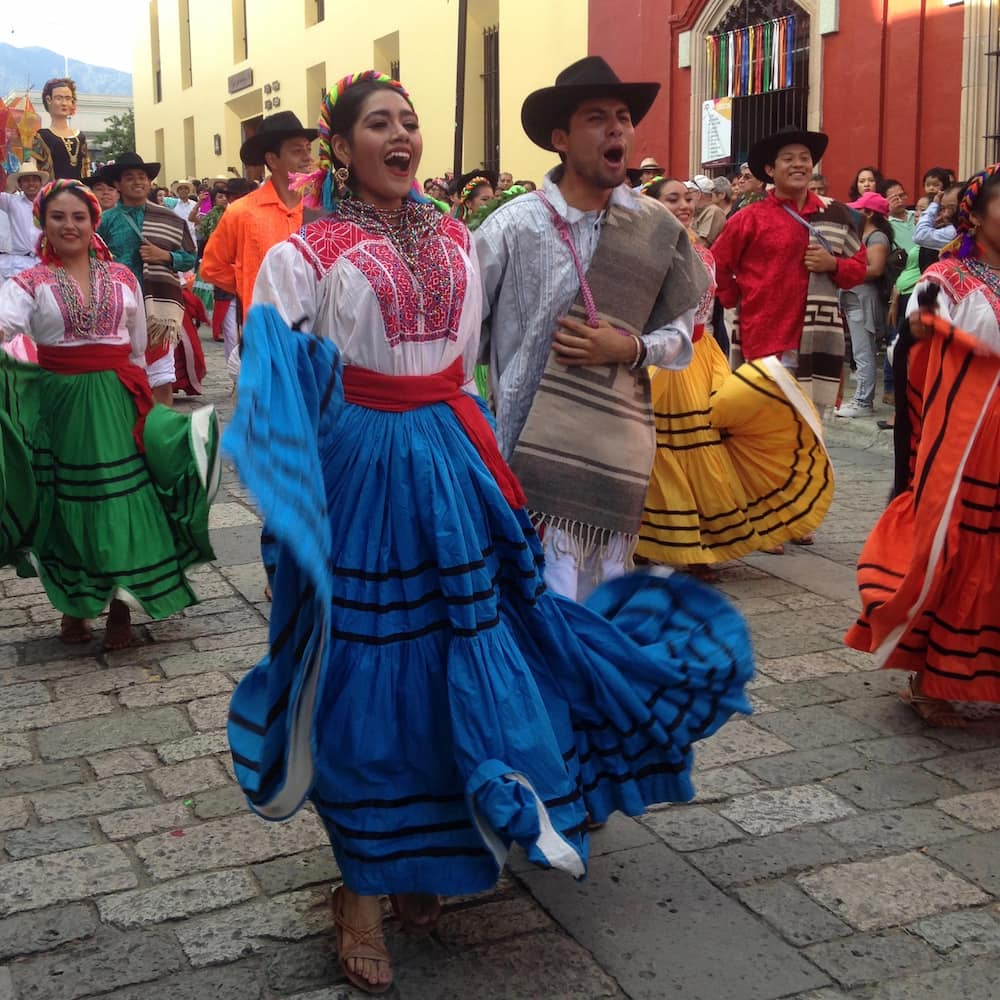
Dancers — People in traditional colorful Oaxacan dress from the 8 regions of Oaxaca
Fireworks (cohetes) — going off constantly and without warning. If you startle easily, this is useful information.
Mezcal — at wedding calendas especially, mezcal is often passed to bystanders in small reed-stalk cups called canutos. If someone offers you one, accept it.
The Different Types of Parades
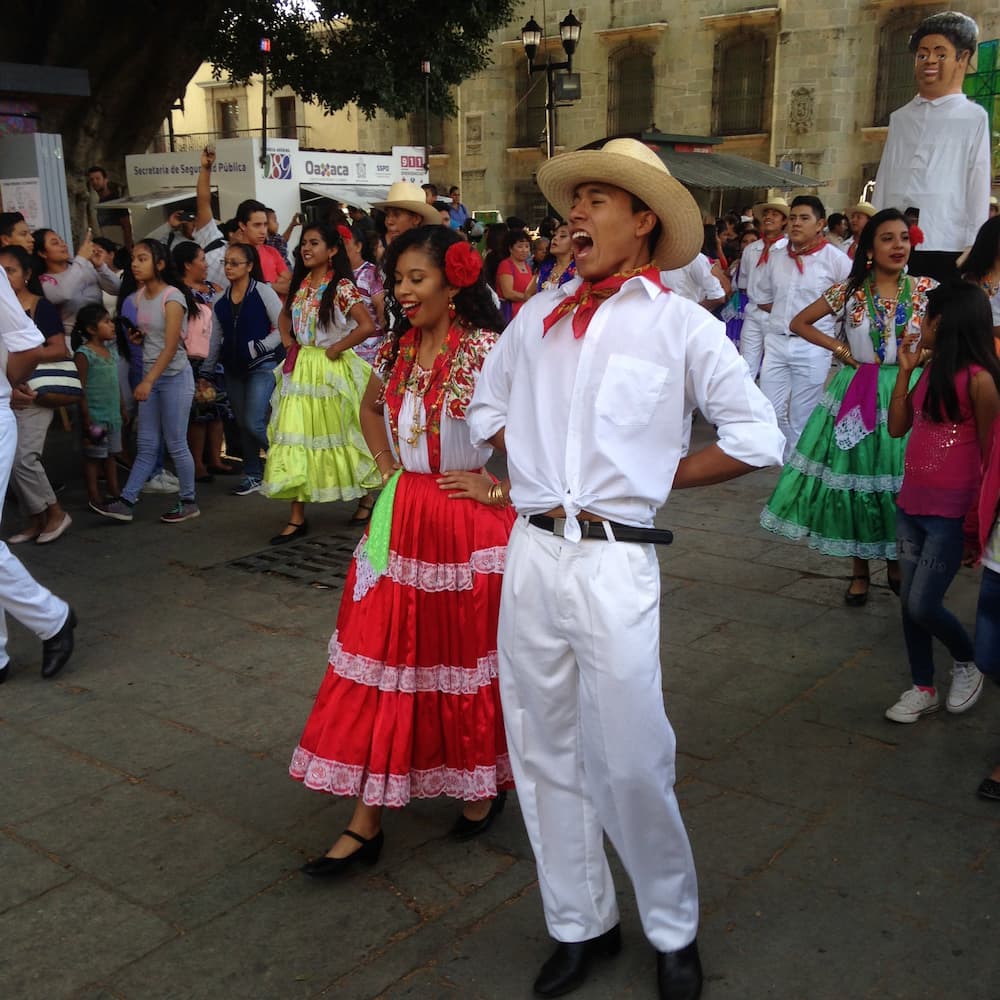
Not all street parades in Oaxaca are the same, even though they look similar at first glance. Each has its own name and occasion.
Calenda — the most common type. Used for weddings, quinceañeras, baptisms, patron saint days, university graduations, and honestly any occasion worth celebrating.
Comparsa — the parade style associated with Day of the Dead. More theatrical, with elaborate skull makeup and costumes, moving through the streets at night. The Jalatlaco comparsa on the night of November 1st is the most famous in the city.
Desfile de Delegaciones — the large official parades that precede the Guelaguetza main shows on the Saturdays before each Monday event. All the Guelaguetza dance delegations in full costume, moving through the city from Reforma to the Zócalo. A different scale entirely from a wedding calenda.
Convite — the warm-up parades in early July that announce the approaching Guelaguetza season. Running from Plaza La Cruz de Piedra to the Zócalo.
When Calendas Peak During the Year
While you can encounter a calenda any day of the week throughout the year, certain periods guarantee them:
Every Saturday and Sunday — wedding calendas at Santo Domingo, year-round. Reliable without exception.
Late spring and summer (May–August) — graduation season produces a completely different kind of calenda. Students march through the streets with marmotas labeled with their faculty: “Arquitectura,” “Facultad de Derecho,” “Medicina.” Rowdy, proud, and unmistakably local. These happen on weekdays as well as weekends.
July — Guelaguetza season brings the convites (July 6, 10, and 11) and the Desfiles de Delegaciones (July 18 and 25) alongside the usual wedding calendas. The entire city is parade territory.
Late October / early November — Day of the Dead comparsas, particularly on the night of November 1st. The Jalatlaco comparsa is the most atmospheric event of the whole festival period.
Easter / Semana Santa — religious processions throughout Holy Week, different in tone from calendas — more solemn, candlelit, moving slowly — but equally extraordinary to encounter.
December — Las Posadas processions throughout the month leading up to Christmas. Noche de Rábanos (December 23) brings crowds and activity throughout Centro.
The Route — Where Parades Go
Most calendas in Centro follow a predictable path:
Starting point: Santo Domingo church or Plaza La Cruz de Piedra (a block north of Santo Domingo)
Route: Down the Andador Turístico (Macedonio Alcalá) heading south
End point: Either the Zócalo or Plaza de la Danza.
The parade typically takes 30-60 minutes to move from Santo Domingo to the Zócalo depending on pace and how often it stops to dance.
Standing anywhere along Alcalá gives you a good view. The Zócalo end tends to be the most crowded. If you want to follow the parade rather than watch it pass, just fall in behind the brass band — joining from the back is entirely normal and expected.
Can You Join In?
Yes — and this is one of the things that makes Oaxacan calendas genuinely special. They’re public celebrations, not private processions.
Walking behind the parade, dancing in the street, accepting mezcal when it’s offered — all of this is welcome and normal. The only etiquette: don’t insert yourself at the front with the wedding party or the official participants. The back of the parade is for everyone.
👉 Oaxaca Customs, Culture & Etiquette: What to Know Before You Visit
Top Rated Tours in Oaxaca City
⭐️ 5 Star – Mezcal Journey
⭐️ 4.9 Star – Monte Alban
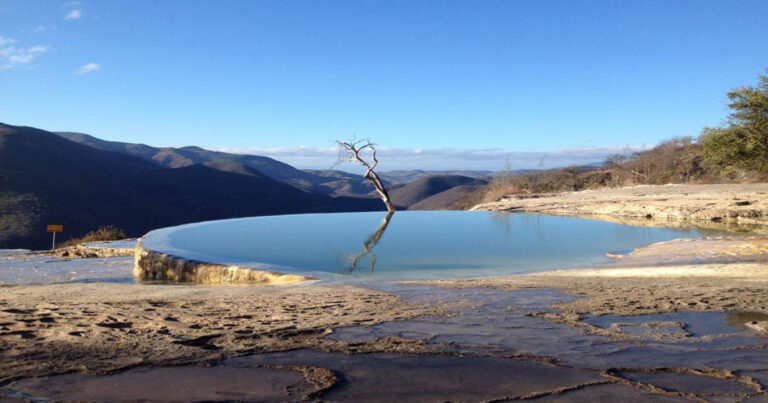
⭐️ 4.5 Star – Hierve El Agua
A Short History
Calendas were introduced to Oaxaca in colonial times by Dominican friars, who used parades to celebrate saints’ days and introduce Catholic celebrations to indigenous communities. The tradition merged over time with pre-Hispanic procession culture, absorbing the giant figures, the communal street celebration, and the ritual offering of food and drink to everyone present.
What exists today is something distinctly Oaxacan — neither purely indigenous nor purely colonial, but a living tradition that has been absorbing new occasions for centuries. University graduations, company anniversaries, wedding parties from Mexico City — all of them arrive at the same form: brass band, giant puppets, fireworks, mezcal, streets full of dancing.
It’s one of the clearest demonstrations of what makes Oaxaca different. The street here is still genuinely public.

FAQ
What is a calenda in Oaxaca? A traditional street parade featuring a brass band, giant papier-mâché figures (monos), illuminated marmotas, dancers in traditional dress, and fireworks. Used to celebrate weddings, graduations, baptisms, patron saints, and almost any significant occasion.
When is the best time to see a calenda in Oaxaca City? Saturday afternoons outside Santo Domingo church are the most reliable — wedding calendas happen throughout the afternoon at roughly 90-minute intervals and then move down Alcalá toward the Zócalo.
What’s the difference between a calenda and a comparsa? A calenda is the general-purpose celebration parade used for weddings and various occasions. A comparsa is specifically associated with Day of the Dead — more theatrical, costumed, and typically moving at night.
Can tourists join the parade? Yes — walking and dancing behind the parade is completely normal and welcomed. Don’t push to the front with the official participants, but the back of any calenda is open to anyone who wants to follow.
Do they happen every week? For those who live here, calendas are part of the landscape — sometimes we pause to watch, sometimes we sidestep and continue our errands. But they exist reliably, particularly on Saturdays around Santo Domingo. You are genuinely unlikely to spend a full weekend in Centro without encountering at least one.