Oaxacan Pottery: A Hands-On Guide to Oaxaca’s Clay Masterpieces
Pottery is everywhere in Oaxaca. You’ll see it in markets, kitchens, workshops, and stacked outside homes in nearby villages.
Some of it’s decorative, some of it’s meant to be cooked with, and almost all of it is still made by hand using techniques that go back generations. This isn’t factory-made souvenir stuff — it’s part of daily life here.
This guide breaks down the main types of Oaxacan pottery, where they come from, and what’s actually worth seeing (or buying) if you’re visiting.
Top Rated Tours in Oaxaca City
⭐️ 5 Star – Mezcal Journey
⭐️ 4.9 Star – Monte Alban
⭐️ 4.5 Star – Hierve El Agua
Why Pottery Still Matters in Oaxaca
Pottery in Oaxaca isn’t a revival craft or something recreated for tourists. Many families have been working with clay for centuries, passing techniques down through Zapotec and Mixtec communities.
Different villages use different clay, firing methods, and finishes, which is why pottery here doesn’t all look the same. One town’s known for glossy black pieces, another for cookware that goes straight on the fire.
The variety is what makes Oaxacan pottery interesting — and why it’s still very much alive.
Barro Negro (Black Clay) – San Bartolo Coyotepec
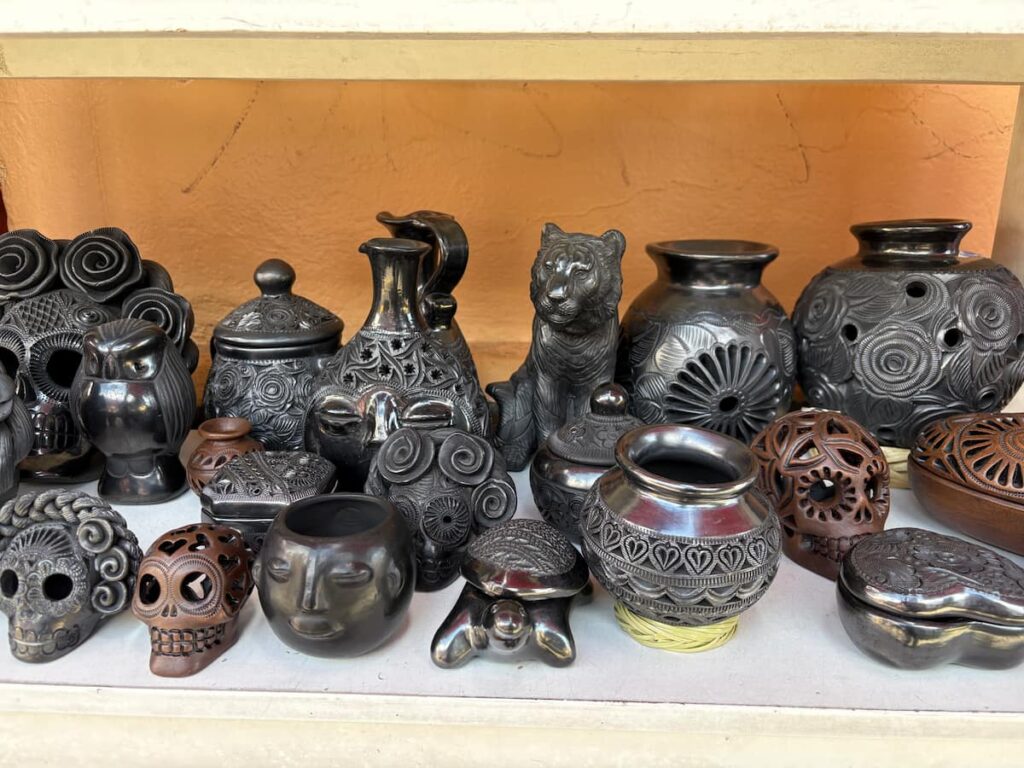
Barro negro is the most famous pottery style in Oaxaca.
It comes from San Bartolo Coyotepec, a village about 20 minutes south of Oaxaca City, and it’s known for its deep black color and smooth, polished finish.
What Makes Barro Negro Unique
The clay itself isn’t naturally black. The color comes from:
- Polishing the clay before it fully dries
- Firing it in a low-oxygen kiln
This technique became popular in the mid-20th century and turned local pottery into something internationally recognized.
You’ll see barro negro made into:
- Vases and bowls
- Decorative figures and skulls
- Lamps and sculptural pieces
It’s striking but fragile, so most pieces are decorative rather than practical.
Where to See It
- Workshops in San Bartolo Coyotepec
- Artisan markets in Oaxaca City
👉 Black Pottery Tour included with Monte Albán and Alebrijes
Red Clay Pottery – San Marcos Tlapazola
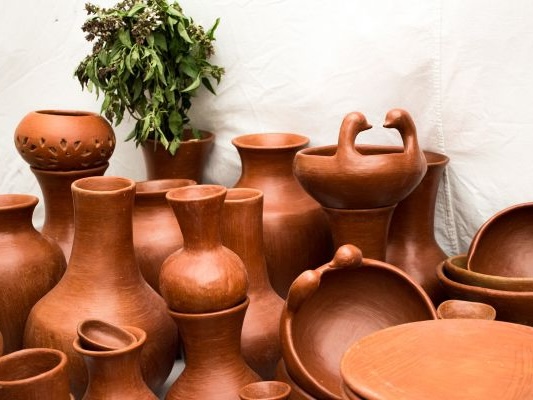
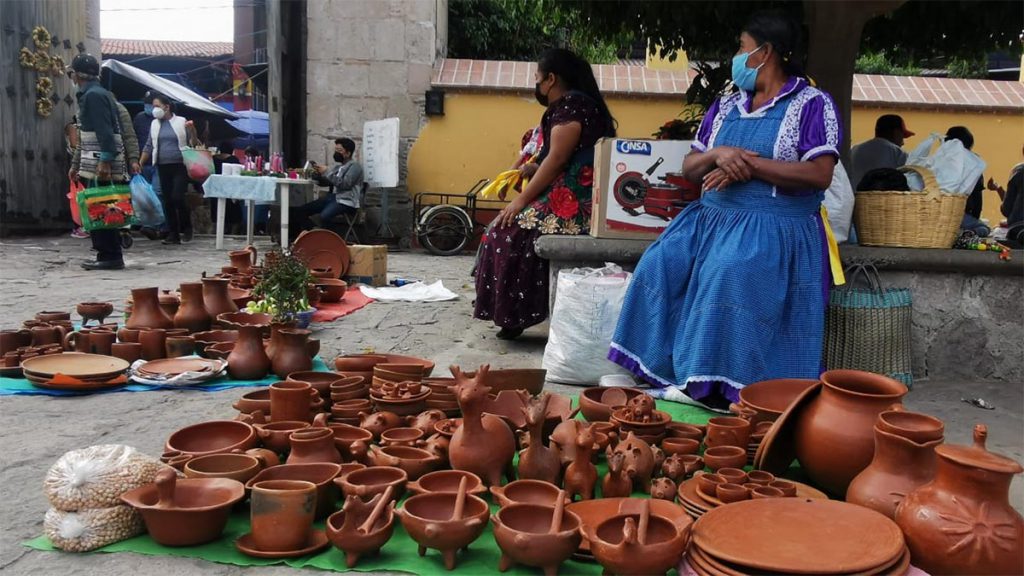
If barro negro is decorative, red clay pottery is practical.
This style comes from San Marcos Tlapazola, a Zapotec village east of Oaxaca City, and it’s mostly made by women using open-fire techniques.
What Red Clay Is Used For
Red clay pottery is mostly designed for cooking. You’ll see:
- Comales (griddles)
- Cazuelas (pots)
- Large bowls used in everyday kitchens
The pieces are unglazed and fired at high temperatures, which makes them strong enough to go directly over flames.
This is the kind of pottery locals actually cook with.
Where to Find It
- San Marcos Tlapazola itself
- Artisan markets in Oaxaca City
👉 Oaxaca Red Clay Pottery Experience – Full Day Private Tour
Other Pottery Styles You’ll See in Oaxaca
Oaxaca has dozens of pottery villages, but a few other styles stand out:
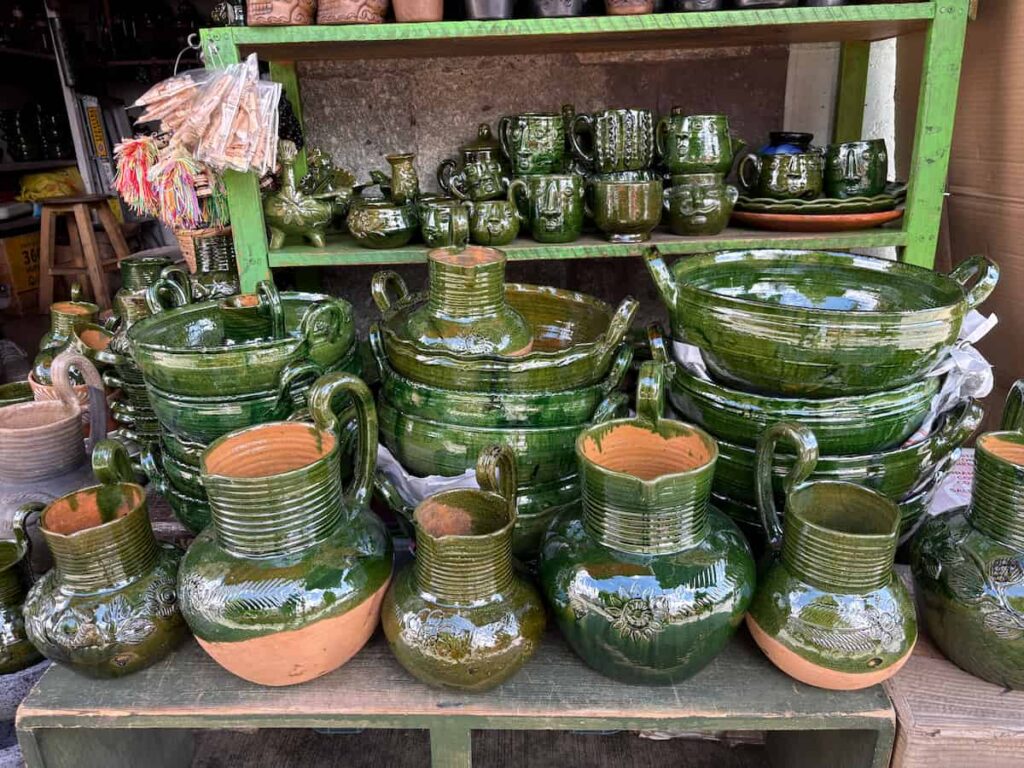
Barro Verde – Santa María Atzompa
Green-glazed pottery made using copper-based glazes. Mostly bowls, plates, and pitchers.
Figurines and Folk Pieces
Small decorative figures from villages like Ocotlán de Morelos and Atzompa. Often animals, people, or traditional scenes.
Each village has its own look, which is why browsing markets here never gets boring.
👉 50 Best things to See, Do and Eat in Oaxaca City: Your Ultimate Guide
Where to See Pottery Being Made
If you want more than just shopping, these places are worth visiting:
- San Bartolo Coyotepec – Barro negro workshops
- San Marcos Tlapazola – Red clay cookware
- Santa María Atzompa – Green-glazed pottery
You can visit independently or join an artisan tour that combines pottery villages with other crafts.
Buying Pottery in Oaxaca: What to Know
A few practical tips:
- Buy directly from villages when possible
- Barro negro should feel smooth and evenly polished
- Red clay should feel solid and heavy
- Decorative pieces are fragile — pack carefully
The prices vary, but most small pieces are affordable, especially compared to galleries abroad.
🌮 Ready for Oaxaca City’s Best Street Food?
Download my personal Street Food Map – 20+ stalls I actually eat at every week as a local. The real-deal memelas, crispy tlayudas, and late-night tacos that locals line up for (and the ones top food tours secretly hit).
✅ First-timers → eat like a pro from day one
✅ Foodies → discover hidden gems tourists never find
✅ Instant Google Maps link — opens on your phone in seconds
Just $3.99 (cheaper than one tlayuda… and way better than buying me a coffee 😉)
👉 🌮 Unlock Oaxaca’s Best Street EatsWhy Oaxacan Pottery Is Worth Paying Attention To
Oaxacan pottery isn’t just something to put on a shelf.
It’s tied to food, family, and daily routines — whether that’s cooking on a red clay comal or shaping black clay the same way your grandparents did. The techniques haven’t been cleaned up or modernized for visitors, which is exactly why they’re still interesting.
If you want a souvenir that actually means something here, pottery is a good place to start.
👉 Follow Johnny_in_Oaxaca on Instagram 😎