Jalatlaco: The best Street Art in Oaxaca City
There’s a neighbourhood in Oaxaca City that stopped me in my tracks the first time I walked through it — and keeps doing it every time.
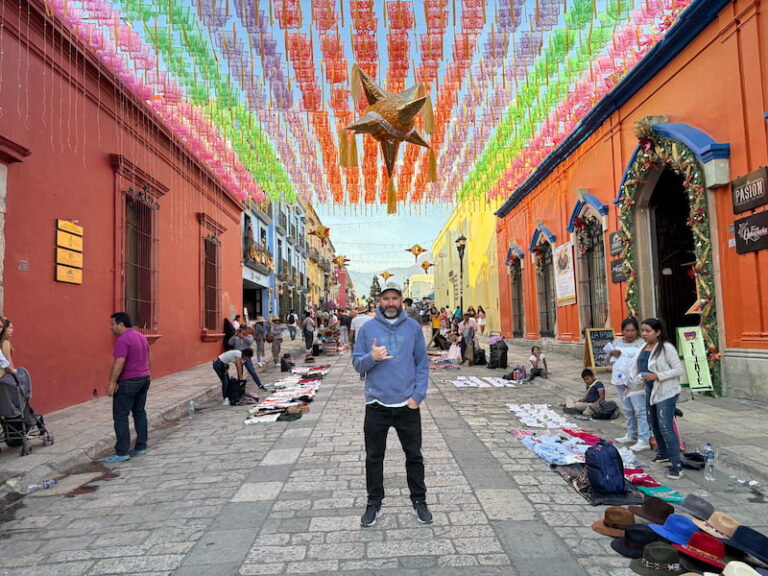
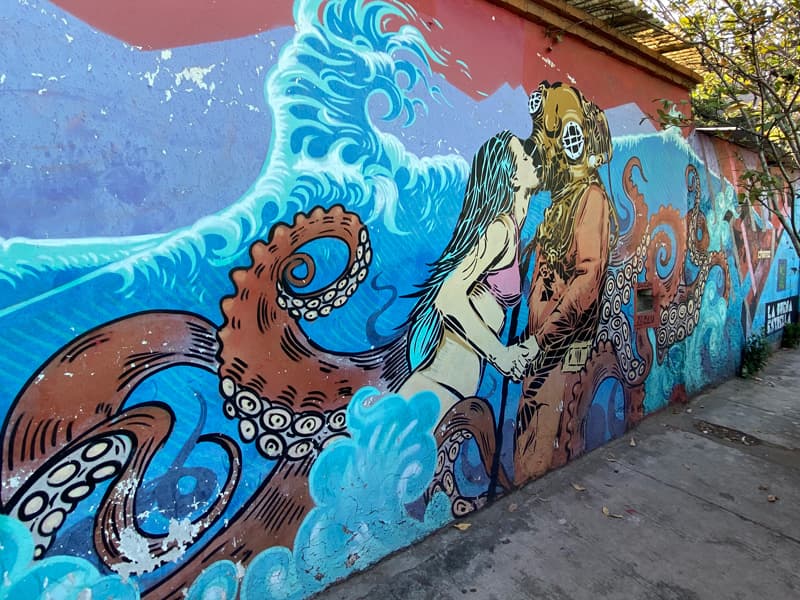
Jalatlaco (pronounced ha-lat-LA-co) is only ten minutes on foot from the Zócalo, but it feels like a completely different world. Cobblestone streets barely wide enough for one car, painted walls in terracotta and yellow and deep blue, a church that’s been standing since the 16th century, and murals — extraordinary murals — covering almost every available surface.
It’s the most concentrated open-air art gallery in Oaxaca, and arguably one of the best in Mexico.
👉 50 Best things To Do In Oaxaca City: Your Ultimate Guide
What Makes Jalatlaco Different
Before it was a street art destination, Jalatlaco was a Zapotec village — pre-dating Spanish colonization by centuries. Its colonial architecture, cobblestone streets, and village-like character have been preserved in a way that much of Oaxaca City’s Centro hasn’t.
The street art here didn’t arrive as a generic urban beautification project. It grew organically from a neighbourhood that already had strong indigenous and artistic identity. The murals act as mirrors of the city’s traditions, beliefs, and social struggles — you’re not looking at decoration. You’re reading a conversation between artists, community, and centuries of Oaxacan history.
That’s what sets it apart from street art you’ll see in other cities. Every wall here is telling you something.
The Themes — What You’re Actually Looking At
Understanding the recurring symbols makes the whole experience more meaningful. Here’s what to look for:
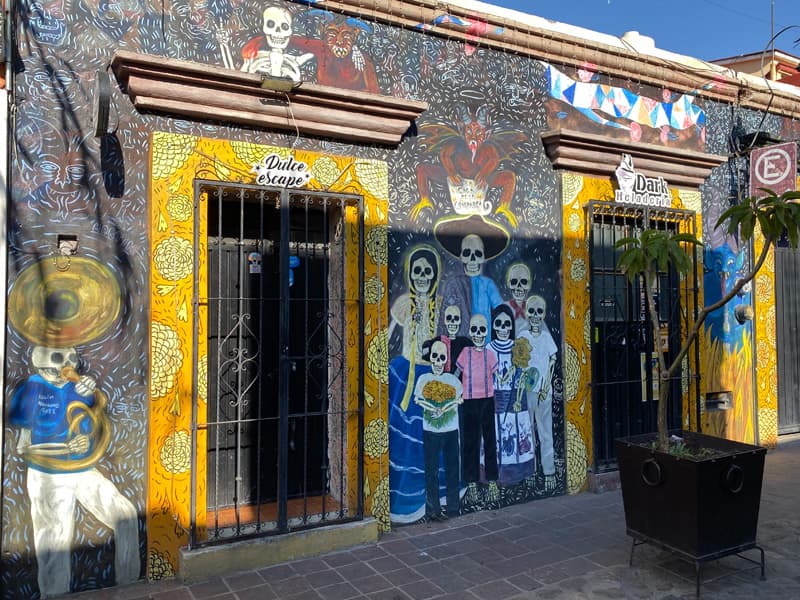
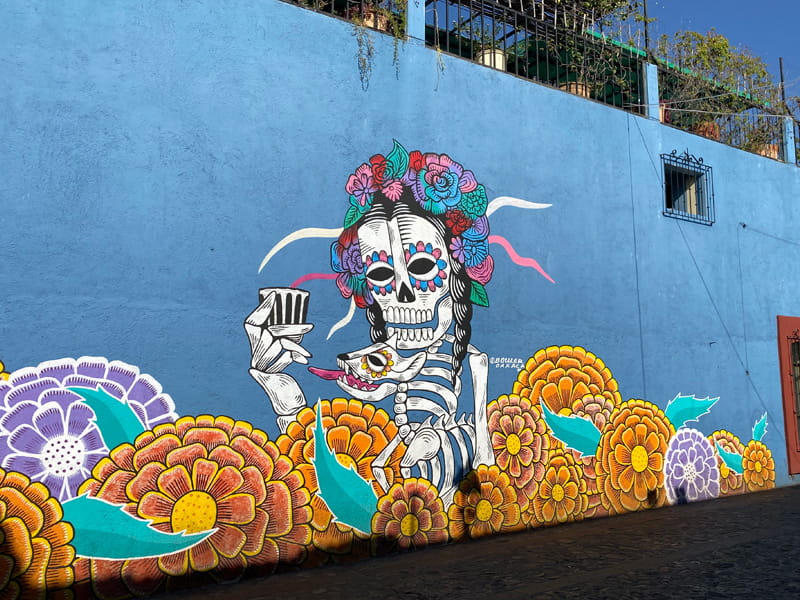
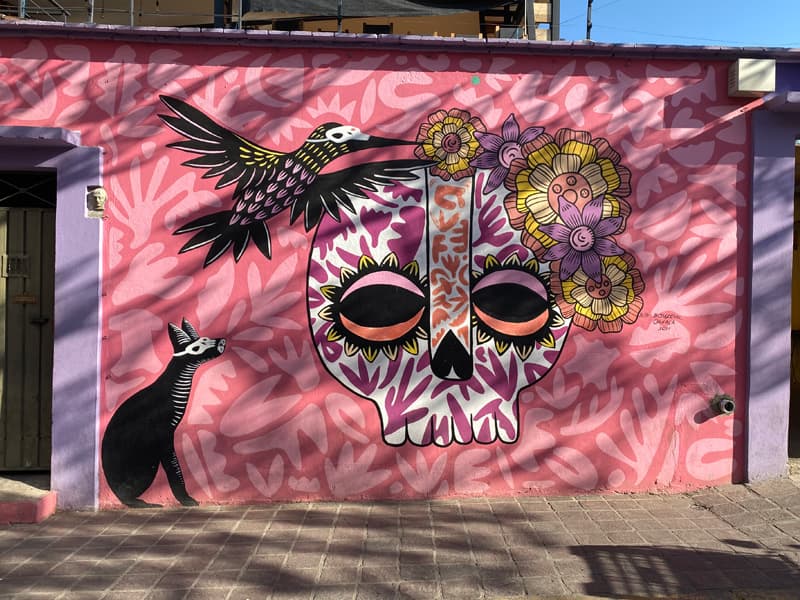
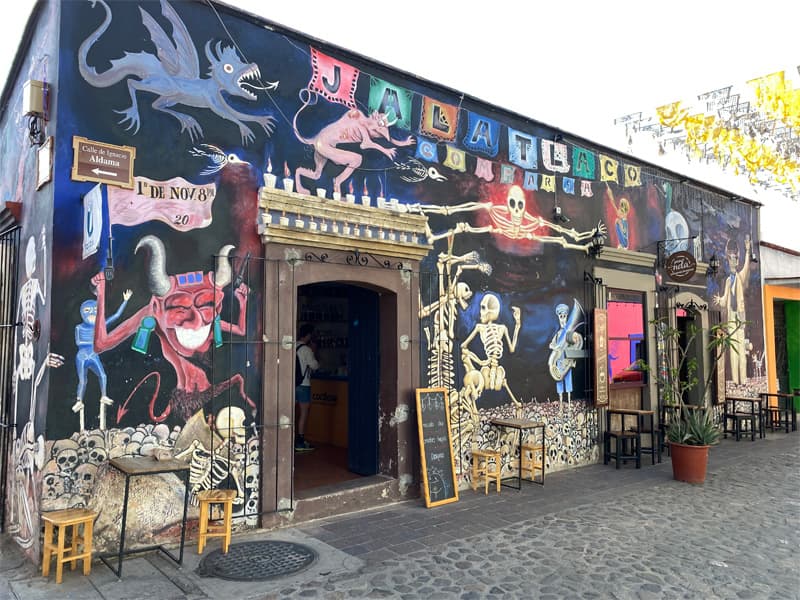
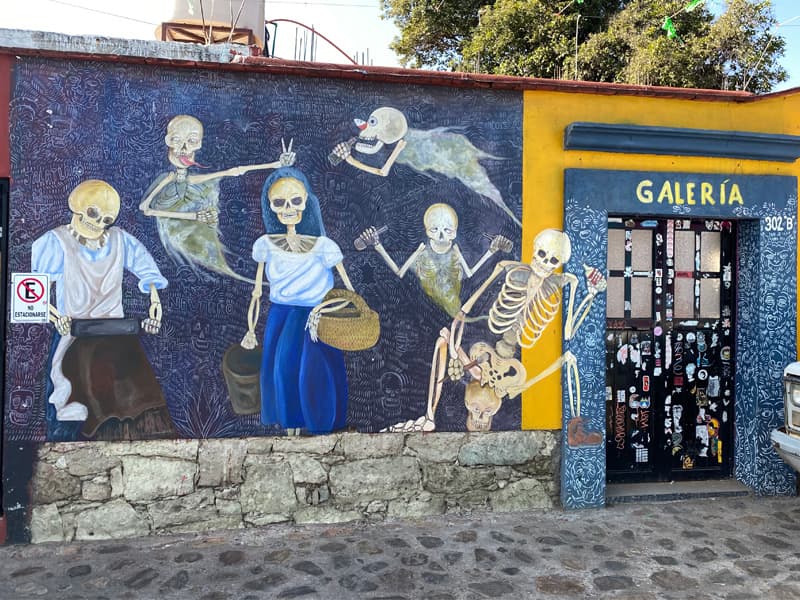
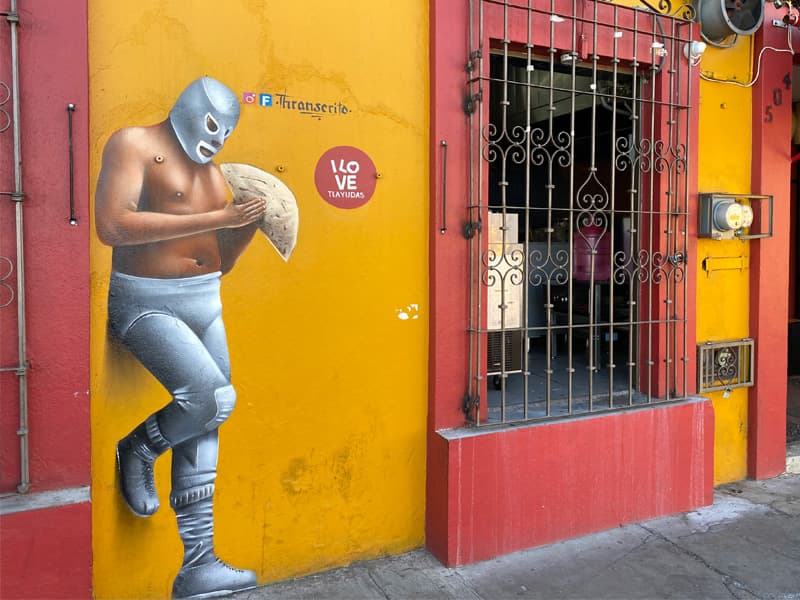
Calaveras (Skulls and Skeletons) The most immediately recognizable motif throughout Jalatlaco. Skeletons have deep roots in both pre-Hispanic Mesoamerican art and Catholic colonial tradition — the two merged in Oaxaca in ways that are still visible everywhere. Day of the Dead themes dominate much of the art here, but these aren’t macabre — they’re joyful, irreverent, and life-affirming. Skeletons dancing, skeletons eating tlayudas, skeletons playing brass instruments.
La Catrina The elegant skeletal female figure in a wide-brimmed hat — originally created by Mexican artist José Guadalupe Posada and later developed by Diego Rivera. She’s come to represent both the inevitability of death and the futility of wealth in the face of mortality. You’ll see her interpretation everywhere in Jalatlaco.
Zapotec Symbols The Zapotec ethnic group remains the largest indigenous group in Oaxaca, and symbols of their culture appear throughout the street art. Geometric patterns similar to the stone mosaics at Mitla, serpents, maize, and cosmological symbols drawn from thousands of years of Zapotec tradition.
The Jaguar The jaguar holds profound significance in Mesoamerican culture — a symbol of power, strength, and divinity. The Zapotecs believed they descended from the clouds and became jaguars. You’ll find jaguar motifs throughout Jalatlaco and across Oaxaca generally.
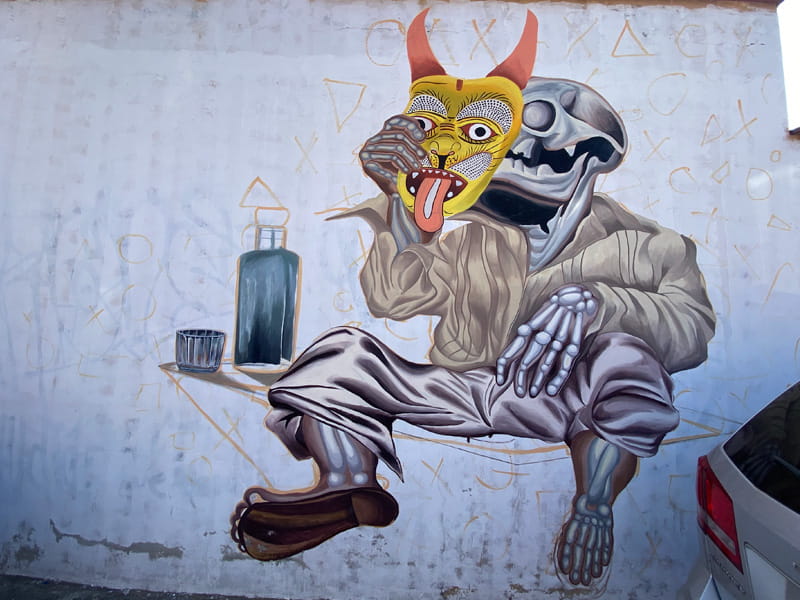
Alebrijes The fantastical painted creatures with mismatched animal parts — wings on a lion, a fish with legs, a serpent with feathers — are a celebrated Oaxacan craft tradition. In Oaxaca, alebrijes carved from copal wood by artisans in San Martín Tilcajete are seen as spiritual guides or protective spirits. Their wild colors and forms translate beautifully to murals.
Political and Social Commentary Oaxaca is also filled with political pieces, often done in the form of woodcut prints. Indigenous rights, water access, earthquakes, migration — the walls here don’t shy away from the difficult parts of Oaxacan and Mexican life. Look for printed paper murals as well as painted ones — these are often more overtly political and tend to be shorter-lived, replaced or removed as they fade.
👉 5 Days in Oaxaca City: A Practical Itinerary for First-Time Visitors
How to Walk Jalatlaco — The Route
Jalatlaco is small enough to cover in a couple of hours on foot, and compact enough that you can’t really get lost. The layout rewards wandering more than following a strict route, but here’s the framework:
Start at the entrance arch on Calle Zárate — the stone arch that marks the boundary between El Llano and Jalatlaco proper. This is the traditional gateway to the neighbourhood and a good orientation point.
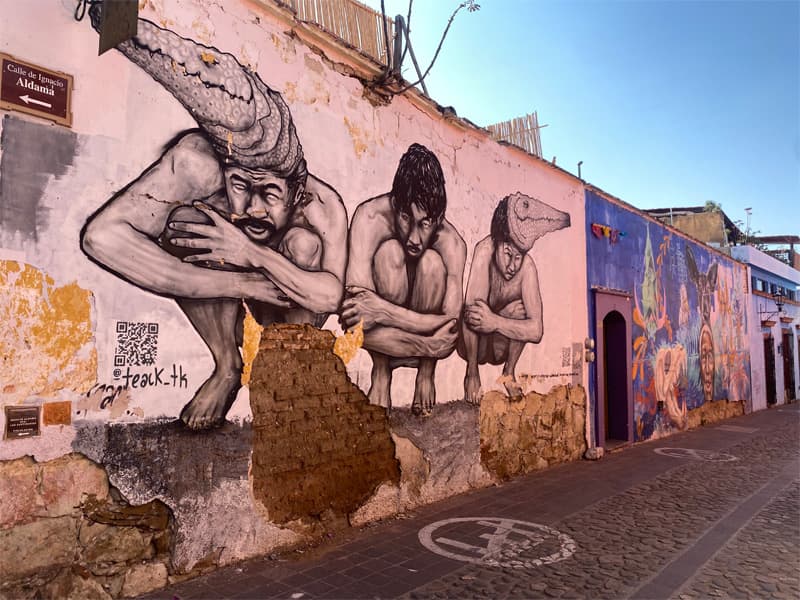
Walk Calle Aldama — this is the main artery of Jalatlaco’s street art scene. Walk it slowly and let the smaller streets fork off naturally. Some of the most significant murals are along Aldama and on the walls of buildings on the cross streets.
Loop back via Calle 5 de Mayo — making a loop from Aldama via Calle 5 de Mayo covers the core of the neighbourhood without missing the main pieces.
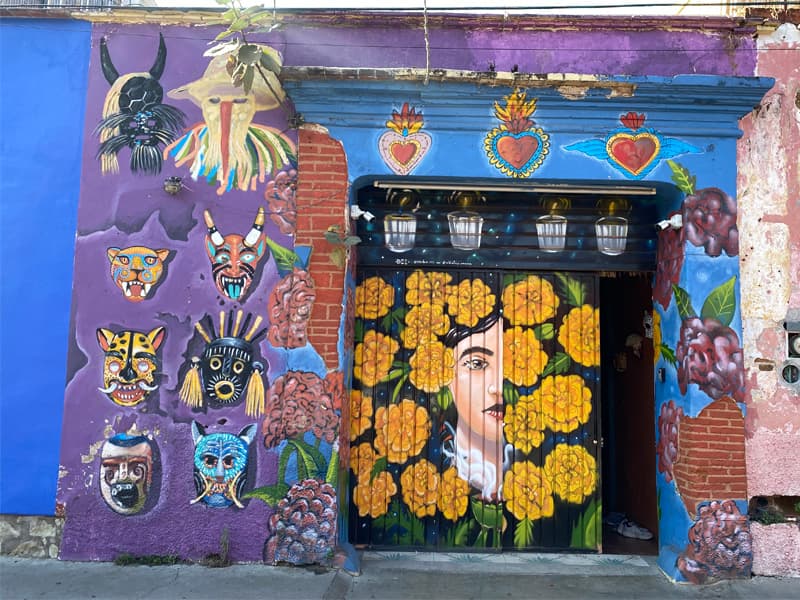
The Parroquia San Matías Jalatlaco — the neighbourhood church at the centre of the barrio. Its brightly-painted belfry in yellow, blue, and red is one of Jalatlaco’s most photographed spots. The walls surrounding the church are particularly good for murals.
The outskirts — the streets and alleyways on the edges of Jalatlaco are less dense but worth exploring. You’ll find murals scattered throughout that don’t appear on any map.
Allow: Two to three hours if you want to walk slowly, photograph properly, and stop for a coffee. It’s the right pace for a neighbourhood that rewards attention.
The Cafés and Food Scene
One of Jalatlaco’s great advantages over other street art districts is that it’s also genuinely good for eating and drinking. You don’t need to leave the neighbourhood to have a complete afternoon.
Cocuche Café — one of the most famous spots in Jalatlaco, directly in front of the church. The building itself is one of the most photographed in the neighbourhood. Good coffee, relaxed atmosphere.
Pannela Panadería — next to Cocuche, an artisanal bakery that’s become a fixture of the neighbourhood. The smell of fresh bread mixing with the cobblestones and murals is a very Jalatlaco combination.
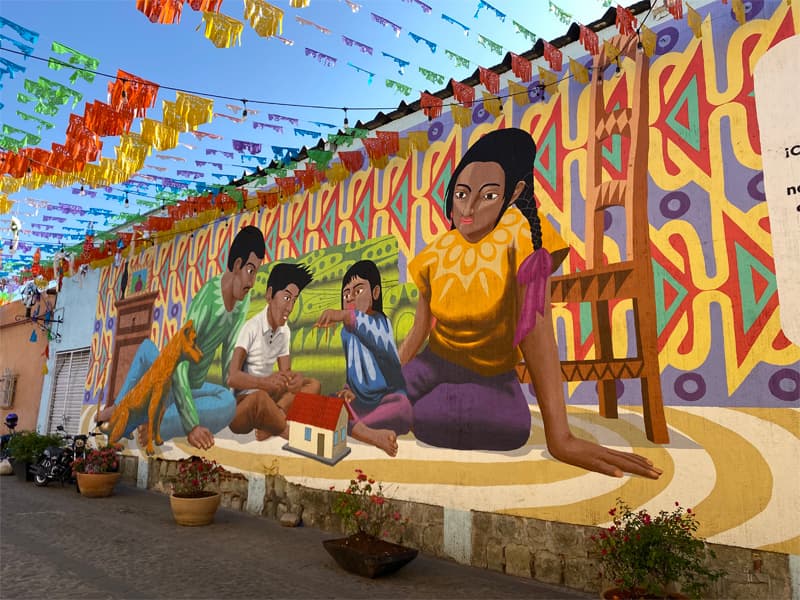
Santa Hierba — a café with a mural on its front wall that’s become one of the neighbourhood’s signature images.
Boulenc — the popular artisanal bakery has an outpost on Calle 5 de Mayo where you can happily disappear into bread and coffee for an hour.
The neighbourhood has expanded significantly in recent years — boutique restaurants, mezcal bars, and independent shops now line many streets. La Punta it isn’t, but the food and drink scene in Jalatlaco is genuinely good and keeps improving.
👉 10 Best Day Trips from Oaxaca City (With And Without A Tour)
Do You Need a Tour?
You can absolutely walk Jalatlaco independently and see everything without a guide. The neighbourhood is small, safe, and entirely navigable on your own.
That said, a guided tour adds something real here — because without context, a lot of the symbolism is just beautiful colour. With context, it becomes a conversation about pre-Hispanic cosmology, the 2017 earthquake, indigenous rights, and how a neighbourhood keeps its identity while the city around it changes.
Art Walk & Cacao Delight — a half-day walk through Jalatlaco. Learn the ancestral techniques used by local artists, visit murals, studios, and galleries, and participate in a printing session at a local art studio. You leave with something you made.
⭐️ Art Walk & Cacao Delight Tour
Street Art Bike Ride — covers Jalatlaco plus Xochimilco and other neighbourhoods. Better for seeing the full breadth of Oaxacan street art across different barrios. Half day, bike provided.

Street Art Beyond Jalatlaco
Jalatlaco is the best single destination for street art in Oaxaca — concentrated, walkable, and consistently high quality. But there are two other areas worth knowing about.
Xochimilco Just north of Santo Domingo, Xochimilco is the second major street art district in Oaxaca City. Originally established by the Aztecs and later known for its 18th-century Spanish aqueduct, the neighbourhood has its own strong mural tradition. Quieter than Jalatlaco, less touristy, and the art here has a slightly different character — larger scale pieces, more politically engaged, and often more recently produced. The old aqueduct running through the neighbourhood is itself a remarkable backdrop for murals.
Centro Histórico and Santo Domingo area The art around Santo Domingo tends to be smaller in scale — mythological creatures on storefronts, smaller painted pieces on doorways and walls. You’ll stumble across excellent pieces throughout Centro without specifically looking, but it’s harder to navigate systematically. The advantage is that you’re already walking through here anyway — keep your eyes up as you move between the Zócalo and Santo Domingo.
The honest truth about Centro is that murals here have shorter lifespans — paper-based guerrilla murals fade and shred quickly in sun and rain, and city cleaning crews occasionally remove them. What you see on any given day is different from what was there six months ago.
For a focused experience, Jalatlaco is your destination. For the full picture of Oaxacan street art, add Xochimilco. The bike tour covers all of it in one morning.
How to Get to Jalatlaco
Jalatlaco sits about 10 minutes northeast of the Zócalo on foot. From Santo Domingo church, walk east toward El Llano park, then look for the Calle Zárate entrance arch on the far side of the park — the transition from Centro to the neighbourhood is almost immediate.
No taxi needed. No navigation required. Just walk east.
The Best Time to Go
Morning — the best light for photography and the streets are quietest. The cafés are open from around 8am and the neighbourhood is at its most peaceful before the afternoon visitor flow.
Day of the Dead period (late October/early November) — Jalatlaco’s murals and Day of the Dead themes take on extra resonance during the festival. The neighbourhood itself hosts a famous comparsa (street parade) on the night of November 1st — one of the most atmospheric events in the city. Walking the murals in the days leading up to the festival, when the neighbourhood is being decorated with marigolds and altars, is a genuinely special experience.
Any day, any weather — the cobblestone streets look good in sun and look dramatic in rain. There’s no bad time.
👉 100 Mexican Slang Words You’ll Actually Hear Every Day
Jalatlaco is one of those places that earns multiple visits. The first time you’re processing the neighbourhood. The second time you’re reading the walls. By the third visit you have a favourite mural, a preferred café, and a route that’s yours.
Set aside two hours, bring a charged phone, and get lost in it.
Also read: [50 Best Things to Do in Oaxaca City] and [Where to Stay in Oaxaca City: Best Neighbourhoods Guide]