Oaxacan Mole Explained: The 7 Moles, Where They Come From, and Why Locals Care
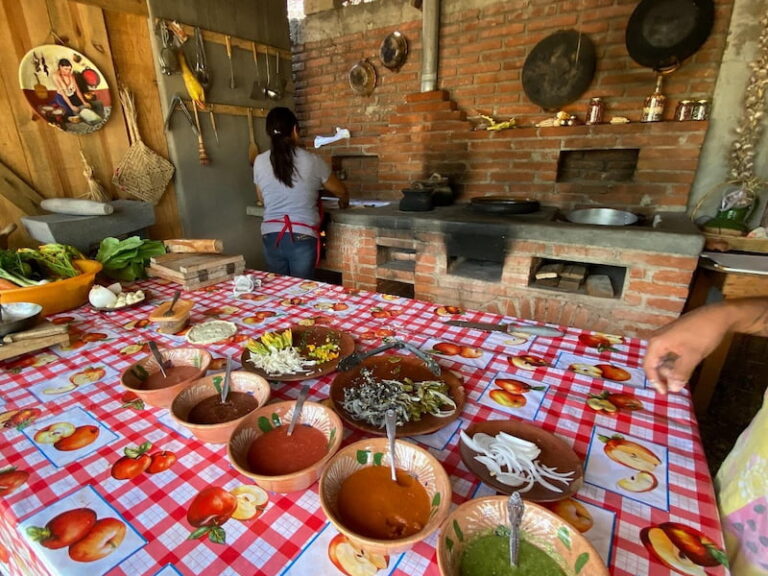
Mole is everywhere in Oaxaca. You’ll spot it on restaurant menus, piled high in market stalls, and cooking in enormous clay pots at celebrations across the state.
But here’s the thing — mole isn’t just a sauce. In Oaxaca, it carries real weight. It takes hours, sometimes days, to make properly. It shows up at weddings, funerals, and festivals. And it tells you a lot about how people here think about food.
If you want to understand Oaxacan food culture, mole is the place to start.
👉 Oaxaca Cheese (Quesillo): How It’s Made and Why Everyone Loves It
What Is Mole, Really?
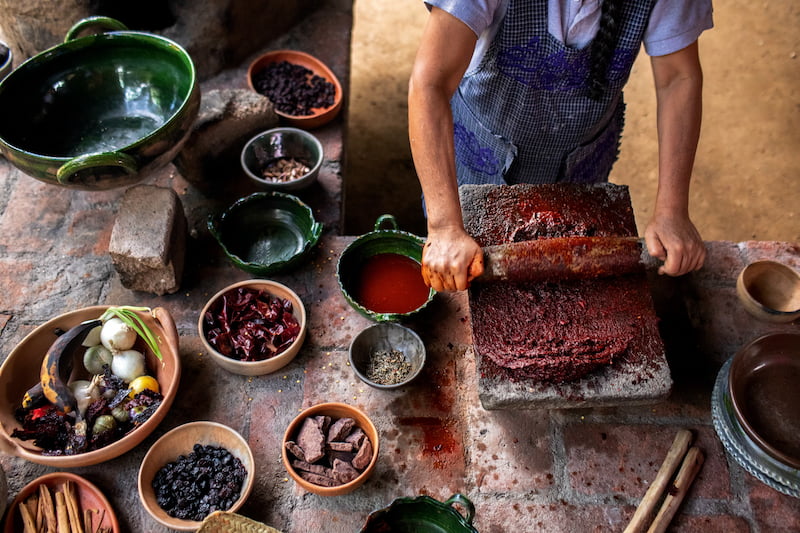
Mole is a slow-cooked sauce made from an intimidatingly long list of ingredients — dried chilies, spices, seeds, nuts, tomatoes, and sometimes chocolate or cacao. Everything gets toasted, ground, and cooked down together until the flavors melt into something deep and layered.
In Oaxaca, mole is rarely fiery hot. It’s more smoky and earthy, with a bitterness that the chocolate balances out rather than dominates. Savory is the word people reach for most.
It’s typically served over chicken, turkey, pork, or vegetables — but the protein almost plays second fiddle. The mole is the star.
Where Does Mole Come From?
Mole in Oaxaca goes back long before the Spanish arrived.
Indigenous communities were already making complex chili-based sauces using a metate — the flat stone grinding tool you still see in traditional kitchens today. Cacao, herbs, seeds, and dried chilies had been combined into pastes and sauces for centuries.
When Spanish colonization brought new ingredients in the 1500s — cinnamon, cloves, almonds, sesame seeds — local cooks folded them into what they already knew. Over generations, those two traditions merged into the moles Oaxaca is known for today.
It didn’t happen overnight, and it didn’t happen in one place. Mole evolved slowly, village by village, family by family.
👉 5 Days in Oaxaca City: A Practical Itinerary
What Makes Mole Different?
The balance.
Good Oaxacan mole isn’t trying to hit you with one big flavor. It’s built in layers — every ingredient playing a role.
- Dried chilies bring smokiness, depth, and mild heat
- Chocolate or cacao adds bitterness and rounds out the edges
- Seeds and nuts give it body and richness
- Spices add warmth and complexity
- Fruit or herbs cut through the heaviness and keep it alive
That’s why each bite tastes slightly different from the last. Nothing is flat, nothing is obvious. You just keep tasting.
👉 Oaxaca City’s Top Markets: Eat, Shop, Vibe
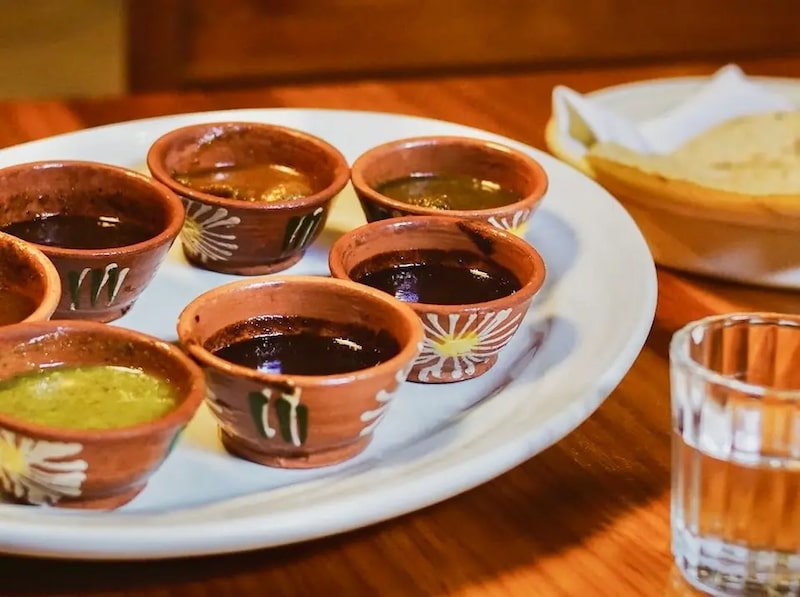
The Seven Moles of Oaxaca
You’ve probably heard Oaxaca called “the land of seven moles.” It’s one of those things everyone repeats, and it’s not wrong — but it can give the impression there are only seven. In reality there are countless regional variations. These seven are just the most recognized.
Some you’ll find on almost every menu. Others you might only encounter once, at someone’s grandmother’s house during a village celebration.
1. Mole Negro
The one Oaxaca is most famous for.
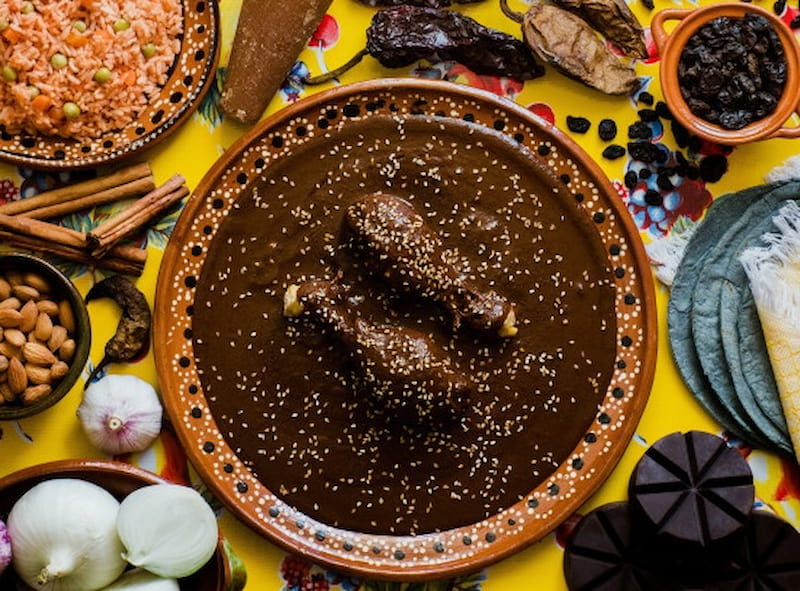
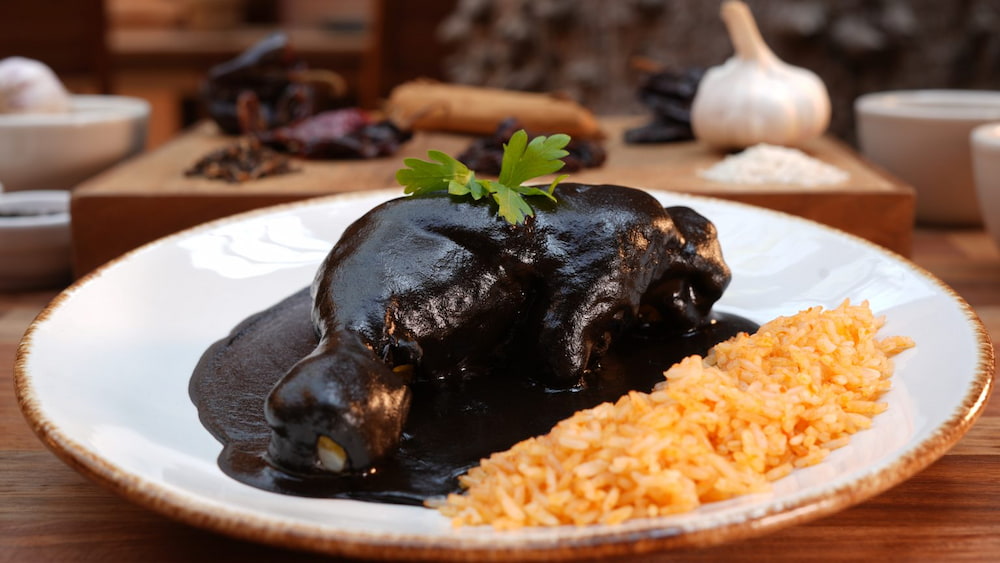
Mole negro is dark, thick, and deeply complex. It’s made with multiple types of dried chilies, whole spices, seeds, and a small amount of chocolate. The color is almost black. The flavor is smoky, slightly bitter, and rich — but not sweet.
This is a special-occasion mole. Weddings, funerals, major fiestas. You won’t find it thrown together on a weekday.
If you only try one mole in Oaxaca, make it this one.
2. Mole Rojo
Bold, hearty, and more accessible than negro.
Mole rojo is built around red chilies and has a more obvious savory heat. It’s less complex than negro but still has serious depth. You’ll often see it paired with chicken or pork.
This is one of the easier moles to find day-to-day in Oaxacan restaurants, and a great starting point if you’re new to the topic.
3. Mole Coloradito
Smoother, milder, and a local favorite.
Coloradito sits between rojo and negro in intensity. It’s more balanced and approachable — less heat, more warmth. A lot of people find this their gateway mole, the one they come back to.
It’s common in home kitchens and everyday restaurants, which means it’s also the version that varies the most from cook to cook.
4. Mole Amarillo
Lighter, broth-based, and more everyday.
Despite the name, mole amarillo isn’t bright yellow. It’s lighter in color and consistency than the others — closer to a thick broth than a paste-based sauce.
You’ll often find it with vegetables and herbs, sometimes meat, sometimes not. It shows up inside street food empanadas and is the mole most associated with casual home cooking rather than celebrations.
5. Mole Verde
Fresh, herbal, and completely different.
Mole verde is the outlier. Made with tomatillos, green chilies, and fresh herbs, it has a bright, almost grassy flavor that’s nothing like the dark, smoky moles above.
It’s a good option if you want something lighter, and it works particularly well with chicken or pork. If you’ve been working through the darker moles, verde feels like a palate reset.
6. Mole Chichilo
Rare, smoky, and worth seeking out.
Chichilo is one of the hardest moles to find in restaurants. It’s made using burnt chilies and charred tortillas, giving it a deep, almost acrid bitterness that sounds intense but works surprisingly well.
This one tends to appear at community events and family gatherings rather than tourist-facing menus. If you come across it, order it.
7. Mole Manchamantel
The one that stains the tablecloth — and your shirt.
Manchamantel means “tablecloth stainer,” which tells you everything you need to know about the color. It’s reddish, bold, and slightly sweet-savory — one of the only moles that leans toward fruit as a main ingredient.
Less common than the others, but memorable when you do find it. The sweetness catches people off guard in a good way.
👉 10 Traditional Oaxacan Foods You Must Try

Mole and Celebration In Oaxaca
Mole doesn’t just show up anywhere.
In Oaxaca, it’s tied to the moments that matter — weddings, baptisms, Día de los Muertos, village patron saint festivals. Food is central to all of these events, and mole is almost always on the table.
Making it is rarely a solo effort either. Traditional mole preparation involves multiple people, long hours, and a recipe that gets passed down and quietly adjusted with every generation. There’s a reason people talk about their grandmother’s mole in the same breath as a family heirloom.
That collective, unhurried process is part of what makes it mean something here.
Where to Find and Try Mole in Oaxaca
In restaurants: Mole negro and coloradito are on most traditional menus in Oaxaca City. Look for comidas corridas — the set lunch menus — where you’ll often find mole served with rice, beans, and fresh tortillas for a fraction of the price.
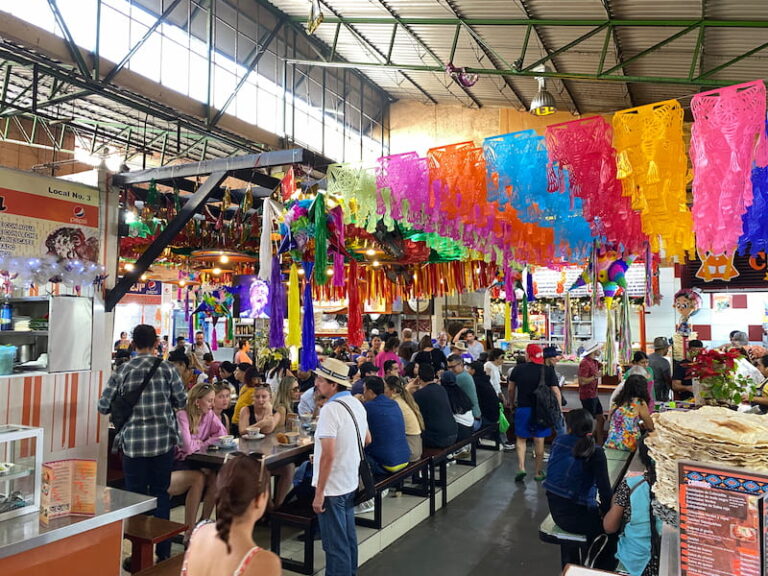
In markets: Mercado 20 de Noviembre is the most famous for mole. You can also buy it as a fresh paste to take home from Mercado Benito Juárez — bags and bags of it, in every variety.
In cooking classes: This is honestly the best way to understand it. When you actually grind the chilies, smell each ingredient going in, and taste the sauce at different stages, it clicks in a way that eating it alone never quite does.
👉🧑🍳 Try a Mole cooking class with Traditional Cooking Class with Minerva Lopez
Why Mole Still Matters
Oaxaca has a reputation for food, and mole is a big part of why.
It’s not fast, it’s not simple, and it’s not trying to be either of those things. It’s a sauce that asks you to slow down and pay attention — which, honestly, is a decent way to describe Oaxaca itself.
Whether you’re eating it at a local wedding, ordering it at a corner restaurant, or learning to make it from scratch, mole is one of those things that gives you a real window into how food and tradition are woven together here.
That’s why, after all this time, it’s still the dish people point to first.
👉 Check out some more Oaxaca Food posts