A Beginner’s Guide to Mezcal: Everything You Need to Know In Oaxaca
Someone hands you a small clay cup. It’s filled with something clear — maybe slightly golden. It smells like a campfire and something floral underneath that. They tell you not to shoot it.
That’s your mezcal moment. And if you’re in Oaxaca, it’ll happen within the first few hours.
Mezcal is the drink Oaxaca is built around — not as a tourist attraction, but as a genuine cultural anchor that has been present at Zapotec weddings, funerals, harvests, and ceremonies for centuries. Understanding even the basics changes the experience completely. This guide covers everything from what it actually is to how it’s made, what to order, and where to drink it properly.
What Is Mezcal?
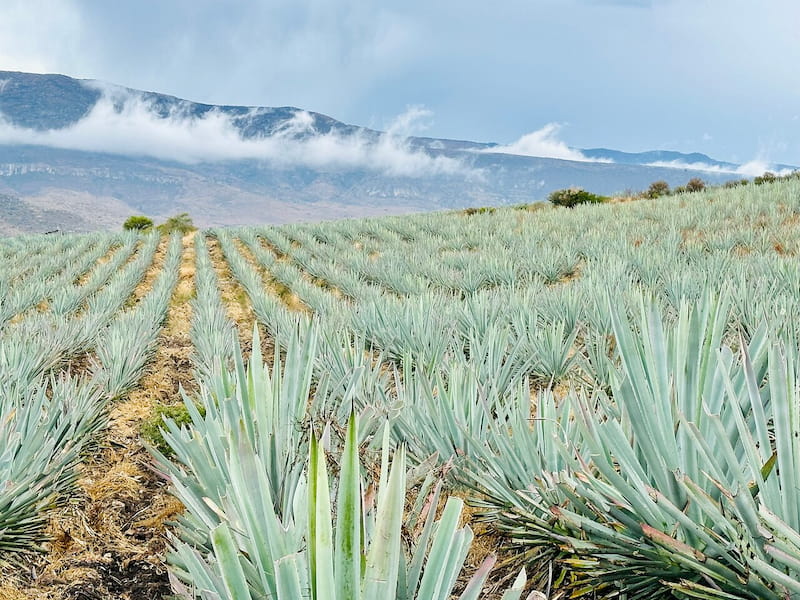
Mezcal is a distilled spirit made from the heart of the agave plant — the same spiky desert plant growing in the rocky hillsides across the Oaxacan valleys. The word comes from the Nahuatl mexcalli, meaning “cooked agave,” which immediately tells you what makes it different: the agave is cooked before distillation, in underground earthen pits, and that cooking is where the smoke comes from.
It’s not an added flavor. The smokiness is structural — built in at the most fundamental stage of production. Every sip carries the memory of the roasting pit.
Mezcal can be made from over 30 varieties of agave. Around 85–90% of the world’s mezcal comes from Oaxaca. Not because of marketing — because the combination of terrain, climate, agave diversity, and centuries of production knowledge is genuinely concentrated here in a way it isn’t anywhere else.
👉 10 Best Day Trips from Oaxaca City (With And Without A Tour)
Mezcal vs Tequila — The Actual Difference
People ask this constantly, and it’s worth answering properly rather than with the usual oversimplification.
Technically, tequila is a type of mezcal — specifically one made from blue Weber agave in Jalisco and a few neighboring states, using industrial steam-cooking rather than pit roasting. All tequila is mezcal. Not all mezcal is tequila.
The practical differences:
Agave: Tequila uses only blue Weber agave. Mezcal uses 30+ varieties — each producing a distinctly different flavor.
Process: Tequila agave is steamed in industrial ovens. Mezcal piñas are roasted in earthen pits for 3–5 days. This is where all the smoke comes from.
Scale: Tequila is largely industrial. Most Oaxacan mezcal is still handmade by family operations in small batches.
Flavor: Tequila is clean, bright, consistent. Mezcal is smoky, complex, and variable — no two batches taste exactly alike.
Culture: Tequila is the party shot. Mezcal is the slow conversation at the end of the night.
⭐️ 5 Star — The Mezcal Journey (guided palenque tour from Oaxaca City, highly recommended)
How Mezcal Is Made: From Agave to Glass
Understanding the production process is what separates a mezcal drinker from someone who just drinks mezcal.
1. Growing and Harvesting
Agave is extraordinarily slow-growing. Espadín — the most common variety — takes 7–10 years to mature. Wild varieties like tobalá or tepextate can take 15–25 years. The jimador harvests the plant at the right moment, cutting away the leaves to expose the piña — the dense heart that can weigh anywhere from 20 to over 300 pounds.
Once harvested, the plant is dead. It will never regrow.
2. Roasting
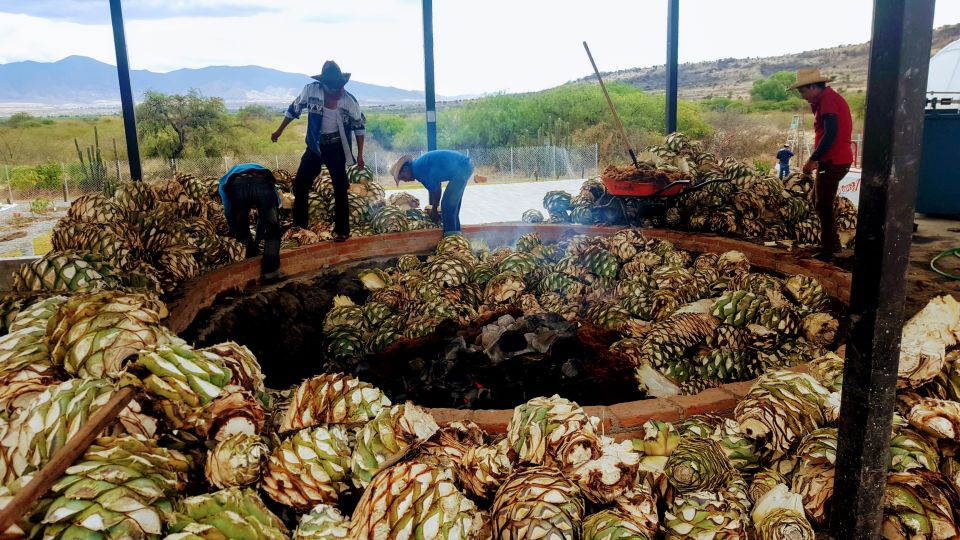
The piñas go into a conical pit lined with volcanic rocks heated by wood fire. Covered with earth and fiber, they roast slowly for 3–5 days. The sugars caramelize. The smoke absorbs into every fiber. This is where the character of the mezcal is determined.
3. Crushing
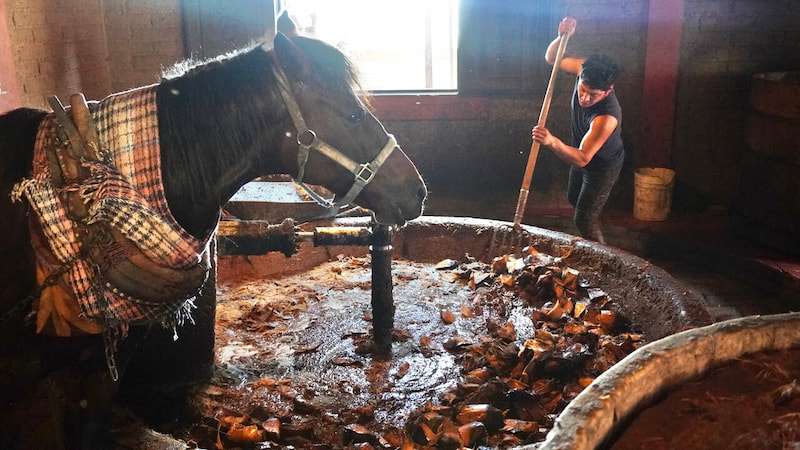
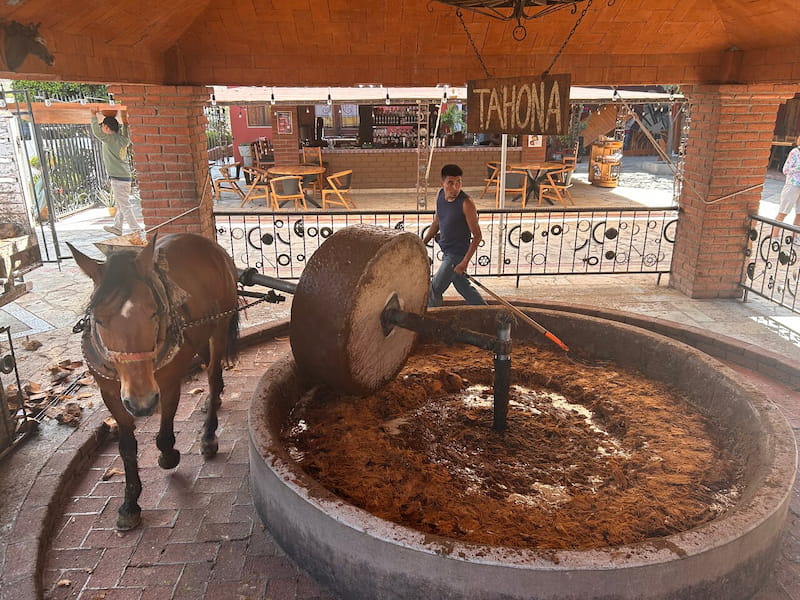
Roasted piñas are crushed to release their juice. Traditional palenques use a tahona — a massive stone wheel, sometimes weighing a ton, pulled around a circular pit by a horse or mule. Some operations still crush by hand. The method affects the flavor.
4. Fermenting
The crushed pulp and juice ferment in open wooden vats using wild airborne yeasts — no commercial yeast added in traditional production. Fermentation takes days to two weeks. The local wild yeasts contribute distinct character to the final spirit.
5. Distilling
Distilled twice — in copper or clay pot stills (ollas de barro). Clay pot distillation is ancestral technology producing a slightly different flavor profile than copper. The mezcalero tastes throughout, adjusting by experience alone. No hydrometer. Just knowledge passed down through generations.
👉 10 Traditional Oaxacan Foods You Must Try
Agave Varieties — Why Every Bottle Tastes Different
This is where mezcal becomes genuinely fascinating.
Espadín (Agave angustifolia) — around 90% of all mezcal. Matures in 7–10 years, grows well in cultivation. Accessible, balanced, with a clear smoky baseline. Start here.
Tobalá (Agave potatorum) — grows wild in the mountains, matures in 12–15 years. More floral and complex than espadín, softer smoke, often with fruit notes. More expensive, smaller batches.
Tepeztate (Agave marmorata) — takes 25+ years to mature. Wild and herbaceous, intensely distinctive. The plant you’re drinking was growing before you were born. Not for everyone, but nothing else tastes like it.
Cuishe and Madrecuixe — Oaxaca-specific varieties producing vegetal, herbaceous mezcals with less smoke than espadín. Hard to find outside the state.
Arroqueño — large plant, 15–20 year maturation. Fruit-forward with tropical notes and earth. Excellent from Miahuatlán region producers.
The rule: the slower the agave grows, the rarer and more complex the mezcal — and the more important the sustainability question becomes.
The sustainability issue worth knowing: Demand for wild-agave mezcals has grown dramatically. Tobalá in particular shows signs of overharvesting in some regions. Choose producers who are transparent about replanting practices. The price of a good wild-agave mezcal reflects real scarcity — drink it with that awareness.
How to Drink Mezcal
Never shoot it. This is said seriously in Oaxaca — shooting mezcal is considered disrespectful to the spirit, the mezcalero who spent years making it, and the agave that took a decade to grow.
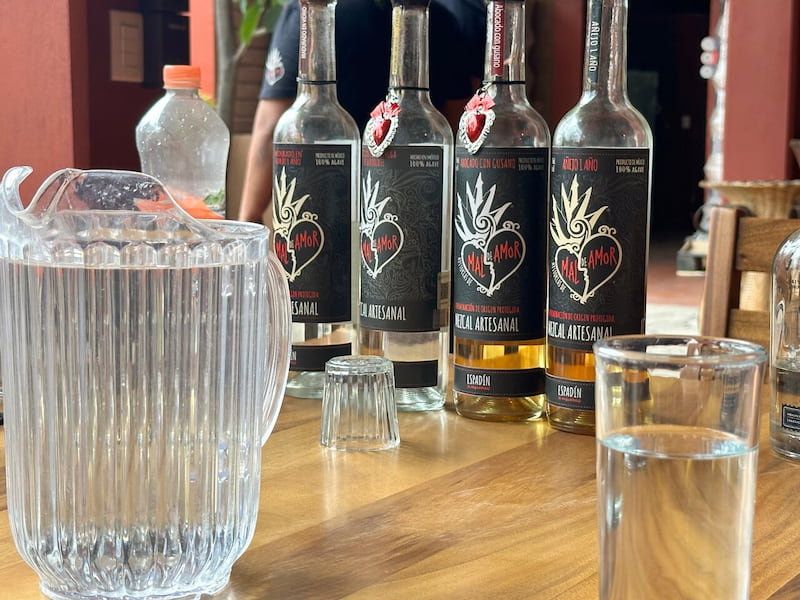
Mezcal is sipped slowly from a copita (small clay cup) or a veladora (a small ridged glass originally used for prayer candles, now the standard vessel in most Oaxaca bars). These small glasses with ridges were originally used for holding prayer candles in Catholic churches in Mexico. Once the candle burned out, the glass was repurposed for drinking mezcal.
How to actually taste it:
Look at it first. Color (clear to pale gold), clarity, and how it moves in the glass tell you something about the distillation.
Smell it without putting your nose in. Mezcal is high-proof. Hover above the rim and breathe normally. Smoke comes first, then underneath: fruit, earth, floral notes, minerals depending on the agave.
Take a small first sip and let it rest. Your palate is adjusting. Smoke hits first, then the agave character emerges — sweetness, herbs, sometimes a mineral finish. The second sip will taste different from the first.
The accompaniments. Mezcal in Oaxaca is traditionally served with sliced orange and sal de gusano — worm salt, made from dried ground agave worm, salt, and dried chili. The citrus, salt, and fat cut through the smoke and reset the palate between sips. It’s not a gimmick — it works.
The toast: ¡Para todo mal, mezcal; para todo bien, también! — For all ills, mezcal; for all good, the same.
The Classifications — What the Terms Mean
Joven — unaged, bottled straight from distillation. The clearest expression of the agave and process. Most artisanal Oaxacan mezcal is joven.
Reposado — rested in wood for 2–12 months. Softer smoke, slight oak character.
Añejo — aged over 12 months. Wood flavors integrated, smoke becomes subtle. Less common in traditional Oaxacan production.
Pechuga — the most unusual category. During final distillation, a raw protein — traditionally chicken or turkey breast, sometimes rabbit or iguana — is suspended in the still with fruits, spices, and grains. The vapors absorb compounds from the protein. The result is richer and more complex than anything else in the category. Traditionally made for celebrations. Absolutely worth trying if you find it.
Ensamble — two or more agave varieties blended. Can be exceptional.
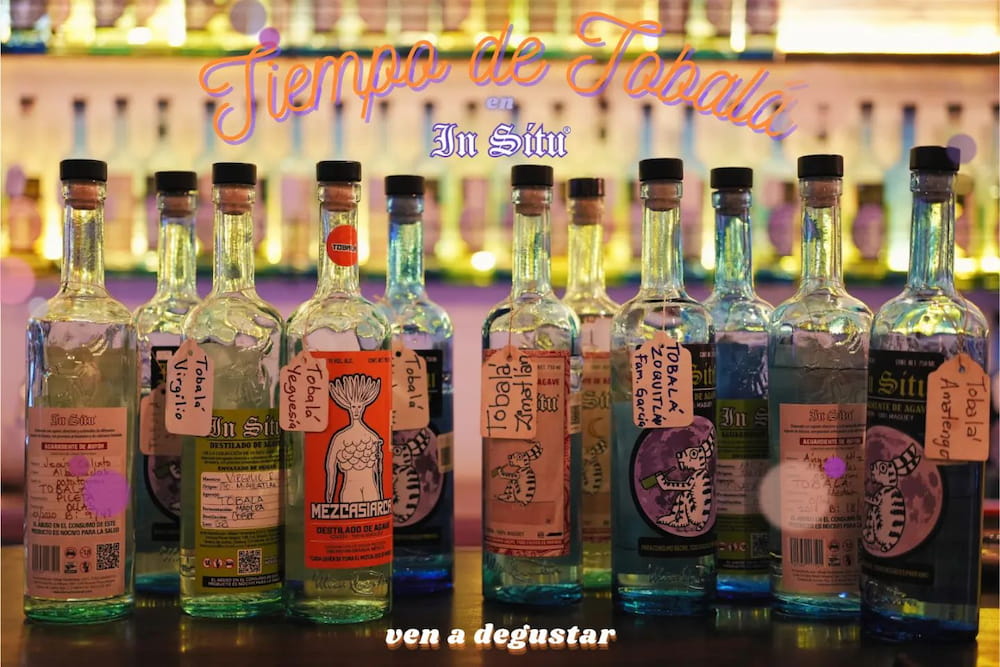
How to Read a Mezcal Label
A good label tells you everything. A vague label is a warning sign.
Look for:
- Agave variety — if it doesn’t say, be suspicious
- Maestro mezcalero — the name of the producer
- Village of origin — where it was made
- Batch number — artisanal mezcal varies batch to batch
- ABV — typically 40–55%; higher proof often indicates more traditional distillation
- NOM number — official certification confirming regulated production
The more specific a label is about origins, the better. Vague labels that omit the agave variety or producer are a sign of industrial or semi-industrial production.
Where to Taste Mezcal in Oaxaca City
In Situ — the most serious mezcal bar in the city. Extraordinary selection of small producers and wild-agave expressions. No cocktails — just mezcal, served properly. Staff know the inventory deeply.
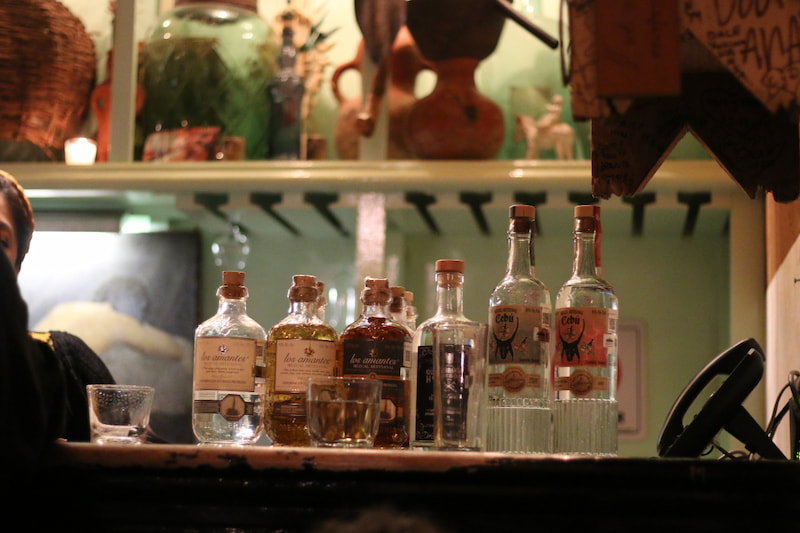
Mezcalería Los Amantes — near the Zócalo. More accessible atmosphere, good selection, the kind of place where a conversation about agave varieties lasts an hour.
El Destilado — mezcal bar and restaurant with a thoughtful list and excellent food pairings.
At the source — visiting a palenque
This is the experience that changes everything. Tasting mezcal fresh from the still, with the mezcalero explaining what you’re drinking, is incomparably better than tasting the same bottle in a bar.
The Ruta del Mezcal runs east from Oaxaca City through the Tlacolula Valley toward Santiago Matatlán. You can visit some palenques independently — Casa Chagoya near Matatlán offers a free 35-minute tour. A guided tour gives access to smaller family operations that don’t advertise.
⭐️ 5 Star — The Mezcal Journey (guided palenque tour from Oaxaca City, highly recommended)
Best Mezcal Brands for Beginners
Not in Oaxaca yet? These are solid starting points:
Del Maguey Vida — the gateway mezcal for many people. Espadín-based, accessible, genuinely good. The brand that introduced single-village mezcal internationally.
Putamadre Espadín — excellent value, clean and well-made.
El Jolgorio — small batch, multiple agave varieties, consistently high quality.
Vago Espadín en Barro — distilled in clay pots. Good example of how still type changes flavor.
Koch El Espadín — affordable and easy to find. A decent everyday bottle.
Taking Mezcal Home
A bottle bought at a palenque in Oaxaca costs a fraction of what it costs abroad — and you’ll often find expressions that never leave the state.
- Airline rules: under 100ml in carry-on, take in checked baggage within weight limits
- Wrap carefully — bubble wrap or specialist bottle bags
- Buy at a palenque, at In Situ, or at Mercado Benito Juárez for mid-range options
- Avoid the airport — prices are significantly higher and selection is limited
FAQ
What does mezcal taste like? Smoky and complex, with the flavor varying significantly by agave variety. Espadín is the most accessible — smoky, slightly sweet, earthy. Wild agave varieties like tobalá are more floral and fruity. The smoke is always present but varies in intensity.
Is mezcal stronger than tequila? Often yes. Commercial tequila is typically 40% ABV. Artisanal mezcal frequently runs 45–55%. Sip slowly — especially at altitude in Oaxaca City.
Why is good mezcal expensive? Espadín requires 7–10 years of growing time. Wild varieties take 15–25 years. Add entirely manual production in small batches and the math is clear. The price reflects real time and real labor.
What’s the difference between artisanal and industrial mezcal? Artisanal: pit roasting, tahona or hand crushing, natural fermentation, small batch clay or copper distillation. Industrial: modern equipment throughout. Both are technically mezcal — they taste entirely different and carry completely different cultural weight.
Can I visit a palenque without a tour? Yes — Casa Chagoya near Santiago Matatlán welcomes independent visitors. But a guided tour accesses smaller family operations that don’t advertise and provides a guide who can translate the conversation.
Should I buy mezcal at the airport? Only as a last resort. Significantly higher prices, limited selection, no story behind the bottle. Buy at a palenque or at In Situ.
⭐️ 5 Star — The Mezcal Journey (guided palenque tour from Oaxaca City, highly recommended)