El Tule, Oaxaca: The Biggest Tree Trunk In The World
Twenty minutes east of Oaxaca City, in a small town named after the very tree it’s famous for, sits something that stops people in their tracks.
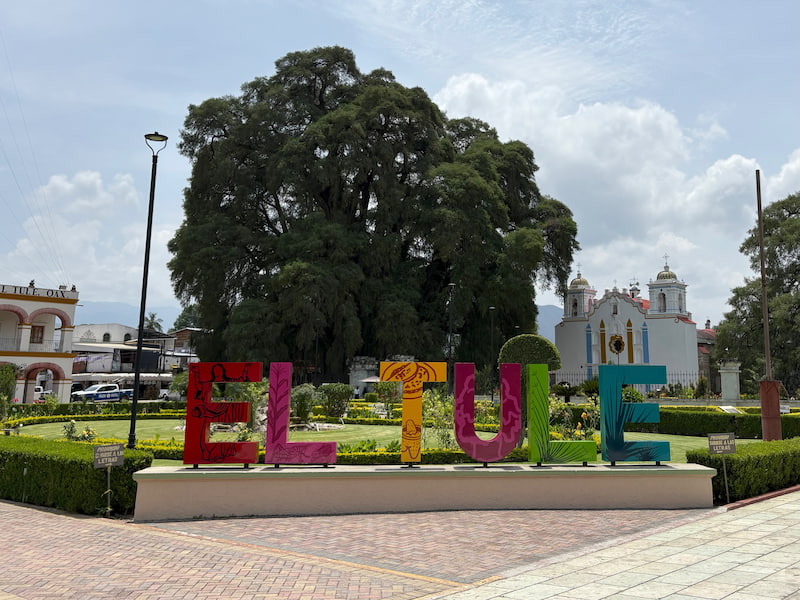
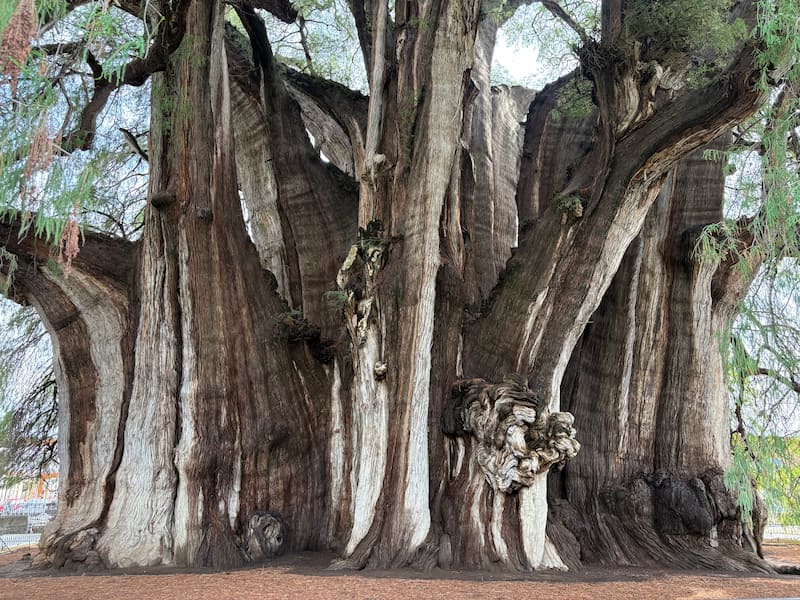
El Árbol del Tule doesn’t look real from a distance. It looks like several trees compressed together into one enormous mass of bark and branches, spilling out in every direction next to a colonial church that it completely dwarfs. Up close, the scale is harder to process — most visitors spend a few minutes just walking around it trying to take it all in.
It’s the widest tree trunk on Earth, and it’s been growing here for over 2,000 years.
👉 50 Best things To Do in Oaxaca City: Your Ultimate Guide
The Facts — What Makes El Tule Extraordinary
El Árbol del Tule is a Montezuma cypress (Taxodium mucronatum) — known in Spanish as ahuehuete, meaning “old man of the water.” It’s Mexico’s national tree, and this particular specimen is the most famous tree in the country.
The numbers are genuinely staggering:
- Trunk circumference: approximately 58 meters (190 feet)
- Trunk diameter: 14 meters (46 feet) at its widest point
- Height: 42 meters (138 feet)
- Estimated age: 1,500 to 2,000 years old
- Weight: estimated at over 800 tonnes
- Shade coverage: reportedly provides shade for up to 500 people
To put the age in context: when this tree was a sapling, the Zapotec civilization at Monte Albán was at its height. It has been growing here through the rise and fall of pre-Hispanic civilizations, the Spanish conquest, Mexican independence, and two world wars.
Is It One Tree or Many?
This is the question people ask every time they see it — the trunk is so broad and irregular that it genuinely looks like multiple trees that grew into each other.
Scientists ran DNA analysis specifically to settle this, and the results were conclusive: El Tule is a single tree, although it does have multiple trunks that give it that multi-organism appearance.
The Animal Shapes
One of the most enjoyable parts of visiting El Tule is finding the animal shapes in the bark — and the local children who guide visitors are remarkably good at spotting them.
The gnarled knots and growth formations of the trunk create shapes that look, when pointed out, unmistakably like: a lion, an elephant, a jaguar, a deer with antlers, a crocodile, an anteater, and various human faces and figures.
Local children from the town work as informal guides, using pocket mirrors to reflect sunlight onto specific parts of the trunk and pointing out figures that are impossible to unsee once you’ve spotted them. A small tip is appropriate and appreciated.
The Zapotec Legend
According to local Zapotec legend, the tree was planted by a priest of the Aztec wind god Ehecatl — though the Ayöök (Mixe) people have their own version: they believe El Tule is actually the walking stick of one of their gods, which took root in the earth and grew into the famous tree.
Whether legend or history, the tree’s cultural significance to the indigenous communities of Oaxaca runs deep. The Zapotecs view it as a living connection to their ancient heritage — not just a natural wonder, but a sacred presence.
Practical Information
Entry fee: 20 MXN per person (US$1)
Opening hours: Daily 9am–6pm, though the plaza around the tree is accessible outside these hours
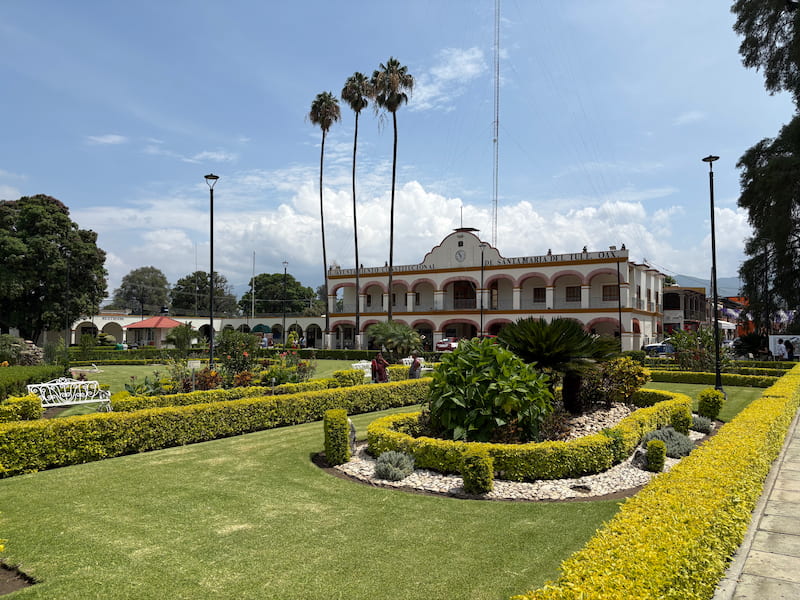
Location: The tree sits in a gated churchyard next to the Iglesia de Santa María de la Asunción in the town plaza of Santa María del Tule. It’s impossible to miss — you can see it before you reach the church.
Time needed: 30–45 minutes is plenty for most visitors. An hour if you want to eat and browse the market.
ATM: There’s one near the children’s playground in the main plaza.
How to Get to El Tule from Oaxaca City
Santa María del Tule is 9km east of Oaxaca City — about 20 minutes by road.
By colectivo Head to the Volkswagen dealership near the baseball stadium (Estadio Eduardo Vasconcelos) — this is the standard departure point for colectivos heading east along Highway 190. Look for vehicles with “Tule” or “Mitla” written in the windshield. Tell the driver you’re getting off at El Tule. Cost: around 15–20 MXN.
By bus Local buses run along Blvd. José Vasconcelos on Highway 190 heading east. Wave one down and tell the driver Tule. Cost: 8–10 MXN.
By taxi Flag one anywhere in Centro — the fare to El Tule runs around 200–250 MXN one way. You won’t find taxis back in Tule easily, so either arrange for your driver to wait, get their WhatsApp number for a return pickup, or catch a colectivo back from the main road.
By bike (best independent option) This is genuinely the best way to do it if you have the time. The route follows Avenida Ferrocarril east from the city center — a mostly flat, tree-lined bike lane that takes 40–45 minutes at a relaxed pace. There are no complicated turns, just follow the lane east until you reach the town.
Rent a bike from Bicibella or Mundo Ceiba in Centro. The ride back is equally flat and pleasant — the whole round trip is about 20km.
⭐️ 6-Hour Bike Tour to El Tule — guided ride with stops at Santo Domingo Tomaltepec and local workshops. A great option for a fuller half-day.
On a tour Most full-day tours heading to Hierve el Agua, Mitla, and Teotitlán del Valle include a stop at El Tule. Given those destinations are all in the same direction, this is the most time-efficient option if you want to see multiple sites.
⭐️ Hierve el Agua, Mitla, Tule + Teotitlán del Valle Full Day Tour
👉 Visiting Hierve el Agua: Tours, Tips, How to Get There & What to Expect
What Else to Do in Santa María del Tule
The town is small, but there’s more than just the tree:
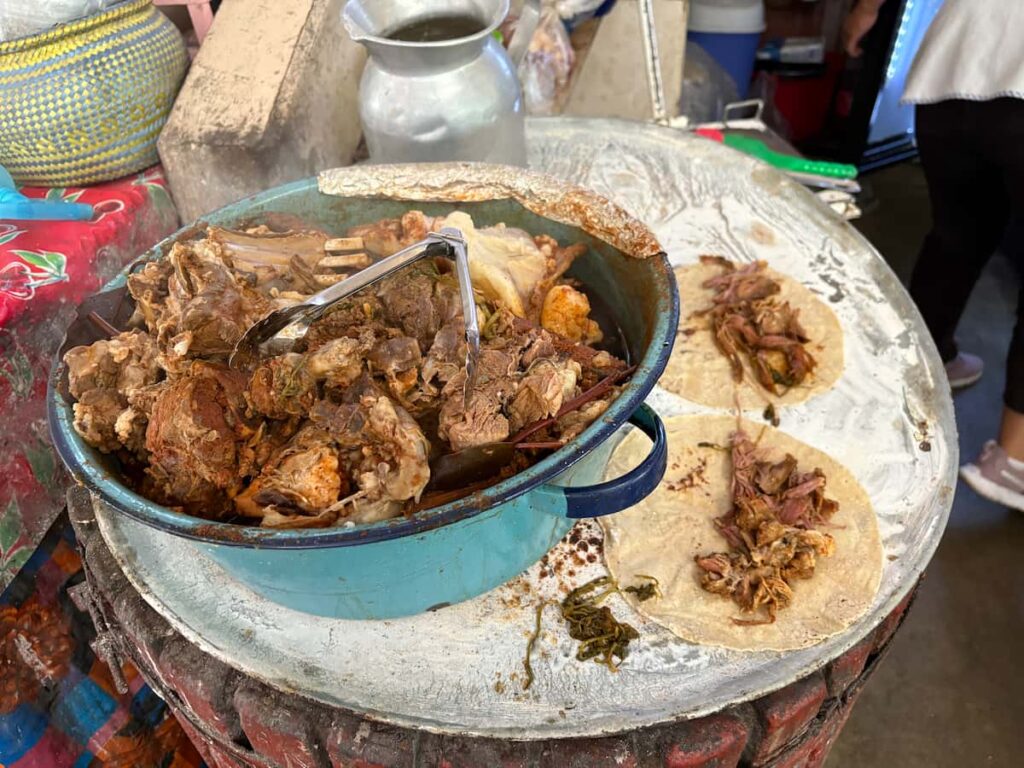
Eat barbacoa at the market — Santa María del Tule is locally famous for its barbacoa. Slow-cooked sheep or goat, served in tacos, from the market right beside the tree. The best food experience in town and worth building into your visit.
Nieve — traditional Oaxacan ice cream stands are dotted throughout the plaza. Flavors like tuna (prickly pear), leche quemada (burnt milk), and mezcal. Good accompaniment to sitting in the shade after you’ve seen the tree.
The church — the Iglesia de Santa María de la Asunción is a beautiful 17th-century colonial church. The contrast between the massive organic curves of the tree and the stone geometry of the church is one of the better photo compositions in the Oaxaca valley.
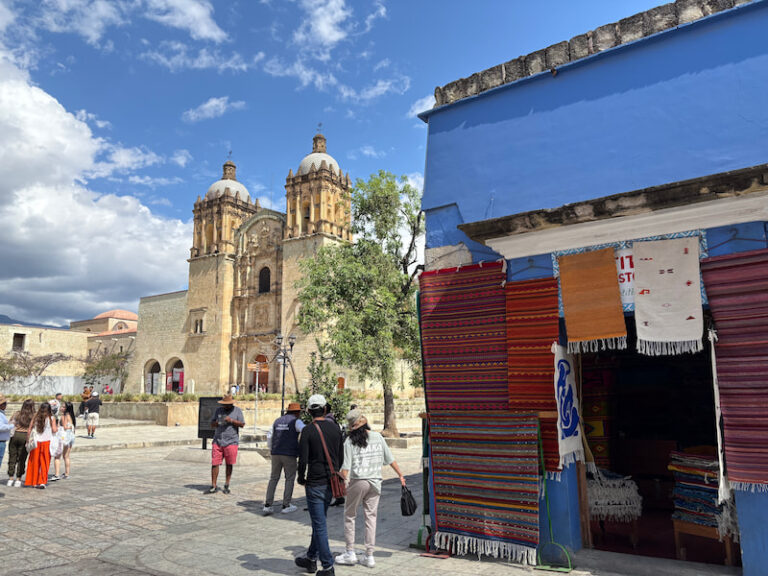
Artisan market — a small market next to the tree sells local crafts and textiles.
The Tree’s Birthday — Second Monday of October
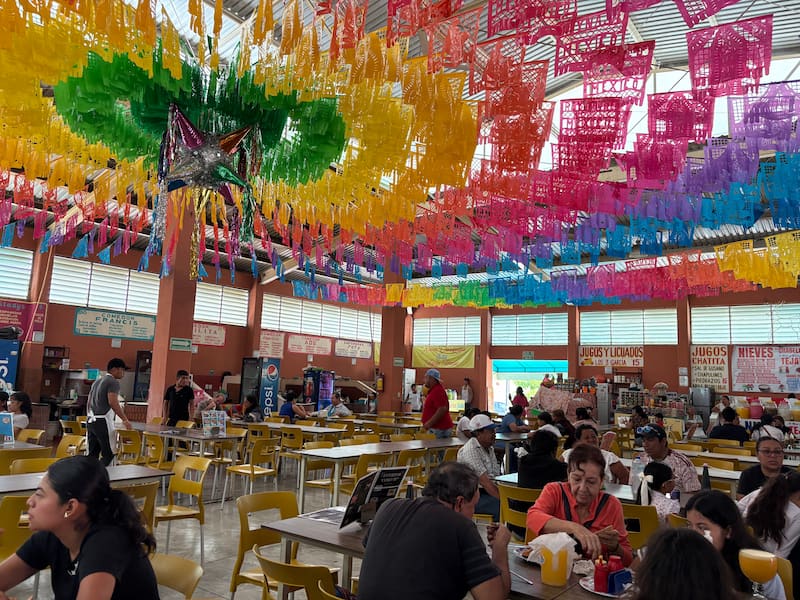
El Tule has an annual birthday celebration on the second Monday of October — a genuine local fiesta with food, music, and community gathering in the plaza. Visitors who time their trip for the celebration have been known to receive free tejate, pan dulce, and ice cream as part of the festivities. A good reason to plan a return visit in October if you’re in Oaxaca for a longer stay.
Is It Worth Visiting?
Honestly — yes, but with realistic expectations.
El Tule is not a half-day destination on its own unless you’re combining it with the bike ride and the market lunch. The tree itself takes 30–45 minutes to properly appreciate, and then you’ve seen the main attraction.
What makes it most worthwhile is as a stop on a bigger day out. The route east from Oaxaca City passes through El Tule, Teotitlán del Valle, Mitla, and eventually Hierve el Agua — and doing all of these in a day gives each one proper context within the Tlacolula Valley rather than feeling like a series of disconnected stops.
If you’re genuinely short on time, it’s a quick stop rather than a destination. But for most visitors with a few days in Oaxaca — see it. You’ll never look at a tree the same way again.

FAQ
How old is El Árbol del Tule? Estimated between 1,500 and 2,000 years old. The exact age is uncertain.
Is El Tule the oldest tree in the world? No — it’s the widest trunk, not the oldest tree. Several trees around the world are older.
Is El Tule one tree or several? One tree. DNA testing confirmed it despite the trunk’s appearance suggesting multiple organisms.
How much does it cost to enter? 20 MXN per person (around US$1).
How long do I need there? 30–45 minutes for the tree and plaza. An hour if you’re eating at the market.
Can I combine it with Hierve el Agua? Yes — it’s a natural stop on the same route east. Most tours combine both in a full day.
Also worth reading: [10 Best Day Trips from Oaxaca City] and [Visiting Hierve el Agua: Tours, Tips, How to Get There & What to Expect]