Oaxaca Customs, Culture & Etiquette: What to Know Before You Visit
Oaxaca is one of Mexico’s most culturally complex destinations — and that’s exactly what makes it extraordinary.
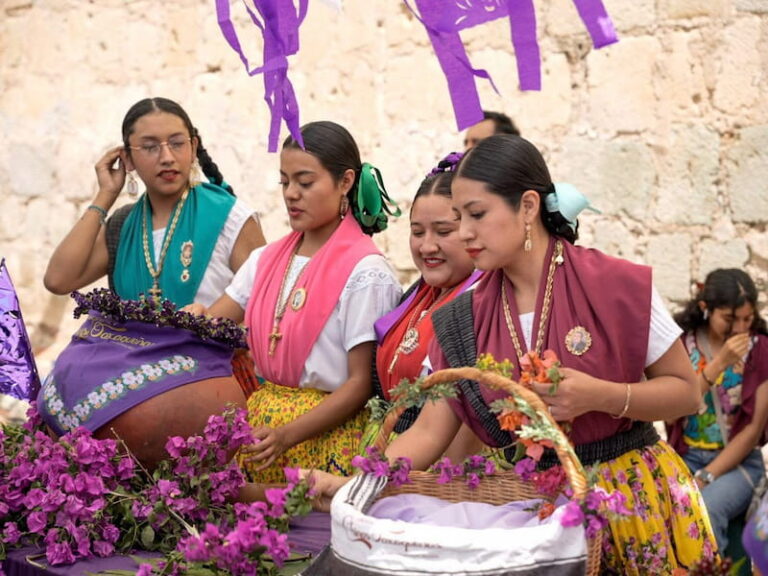
Home to 16 officially recognized indigenous groups, each with their own language, traditions, and way of life, this is a place where pre-Hispanic culture isn’t preserved in museums — it’s still actively lived. The Zapotec and Mixtec roots run deep here, and the customs, rhythms, and unwritten rules of daily life reflect that.
None of this means Oaxaca is difficult to navigate as a visitor. Oaxacans are warm, welcoming, and genuinely happy to share their city. But understanding a few basics before you arrive will change your experience significantly — and ensure your presence here is appreciated rather than quietly resented.
1. Understand Where You’re Going
Before you land, take a moment to understand what Oaxaca actually is.
This isn’t just another Mexican colonial city. Oaxaca state has the highest concentration of indigenous communities in Mexico. Many people you’ll interact with — market vendors, textile weavers, mezcal producers, restaurant cooks — come from communities where Spanish is a second language, and where traditions stretch back thousands of years before the Spanish arrived.
Knowing this shifts how you move through the place. You’re not visiting a theme park version of Mexican culture. You’re a guest in someone else’s living, breathing home.
2. Greetings Matter More Than You Think
One of the most commented-on differences for visitors from North America or Europe: Oaxacans greet each other constantly.
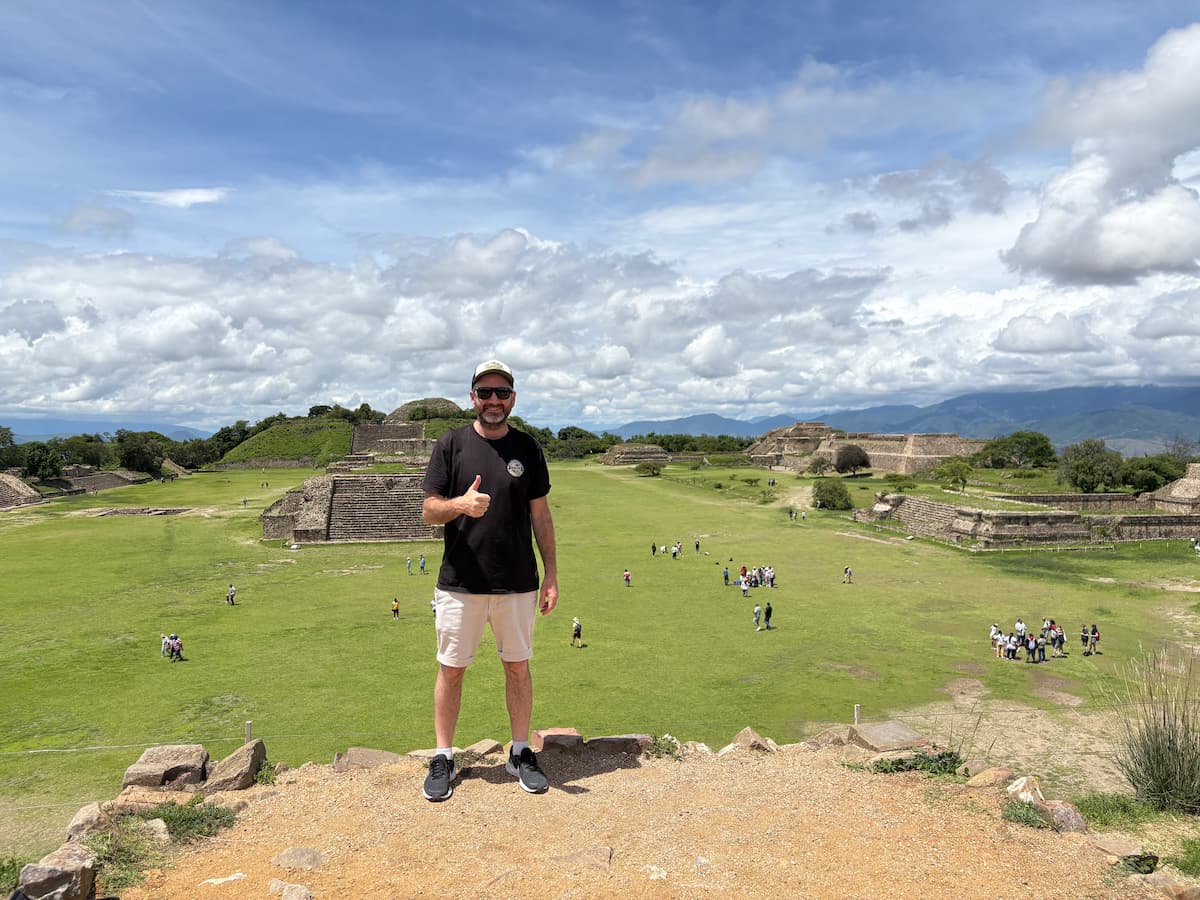
Passing someone on a narrow street — buenos días. Entering a small shop — buenos tardes. Sitting down near someone at a market — a nod and a buenas. It’s reflexive, warm, and deeply ingrained.
Jumping straight into a request or transaction without a greeting first is considered abrupt and slightly rude — even if nobody will say so to your face. Starting any interaction with buenos días, buenas tardes, or simply buenas immediately shifts the tone from transactional to human.
Buen provecho — said to someone who is eating, roughly equivalent to “enjoy your meal” — is another one worth knowing. You’ll hear it constantly in markets and restaurants, and saying it to strangers eating nearby is completely normal and appreciated.
It costs nothing, takes two seconds, and is one of the simplest ways to show you actually paid attention before you arrived.
👉 Why Everyone Says “Provecho” in Mexico (And What It Means for Your Trip)
3. Learn the Pace — Mexican Time Is Real
Life moves differently in Oaxaca. Not worse — differently.
Restaurants don’t rush you. The bill won’t arrive until you ask for it (la cuenta, por favor). Service can be slow by Northern European or American standards. Street vendors work at their own pace. People stop and talk in doorways.
Fighting this rhythm is the fastest way to have a frustrating trip. Leaning into it is the fastest way to have a great one.
Mexican time also applies to social events — arriving 15–30 minutes after the stated time for casual gatherings is completely normal. For anything official or with a tour, be on time. For everything else, relax.
👉 Tipping in Oaxaca : When and how much to tip?
4. Dress Respectfully — Especially at Sacred Sites
Oaxaca is a casual city and nobody is expecting formal dress. But a few specific situations call for more thought:
Churches: Cover your shoulders and knees when entering. A light scarf or cardigan does the job. This applies to Santo Domingo, the Basílica de la Soledad, and every village church you’ll encounter on day trips. It’s not strictly enforced but it’s noticed and appreciated.
Indigenous villages and community events: Dress modestly. Shorts and tank tops signal tourist who isn’t paying attention. Basic shorts/trousers and a shirt/T-shirt go a long way.
In the city generally, Oaxacans dress casually but not flashily. Revealing or very loud clothing stands out in ways that aren’t always positive, particularly in traditional neighborhoods and markets.
Top Rated Tours in Oaxaca City
⭐️ 5 Star – Mezcal Journey
⭐️ 4.9 Star – Monte Alban
⭐️ 4.5 Star – Hierve El Agua
5. Photography — Ask First, Always
Oaxaca is extraordinarily photogenic, which is part of why it became a tourist destination. But the people living here are not props.
In many indigenous communities, being photographed without consent is considered deeply disrespectful — and in some traditional beliefs, invasive at a spiritual level. Even in the city, pointing a camera at someone without acknowledging them first is rude.
The rule is simple: make eye contact, gesture toward your camera, and ask. Most people will either agree or decline with a smile. Either response is fine. What’s not fine is photographing someone without asking and hoping they don’t notice.
This applies especially to:
- Indigenous women in traditional dress in markets
- Children (always ask the parent)
- Families at cemetery vigils during Day of the Dead
A small tip or purchase in exchange for a portrait is a good-faith gesture worth considering.
6. Support the People Actually Making Things
The easiest way to be a responsible visitor in Oaxaca is also the most enjoyable: buy directly from the people who make things.
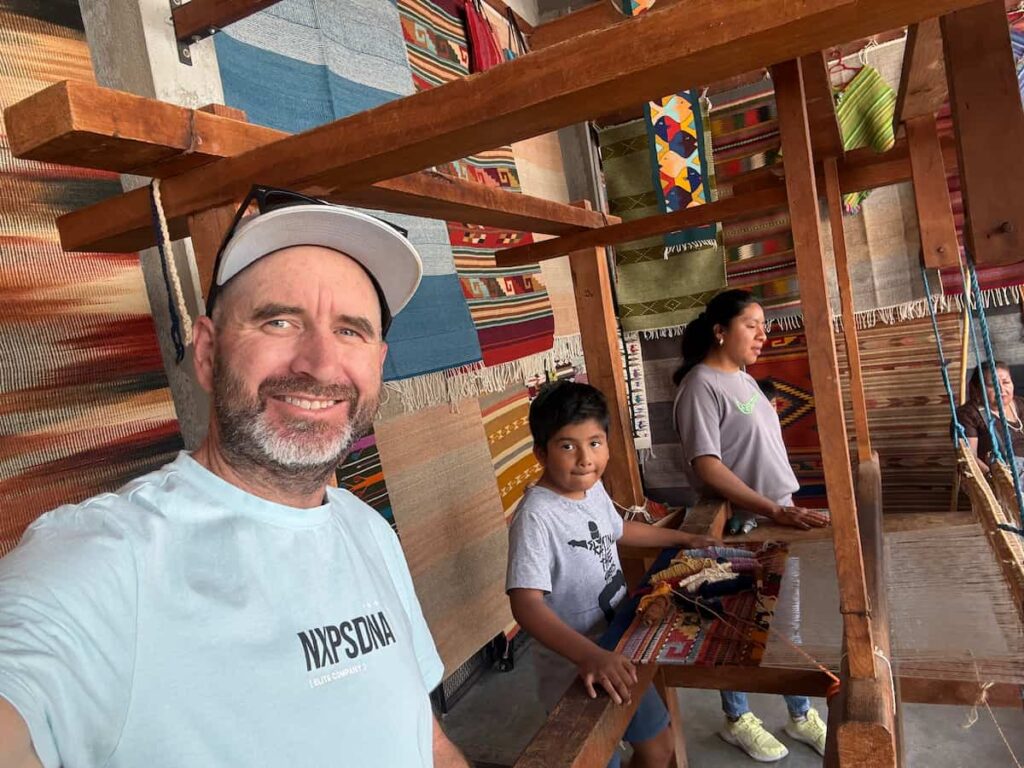
Buy your mole paste from a market vendor, not a packaged brand. Buy textiles from the family workshop in Teotitlán del Valle, not a boutique near Santo Domingo with a markup. Tip your mezcal guide. Eat at the comedor in the market, not just the restaurant with the Instagram following.
This isn’t about avoiding nice places — it’s about understanding where money actually ends up. Tourism intermediaries are everywhere in Oaxaca, and not all of them have the producing community’s interests at heart. The more directly you spend, the more directly it benefits the people who have built this culture.
👉 Teotitlán del Valle: Oaxaca’s Rug Weaving Village Guide
7. Haggling — Know When and How
Prices in most Oaxacan shops are fixed — haggling in a tienda or restaurant is not appropriate.
In markets, some gentle negotiation is normal for crafts and textiles, but keep perspective. You’re often haggling over the equivalent of a dollar or two with someone who spent days making something by hand. Bargaining someone down to the floor and walking away feeling victorious is not a good look — and it’s not good economics for the community either.
The rough guide: a polite counter-offer once is fine. If the vendor holds their price, respect it. If the gap between you is small, just pay what they’re asking.
8. Respect Sacred Spaces
Oaxaca is full of places that carry spiritual and cultural weight — and many visitors miss that these aren’t just attractions.
Churches: Still active places of worship used by real communities. Quiet voices, no flash photography during services, phones down.
Archaeological sites: Monte Albán, Mitla, Yagul — don’t climb structures where it’s not permitted, don’t touch carvings, don’t remove anything. These sites are actively studied and maintained.
Day of the Dead cemeteries: You are welcome as a witness, not as a photographer. Walk with respect. Don’t push through crowds to get a shot. If a family makes eye contact and smiles at you, that’s an invitation to approach. If they’re focused on their loved ones, give them space.
Village fiestas and ceremonies: If you’re lucky enough to encounter one, observe first. Join if you’re invited. Don’t insert yourself into traditions that aren’t yours without being asked.
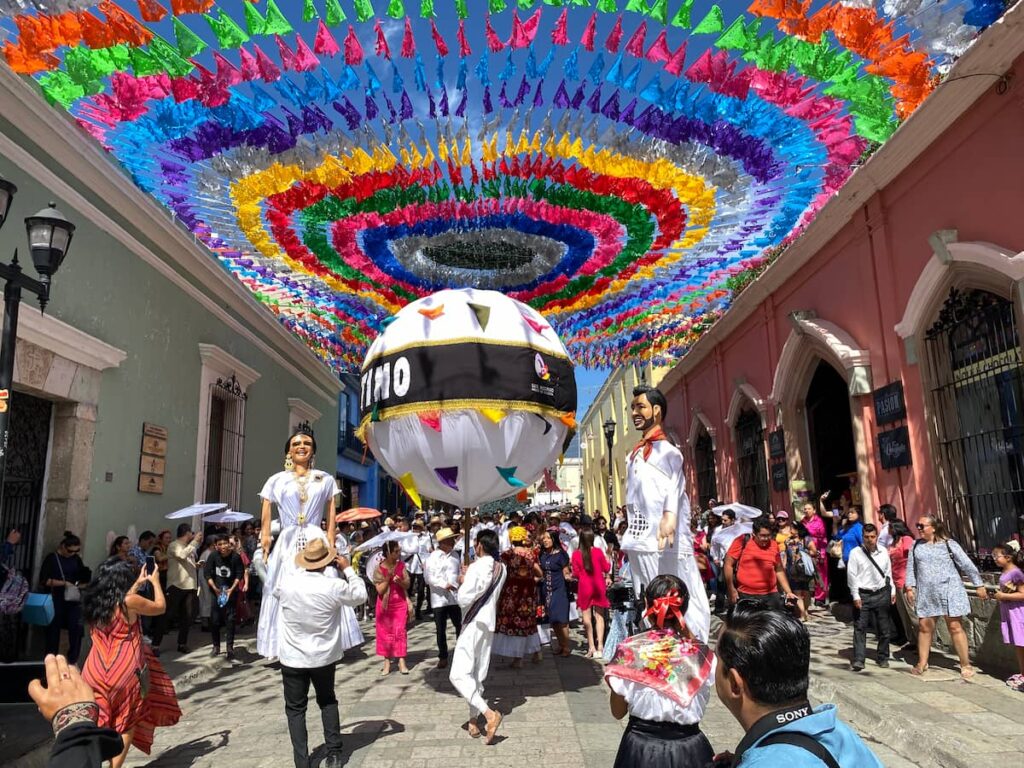
9. At Festivals — Be Part of the Crowd, Not the Show
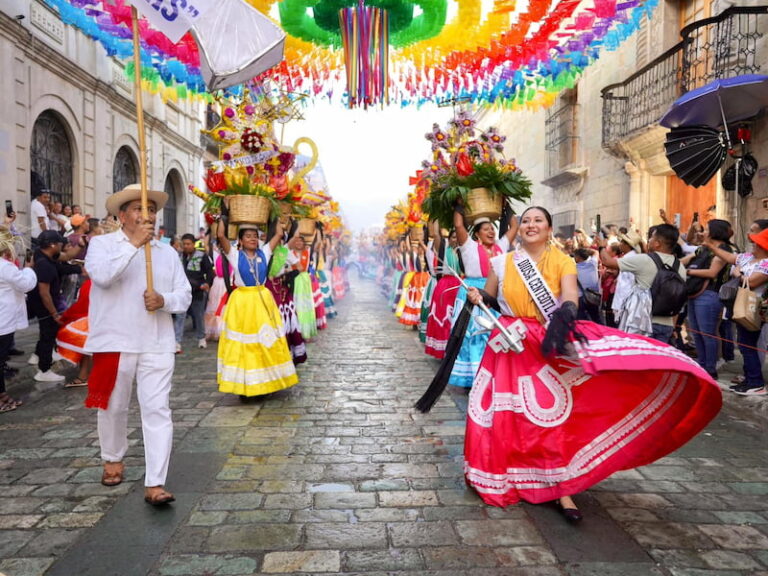
The Guelaguetza, Day of the Dead comparsas, patron saint celebrations, calendas (wedding parades) — these are extraordinary events and you’re genuinely welcome at most of them.
But they’re not tourist entertainment. They’re real cultural traditions happening to real people, and visitors are guests.
Give space to elders and families. Don’t push to the front. Don’t film over someone’s shoulder for an Instagram reel while a dance is happening. If you want to join a comparsa, read the energy of the crowd and follow rather than lead.
The events themselves are joyful and inclusive — Oaxacans are warm hosts. Just remember that hospitality and ownership are different things.
👉 Guelaguetza 2026: The Complete Guide
👉 Day of the Dead in Oaxaca 2026: Cemeteries, Parades & How to Celebrate
10. Use Whatever Language You Have
Nobody expects fluency. But making an effort matters enormously here.
Even a handful of Spanish phrases — buenos días, por favor, gracias, con permiso, cuánto cuesta — shifts you from tourist to human being in the eyes of most people you’ll meet. The effort signals respect, and it will be reciprocated.
If you’re visiting indigenous villages or artisan communities, a single word in Zapotec or Mixtec is a gesture that carries real weight. Ask your guide or host how to say hello in the local language — they’ll almost always light up when you try.
👉 How much Spanish you really need in Oaxaca (with useful phrases)
👉 100 Mexican Slang Words You Need To Know (Swear Words Included)
11. Be Water-Conscious
This one matters more in Oaxaca than most visitors realise.
The city faces serious water shortages — in many neighborhoods, running water arrives once a month or less. Hotels and tourist businesses are largely shielded from this because they can afford private delivery trucks. Local families are not.
Shorter showers, turning off taps, reporting leaks immediately, skipping unnecessary towel changes — none of these are major sacrifices, but across thousands of visitors they add up.
Carry a reusable water bottle and refill it from the garrafón in your accommodation rather than buying single-use plastic. It’s cheaper, better for the city’s already-strained waste system, and sends the right signal.
👉 Oaxaca Water Shortage: What Visitors Need to Know
12. Gentrification — Be Part of the Solution
Oaxaca has changed dramatically in the last decade. Tourism and an influx of foreign residents have driven up rents and property prices in the historic center and Jalatlaco, pushing local families further from the city’s core.
This is a complex issue without simple solutions, but visitors can make choices that lean toward the community rather than against it:
- Stay in locally owned accommodation where possible
- Eat at market comedores and family restaurants, not just the places that appear on food influencer accounts
- Buy from producers and artisans, not import shops
- Pay fair prices without grinding vendors down
Oaxaca is not your backdrop. It’s someone’s home. The more you engage with it like a guest rather than a consumer, the better your experience will be — and the better it will be for the people who live here.
Quick Reference — Oaxaca Dos and Don’ts
Do:
- Greet people before every interaction — buenos días, buenas tardes
- Say buen provecho to people who are eating
- Ask before photographing anyone
- Cover shoulders and knees in churches
- Buy directly from producers and artisans
- Tip generously — mezcal guides, market servers, taxi drivers who help with bags
- Slow down and match the pace of the city
Don’t:
- Jump straight into transactions without greeting first
- Photograph indigenous people or ceremonies without asking
- Haggle aggressively over small amounts
- Treat festivals and ceremonies as tourist entertainment
- Leave waste at markets or street food stalls
- Waste water
- Assume everyone speaks English — or wants to
🌮 Ready for Oaxaca City’s Best Street Food?
Download my personal Street Food Map – 20+ stalls I actually eat at every week as a local. The real-deal memelas, crispy tlayudas, and late-night tacos that locals line up for (and the ones top food tours secretly hit).
✅ First-timers → eat like a pro from day one
✅ Foodies → discover hidden gems tourists never find
✅ Instant Google Maps link — opens on your phone in seconds
Just $3.99 (cheaper than one tlayuda… and way better than buying me a coffee 😉)
👉 🌮 Unlock Oaxaca’s Best Street EatsOaxaca will give you back what you put into it. Come curious, come respectful, and it’s one of the most extraordinary places you’ll ever visit.
Also read: [Is Oaxaca Safe? Honest 2026 Guide] and [When to Visit Oaxaca: The Honest Month-by-Month Guide]