🌎 15 Interesting Facts About Oaxaca
Most people who visit Oaxaca leave knowing they loved it but not quite understanding why it feels so different from anywhere else in Mexico. The answer is in the details — the history, the geography, the politics, and a few things that are genuinely remarkable once you know them.
These are 15 facts about Oaxaca worth knowing.
1. The name “Oaxaca” is a mispronunciation.
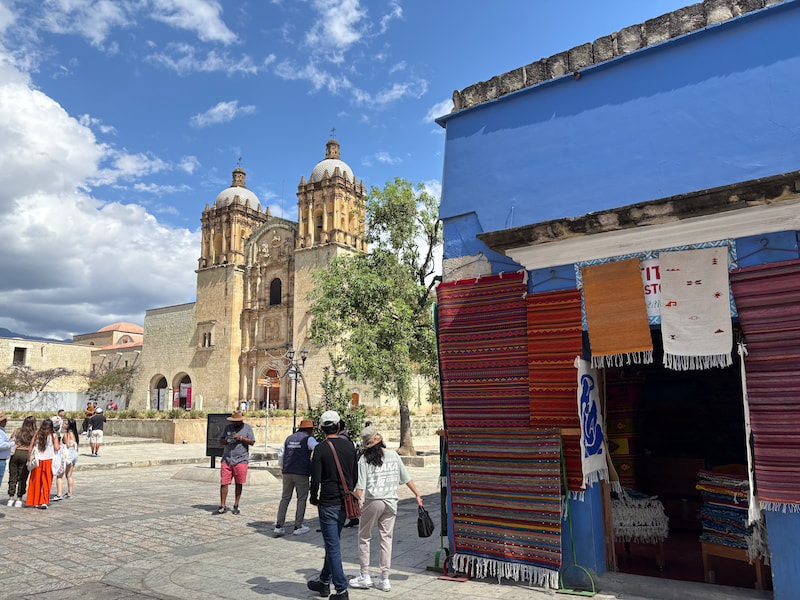
The name comes from the ancient Nahuatl word Huāxyacac, meaning “place of the guaje trees” — native trees still found throughout the city and state. When the Spanish arrived, they mispronounced the Aztec word and the corrupted version stuck. The correct pronunciation of Oaxaca today: wah-HAH-kah.
2. Corn was likely first domesticated here.
Oaxaca is one of the earliest known places where corn (maize) was domesticated from a wild grass called teosinte — around 10,000 years ago. The fact that Oaxacans are still using ancestral corn varieties in the same valley where this happened is remarkable. Corn here isn’t just an ingredient — it’s a living piece of agricultural history.
3. Two Mexican presidents came from Oaxaca.
Two of Mexico’s most consequential presidents were born in Oaxaca: Benito Juárez and Porfirio Díaz. Juárez — born into a Zapotec family in rural Oaxaca, orphaned at three, unable to speak Spanish until his teens — became a lawyer, fought off the French occupation of Mexico, and is considered the country’s greatest president. His birthday, March 21st, is a national holiday. No other Mexican individual has been given that honor.
4. Oaxaca has more indigenous languages than any other state in Mexico.
Oaxaca is home to 16 distinct indigenous peoples who have maintained their identity despite centuries of colonization and globalization. The reason for so much diversity is largely the rugged mountain terrain that left many of these groups developing in relative isolation from one another. You can drive 30 minutes from Oaxaca City and find communities where Spanish is the second language, not the first.
5. It has more municipalities than any other state in Mexico.
Oaxaca is divided into 570 municipalities — approximately one quarter of the total number of municipalities in the entire country. Many of these operate under usos y costumbres — traditional indigenous governance systems that predate Spanish colonization and are still legally recognized in Mexico.
6. The street art scene was born from political protest.
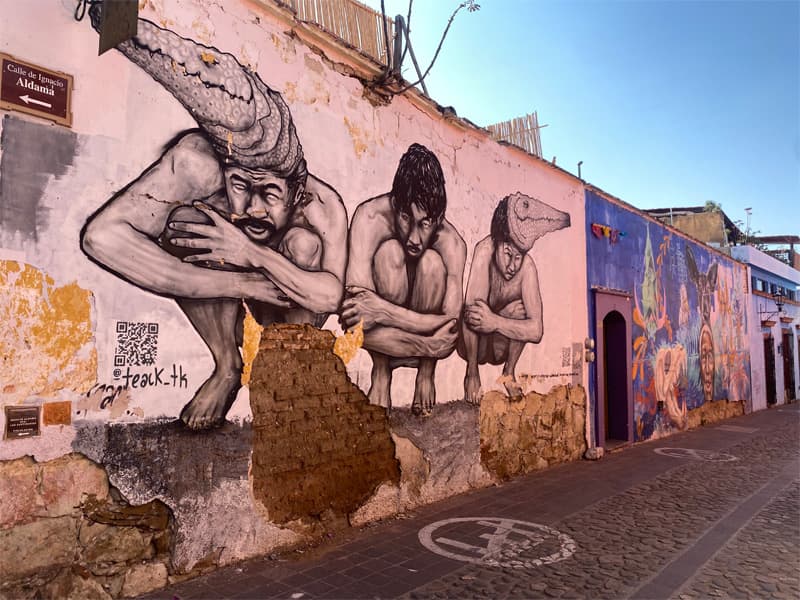
Following the violent suppression of the 2006 Oaxaca protests, the city went from having a shortage of printing presses to becoming the “capital of Mexican printmaking” by 2017. A teachers’ strike that became a broader social movement created a generation of politically engaged artists. The murals covering Jalatlaco and Xochimilco aren’t just decoration — they’re the ongoing visual conversation of a city with a long tradition of resistance.
👉 Jalatlaco: The best Street Art in Oaxaca City
7. Oaxaca is the most biodiverse state in Mexico.
Oaxaca has nine ecosystems, ranging from lush forests to rugged mountains and arid deserts. It’s one of the most biodiverse states in Mexico — a country classified as among the most biodiverse in the world. In one state you can go from cloud forest to tropical coast to desert in a matter of hours. The Sierra Norte alone contains over 6,000 species of plants.
8. A Oaxacan healer introduced the Western world to psychedelic mushrooms.
María Sabina was a well-known Mazatec healer in the 20th century, famous for her practice using psychedelic mushrooms and for being the first shaman to allow Westerners into these ancestral ceremonies. Some of her visitors included Bob Dylan, John Lennon, Mick Jagger, and Keith Richards. She became a counterculture icon while her own community in Huautla de Jiménez became overrun with seekers — something she later said she regretted.
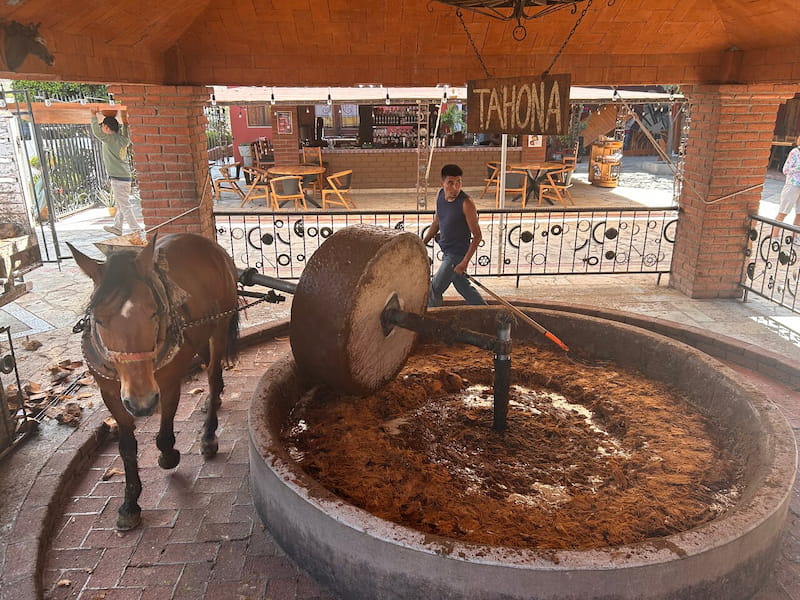
9. Mezcal production here predates written history.
Over 85% of Mexico’s mezcal comes from Oaxaca. But the relationship between Oaxacans and the agave plant goes back thousands of years before distillation was introduced — agave was used for food, fiber, building material, and ritual long before anyone turned it into a spirit. The traditional palenques still operating in the Tlacolula Valley are direct descendants of a practice that has continued uninterrupted for generations.
👉 A Beginner’s Guide to Mezcal: Oaxaca’s Smoky Spirit
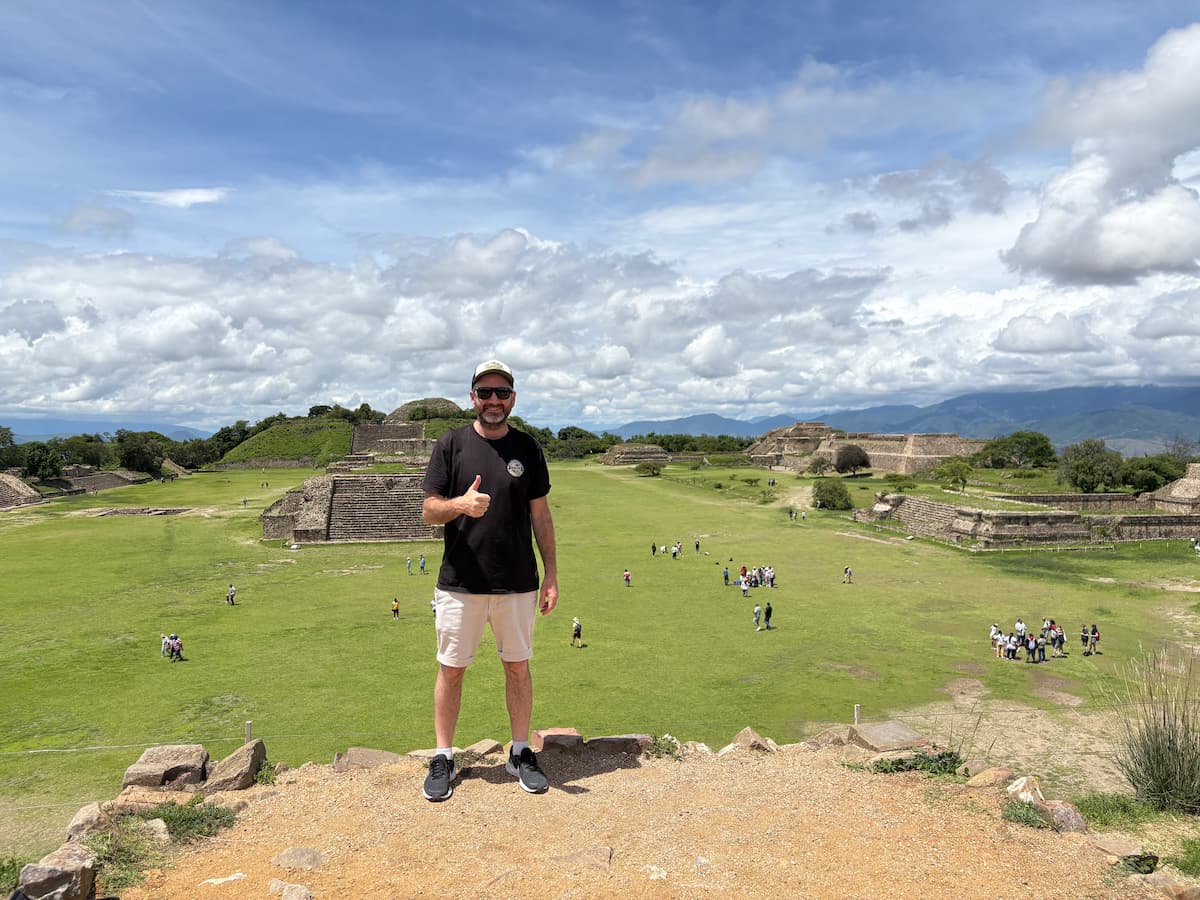
10. Monte Albán was one of the first planned cities in the Americas.
Monte Albán is considered the first great city of Mesoamerica, with its foundation estimated around 500 BC. The entire mountaintop was manually flattened — without modern equipment — to create the ceremonial platform that still stands 400 meters above the valley. At its height the city had a population of up to 25,000 people and dominated the entire region for over a millennium.
👉 Monte Albán: Visiting Oaxaca’s Ancient Centerpiece
11. Every December 23rd, giant radishes are carved into art.
Since 1897, every December 23rd, artisans compete in the Night of the Radishes — Noche de Rábanos — carving massive radishes into intricate sculptures depicting indigenous culture, mythical creatures, ancient gods, and religious themes. It happens in the Zócalo and draws huge crowds. Completely unique to Oaxaca, and genuinely one of the strangest and most wonderful things you’ll witness if you’re in the city in December.
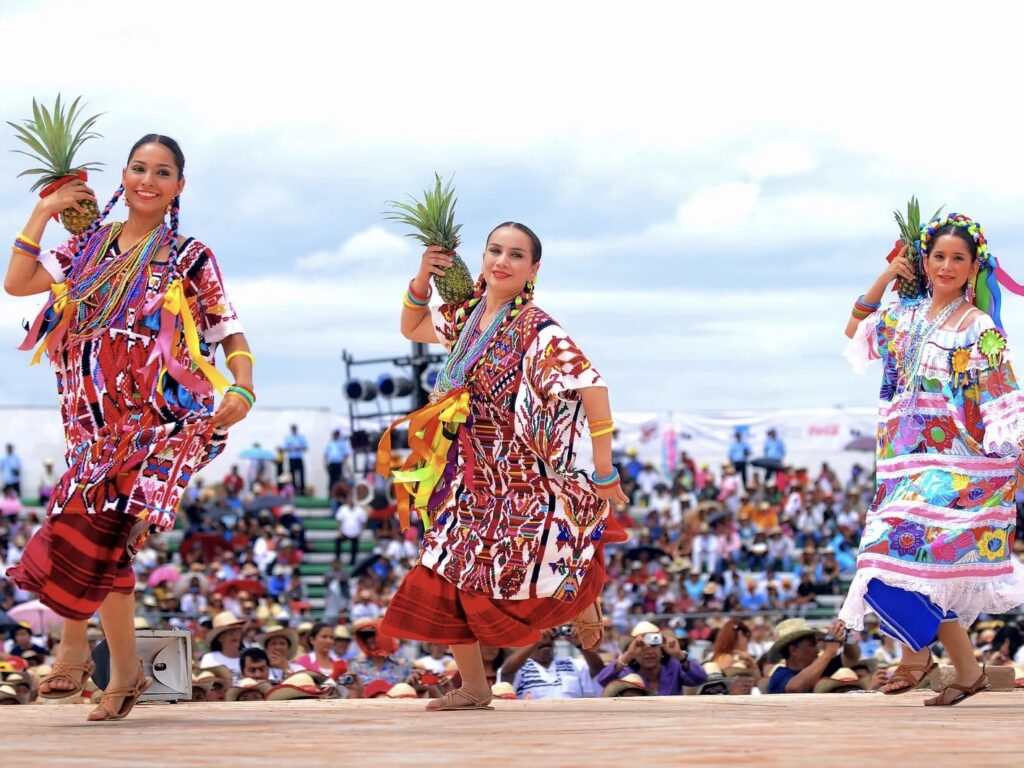
12. The Guelaguetza word means “offering” — and it’s a living economic system.
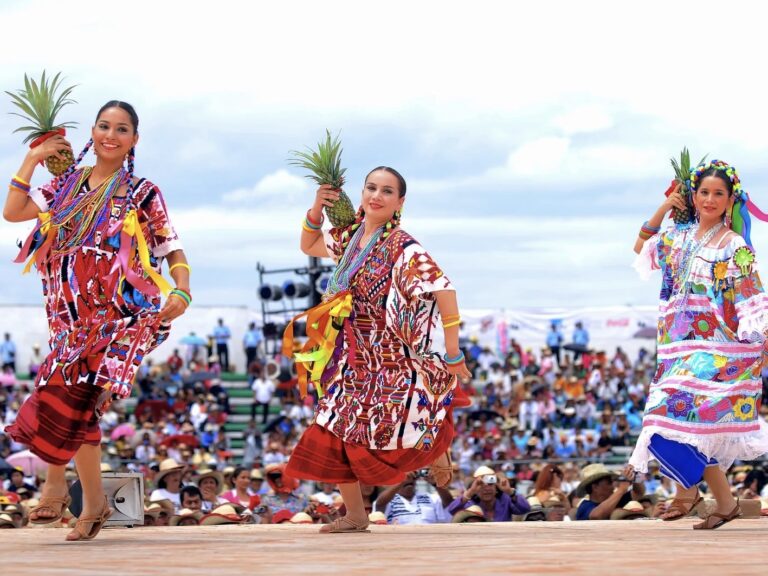
The Guelaguetza festival is named after a Zapotec concept of reciprocal exchange — giving what you have and trusting that it will be returned when you need it. This isn’t just a festival theme — guelaguetza as a social practice still operates in many Oaxacan communities today, governing how neighbors help each other at weddings, harvests, and disasters.
👉 Guelaguetza 2026: The Complete Guide to Oaxaca’s Greatest Festival
13. Oaxacan cuisine has UNESCO protection.
In 2010, UNESCO declared traditional Mexican food an Intangible Cultural Heritage of Humanity — with Oaxacan cuisine specifically cited for its complexity and pre-Hispanic roots. The seven moles, the use of indigenous corn varieties, the fermentation traditions, the chocolate preparation — these are protected cultural heritage, not just food.
👉 Oaxacan Mole Explained: The 7 Moles, Where They Come From, and Why Locals Care
14. El Tule tree has been growing here since before the Roman Empire.
Just 20 minutes from Oaxaca City stands the widest tree trunk on Earth — a Montezuma cypress estimated to be between 1,500 and 2,000 years old. It was already centuries old when the Spanish arrived. DNA testing confirmed it’s a single tree despite looking like several growing together.
👉 El Tule, Oaxaca: The Biggest Tree Trunk In The World
15. Oaxaca City sits at 1,550 meters elevation — and it changes everything.
The altitude explains the climate — warm days, genuinely cold nights, afternoon rains in summer — and the geography that made it possible for so many distinct cultures to develop in the same state. It also explains why Oaxaca feels different from coastal or lowland Mexico: the light, the air, and the temperature all work differently at this height. First-timers often notice it immediately without being able to name it.
Fifteen facts, and we’ve barely scratched the surface. Oaxaca rewards the curious — the more you learn about it, the more there is to find.