How to find an apartment in Oaxaca City and not pay expat prices.
Oaxaca’s rental market has two speeds.
The first is the English-language market — Airbnb, expat Facebook groups, and listings aimed at foreigners. These are easy to navigate, require no Spanish, and will cost you double what a local pays for the equivalent apartment.
The second is the local market — Facebook Marketplace, Spanish-language rental groups, handwritten se renta signs on street corners, and word of mouth between neighbours. This is where Oaxacans rent, and where you’ll find the real prices.
I’ve been renting in Oaxaca for over a decade. Every time I’ve needed to find a place, the local market is where I’ve gone. Here’s exactly how to do it.
👉 50 Best things To Do in Oaxaca City
Why the Price Gap Exists
Oaxaca’s tourism boom and the influx of digital nomads and foreign retirees over the past decade has created a two-tier rental market. Landlords who speak English or list on international platforms know exactly what the market will bear — and foreigners, particularly short-term visitors, consistently pay it without question.
The local market operates on completely different assumptions. Prices are set for Oaxacan incomes, listings are in Spanish, and the expectation is that you’ll negotiate in person.
The gap is real and significant. An apartment that rents for 12,000–15,000 pesos on Airbnb might be available for 6,000–8,000 pesos through a local listing for the same neighbourhood. That difference compounds quickly over months.
The pro tip worth leading with: Don’t rent from the Expats in Oaxaca Facebook group. The listings there are fine and the places are usually nice — but the prices reflect the expat market, not the local one. You’ll pay a significant premium for the convenience of everything being in English.
What Rent Actually Costs in Oaxaca (2026)
Before you start looking, know what’s realistic. These are current local market prices — not Airbnb prices:
| Type | Neighbourhood | Monthly Rent (MXN) |
|---|---|---|
| Studio / 1-bed basic | La Noria, Reforma | 5,000–7,000 MXN |
| 1-bed furnished | Jalatlaco, Xochimilco | 6,000–9,000 MXN |
| 1-bed furnished | Centro Histórico | 6,000–10,000 MXN |
| 2-bed house | San Felipe, outskirts | 6,000–10,000 MXN |
| Colonial house, Centro | Anywhere | 10,000–20,000 MXN |
Rentals range from around 4,000 pesos for a basic studio to 20,000+ pesos for premium central apartments. If you’re being quoted significantly above these numbers, you’re in the expat market. Move on.
Furnished vs unfurnished: Most local listings are unfurnished. If you need furniture, factor in either the cost of buying basics secondhand (Facebook Marketplace again — search venta muebles Oaxaca) or accept a premium for furnished places. Furnished apartments in the local market run roughly 1,500–2,500 MXN more per month than unfurnished equivalents.
Method 1 — Facebook Marketplace (Best Starting Point)
Facebook Marketplace is the single best place to find a rental in Oaxaca at local prices. Hundreds of listings, updated daily, covering every neighbourhood and price range.
Go to Facebook Marketplace → search “se renta Oaxaca” or “departamento en renta Oaxaca” or “casa en renta Oaxaca” → filter by location.
Everything is in Spanish. That’s the point — these listings are aimed at Oaxacans, not foreigners, which is why the prices are honest.
If your Spanish is limited:
- Google Translate handles most listings accurately enough to understand the basics
- Message the landlord in Spanish using translated text — most don’t expect perfect Spanish, they just expect an attempt
- If you need to make a call and your Spanish isn’t there yet, ask a local friend, your Spanish teacher, or someone at your accommodation to help
What to look for in a listing:
- Amueblado — furnished
- Sin muebles / sin amueblar — unfurnished
- Incluye servicios — utilities included
- Internet incluido — WiFi included
- Depósito — deposit amount
- Primer mes adelantado — first month upfront
Most listings include WhatsApp contact — message directly to ask questions and arrange a viewing.
Method 2 — Spanish-Language Facebook Rental Groups
Separate from Marketplace, there are large Facebook groups specifically for Oaxaca rentals where landlords post new listings throughout the day.
Search Facebook groups for: “se renta departamentos Oaxaca” — several large groups will appear. Some have over 100,000 members and new listings going up constantly, like this one.
Good places that appear in these groups often rent within hours of being posted — if you see something that looks right, message immediately rather than leaving it.
The simple rule: If a listing is in English, you’re in the expat market. Skip it and find the same neighbourhood in Spanish.
Method 3 — Walk the Neighbourhood
Not everything ends up online. Mexico still runs significantly on word of mouth and physical signs, and some of the best-value apartments are rented the old-fashioned way.
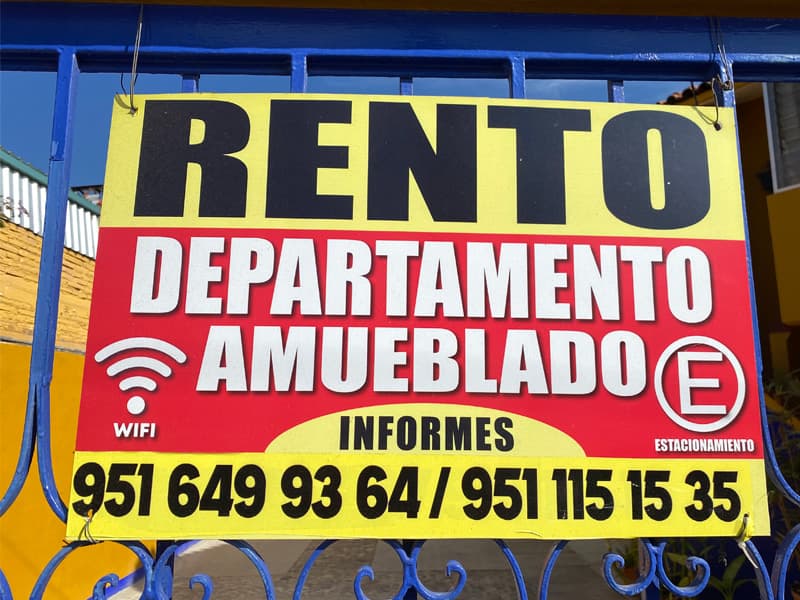
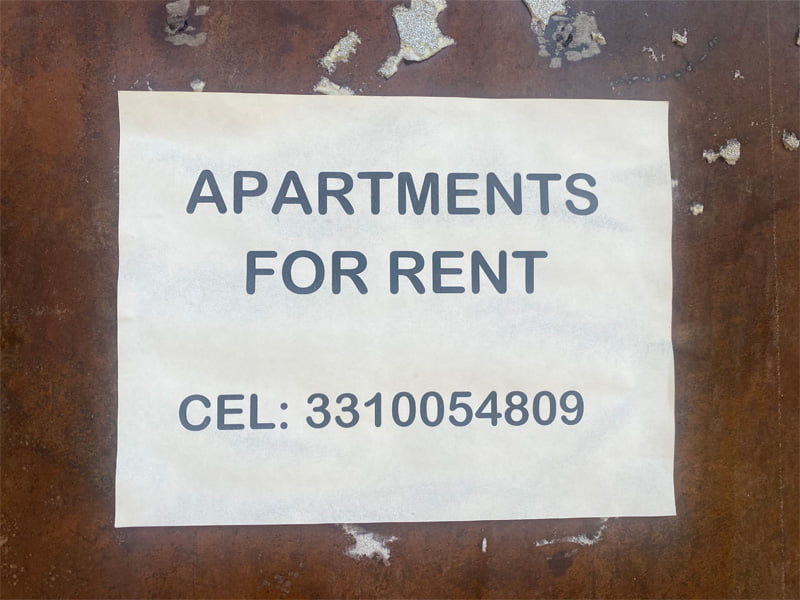
Once you’ve identified a neighbourhood you want to live in, spend an afternoon walking every street and looking for “SE RENTA” signs. They’re everywhere — on gates, on doors, in windows, taped to walls. Write down the phone number, send a WhatsApp message, or knock on the door if there’s no number shown.
The shop owner trick: Walk into any small corner shop (tienda) in the area you want to live and ask if they know of any apartments to rent nearby. In Spanish: “¿Sabe si hay departamentos en renta por aquí?”
This works better than it sounds. Many tienda owners have lived in the same block for decades and know exactly which houses have rentals. They often know the landlord personally and will either call them for you or send you directly. This word-of-mouth method consistently turns up places that aren’t advertised anywhere.
👉 How to get around Oaxaca City
Method 4 — Look for “Se Renta” Posts on Local Facebook Community Groups
Beyond the dedicated rental groups, local neighbourhood Facebook groups regularly have members posting rental listings. Search for groups by neighbourhood name — “Jalatlaco Oaxaca,” “Xochimilco Oaxaca vecinos” — and either post asking for recommendations or browse for recent rental posts.
This method tends to produce the most genuinely local results — often directly from landlords who don’t advertise anywhere else.
The Right Approach — Land First, Then Look
The single biggest mistake people make is trying to find a long-term apartment before arriving.
Remote searching is slow, frustrating, and tends to push you back toward the expat market because those are the listings with English descriptions, photos, and responsive landlords used to dealing with international inquiries.
The best approach is to book a short-term place for your first one to two weeks — a guesthouse or basic Airbnb — then search in person once you’re here. You can view apartments, walk neighbourhoods, and negotiate face-to-face. The whole process moves much faster on the ground, and you’ll find better options than anything you could have locked in remotely.
If you arrive during high season (October–February, around Guelaguetza in July), give yourself more time — good places move fast.
What to Ask Before Committing
Before you agree to anything, get clear answers on:
What’s included in the rent?
- Electricity included or separate? (Electricity in Mexico is metered and bills can spike in hot months with A/C)
- Water included? (Most apartments include water but confirm)
- Internet included? Actual speed — ask to run a speed test, don’t take their word for it
- Gas for cooking included?
Deposit and contract terms:
- Standard in Mexico is one month’s rent as deposit plus first month upfront
- Some landlords ask for two months deposit — this is negotiable
- Contract length — month to month is more flexible but sometimes costs more; 6-month or annual contracts are cheaper
- Early exit terms — what happens if you need to leave before the contract ends
Practical details:
- Hot water — gas boiler (instantaneous) or solar? Solar can be unreliable in cloudy periods
- Laundry — washing machine included or is there a laundromat nearby?
- Parking if you have a car or bike
- Security — good lock, safe street?
- Noise — ask what the street is like on weekend nights. Oaxaca is loud and cohetes (fireworks) go off at all hours
👉 How to pay your electricity bill in Oaxaca City. Step by step guide.
Internet — The Critical Check for Digital Nomads
This deserves its own section because it’s where apartments advertised as “remote work ready” often disappoint.
Internet speeds in Oaxaca have improved significantly — fibre optic is now available across most of the city, but not all landlords pay for more than a basic package. An apartment can technically have fibre optic infrastructure and still deliver slow speeds if the plan is the cheapest tier.
What to do:
- Ask the landlord to run a speed test while you’re viewing (Speedtest.net or fast.com)
- 40+ Mbps is sufficient for most remote work and video calls
- 100+ Mbps is comfortable for video production, large uploads, or multiple devices
- If speed matters to your work and the apartment can’t confirm it, factor in a backup — coworking spaces in Oaxaca are excellent and affordable
Backup options: Coworking spaces throughout Centro and Jalatlaco offer reliable high-speed connections for 300–700 MXN per day or significantly less on monthly memberships. Worth knowing before you commit to an apartment with uncertain internet.
Best Neighbourhoods for Local-Market Renting
Jalatlaco and Xochimilco — closest to Centro, great atmosphere, strong café and restaurant scenes. Most popular with digital nomads for good reason. Prices are higher than other local-market options but still well below expat-facing platforms.
La Noria — south of Centro, residential, quieter, and genuinely more affordable. Good for longer stays where you want local neighbourhood life over tourist-area buzz.
El Llano area — northeast of Santo Domingo, centred around Parque Juárez El Llano. Relaxed, local, and underpriced relative to its proximity to everything.
Reforma — modern, less characterful, but practical and affordable. Good internet infrastructure. Works well for longer stays where you prioritise space and budget over atmosphere.
San Felipe del Agua — 4–5km north, upscale and green, genuinely good value for larger properties. Requires a bus or taxi to Centro for everything.
👉 Where to Stay in Oaxaca City: Best Neighbourhoods Guide
Visa and Legal Basics
For stays under 180 days, most nationalities enter Mexico on a free tourist visa (FMM). You technically shouldn’t be signing a long-term lease on a tourist visa, but in practice landlords rarely ask for anything more than a passport copy.
For stays over 6 months or if you want legal residency, Mexico offers Temporary Resident Visas valid for 1–4 years. These require a financial solvency requirement (proof of income or savings) and are processed through a Mexican consulate in your home country before you arrive. Worth doing if you’re serious about a longer stay — it simplifies banking, SIM cards, and any official processes considerably.
The Spanish Barrier — How to Handle It
This is the honest truth: speaking basic Spanish will open significantly better rental options at significantly better prices. The best-value apartments in Oaxaca are rented by Oaxacans from Oaxacan landlords, in Spanish, often in person.
If your Spanish is limited right now, it’s worth investing a few weeks of learning basic phrases before you arrive — even a very basic level opens doors that are otherwise closed.
While you’re building that, Google Translate handles written messages well enough. For phone calls, video-translate apps have improved dramatically. And having one local contact — a Spanish teacher, a guide you’ve used, someone from your accommodation — who can make a call on your behalf is worth more than any app.
The language isn’t an insurmountable barrier. But it is a real one, and the more Spanish you can deploy, the better your options become.
👉 How much Spanish you really need in Oaxaca (with useful phrases)
Quick Reference — The Search Process
- Before arriving: Browse Facebook Marketplace to understand the market and shortlist neighbourhoods
- First week: Stay short-term while searching. Walk your target neighbourhoods daily looking for se renta signs
- Facebook groups: Join the main Spanish-language rental groups and check them daily — good listings move fast
- Talk to people: Ask at corner shops, ask your guesthouse host, ask anyone local. Word of mouth is underrated
- View before committing: Always see an apartment in person, run the speed test, check the water pressure, walk the street at night
- Negotiate: Everything in the local market is negotiable — particularly for longer commitments. Six months upfront often gets a meaningful discount
👉 100 Mexican Slang Words You Need To Know (Swear Words Included)
FAQ
Can I find an apartment in Oaxaca without speaking Spanish? Yes, but your options narrow significantly and prices trend higher. Google Translate gets you most of the way for written communication. For phone calls, find a local contact to help.
How much deposit do landlords typically ask for? One to two months rent. One month is standard, two is common for unfurnished places. Negotiate — most landlords are flexible, especially for longer stays.
Is it better to arrive and search, or find something remotely? Arrive first. Remote searching pushes you toward the expat market. In-person searching in the local market consistently produces better options at better prices.
What’s the minimum stay most landlords want? Most local landlords prefer at least 3–6 months for furnished apartments. For unfurnished places, 6–12 months is more typical. Month-to-month exists but carries a premium.
Are there rental scams in Oaxaca? Yes, occasionally — particularly on Facebook Marketplace for listings that seem extremely cheap. Standard precautions: never send money before viewing in person, don’t pay a deposit without meeting the landlord and seeing the apartment, and be sceptical of anyone who can’t meet you at the property.
Also useful: [Where to Stay in Oaxaca City: Best Neighbourhoods Guide] and [Cost of Living in Oaxaca: A Full Breakdown]